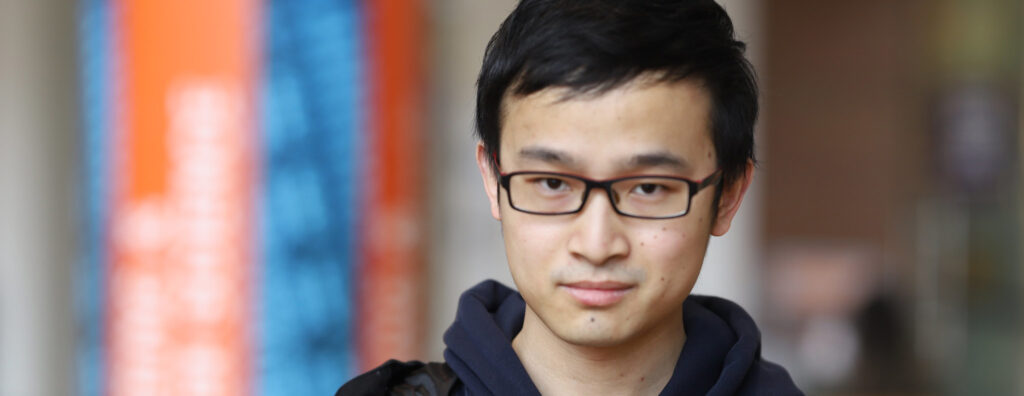
Biomedical and chemical engineering graduate student Siwen Wang was a 2021 Outstanding Teaching Assistant Award recipient.
These awards are reserved for teaching assistants in good academic standing who have made truly distinguished contributions to teaching at Syracuse University.
Hometown: China
BMCE/ECS/other activities you have been involved with: Member of AICHE
Favorite thing about BMCE: All faculties are so nice in BMCE. And I really enjoy the research environment in my group.
Favorite thing about SU: I like SU campus so much. You can find beautiful scenes when walking around the campus, especially in spring and autumn.
Plan after graduation: I hope to keep doing research in my current field.
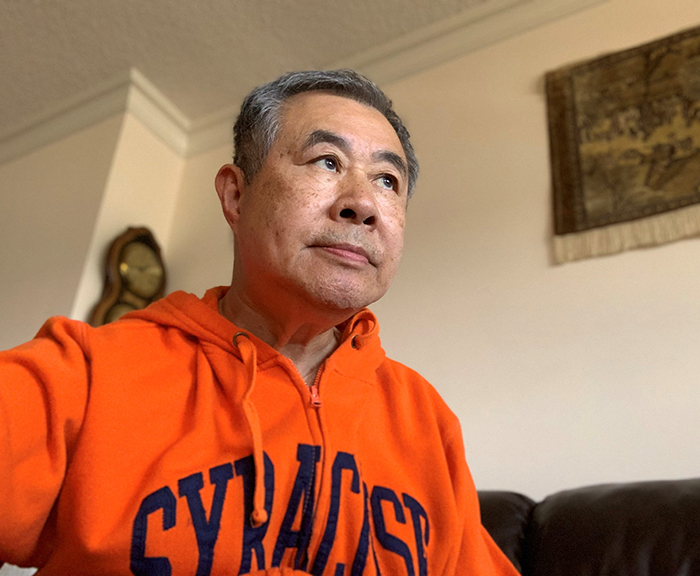
Biomedical and chemical engineering graduate student Bowei Liu was a 2021 Outstanding Teaching Assistant Award recipient.
These awards are reserved for teaching assistants in good academic standing who have made truly distinguished contributions to teaching at Syracuse University
Hometown: Bengbu, China
BMCE/ECS/other activities you have been involved with: research in Jesse Bond’s group, AICHE conference oral presentation.
Favorite thing about BMCE: Students, TAs, and professors get to know each other and have close relationships. You can ask for help from any facilities and staff, they are always willing to do the best for you. The collaboration will always be available between research groups if another has the resources you need.
Favorite thing about SU: The campus is at its optimized size: big enough to have a wide range of diversities and small enough to have a strong sense of community.
Plan after graduation: find a post-doctoral position and continue to be involved in scientific research.
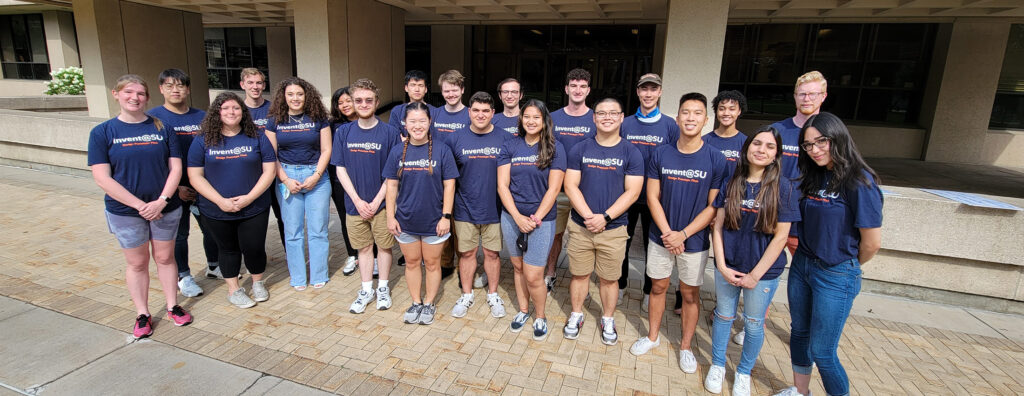
For the first few weeks of Invent@SU, physics major Paul Franco ’22, aerospace engineering student Zach Stahl ’23 and computer science student Anthony Mazzacane ’24 were not always sure their concept would work out. They had identified a clear problem – 80% of NCAA athletes had suffered from dehydration but finding a solution was not simple. They wanted to design a wearable device that could monitor an athlete’s hydration level so coaches and trainers would have better information and keep athletes safe – but would also need to prove their invention worked.
“We knew the scientific principle worked, but in the first few weeks we had logistical problems with the prototype,” said Franco.
As they pushed forward, they leveraged their different skill sets to solve problems with sensors, data collection and a prototype model.
“Being interdisciplinary forces you out of your comfort zone in a really good way,” said Mazzacane.
“Sweatration” was one of seven interdisciplinary teams of undergraduate inventors competing in the six week Invent@SU program. Before the first week of the program, faculty help form three-person interdisciplinary teams that balance different skill sets. Each team comes up with a concept for an original invention, research existing patents to make sure their idea is unique, develop a prototype and pitch it to weekly guest evaluators before “Shark Tank” style final judging at the end of week six.
The Sweatration team was concerned that initial evaluators were skeptical and knew they needed to back up their idea with hard data. They also met with a Syracuse University athletic trainer to gain their input.
“After every time we pitched, I wanted as much feedback as we could get,” said Franco.
The trainer was very supportive of the idea and didn’t believe there was anything like it that existed currently. As their pitch improved, the technical challenges were also being overcome. During a week five test of their prototype at the Barnes Center, the team saw it was collecting meaningful data – and their prototype could reliably show when the wearer was getting dehydrated.
“We had improved the prototype for a better fit and better connections for the technology inside,” said Stahl. “When I saw it was delivering data and consistently indicating dehydration I was thrilled.”
The notable alumni, entrepreneurs and innovators who served as final judges awarded the Sweatration first place and a $7500 prize. They plan on continuing with their invention and will work with both the Blackstone Launchpad in Bird Library and the Innovation Law Center as they move forward.
Second place at Invent@SU went to Ambiflux – a device that can both monitor asthma conditions and deliver medication.
“It felt good that we were rewarded for all the time and energy we put into this,” said bioengineering and neuroscience major Victoria Hathaway ’22. “It is an important device that is needed for a real cause.”
“To see that the judges saw what we saw – it was very gratifying,” said computer engineering student Aidan Mickleburgh ’23. Mickleburgh is also in the H. John Reilly Dual Engineering/ MBA program.
“It felt nice they appreciated the way all the concepts and elements came together,” said chemical engineering student Trinity Coates ’24.
The third place went to Sense-A, a monitoring and alert device that can help people caring for a family member with Alzheimer’s Disease.
“It was a great experience, different from anything else I have done in college,” said computer science student Hong Yang Chen ’22. “Building a physical prototype was a great challenge.”
“Good feedback from judges and evaluators was very helpful and they saw the difficulties caregivers currently face,” said chemical engineering student Simran Lakhani ’22.
“We are definitely going to move forward with this and work with Blackstone Launchpad,” said biomedical engineering student Gabriela Angel ’21 G’22.
Honorable mention at Invent@SU went to Glisten. They designed a device aimed at helping people monitor their dental health at home and provide pre-diagnostic information to a dentist.
“To be able to research, design and build a functioning prototype in six weeks is intense, but the expertise of the faculty and the evaluators made it possible,” said bioengineering student Bianca Andrada ’22.
“Our team was a good balance of different skills and perspectives,” said industrial and interaction design major Ahn Dao ’23.
“We have a passion to keep the world smiling,” said biology student Justin Monaco ’21 G’22.
Invent@SU was sponsored by Syracuse University Trustee Bill Allyn G’59 and Janet “Penny” Jones Allyn ’60, Dr. Deborah L. Pearce and William J. Sheeran ’60, G’63, G’66, Matthew Lyons ’86, Haden Land G’91 and Cathy Land, Ralph Folz ,90, Michael Lazar G’65 and Avi Nash G’77. For more information on the program, you can visit invent.syr.edu.
After rising to the position of vice president of engineering technology at International Flavors & Fragrances (IFF), one of the top priorities for Steve Huang G’72, G’75 was to build a culture that supported the needs of everyone in the company. Huang’s early career and experiences as a chemical engineering student at Syracuse University shaped a belief in the nexus between serving and a better society.
“You kind of change your life perspective,” said Huang. “I decided my focus will be trying to train and cultivate younger engineers and professionals in my company and creating the proper environment for them to grow and develop.”
Now as a management and technology consultant, Huang is scaling these core philosophies and finding new ways to serve gifted, young talent around the world. In honor of the man that once served him, Steve Huang has made a generous gift to establish the endowed Allen J. Barduhn Memorial Scholarship in Chemical Engineering.
“Professor Barduhn trained me and shaped me to become an engineer, but he also helped me on a personal basis,” said Huang. “I told him once, I look at you not just as my advisor, but almost like a parent. I respect him to such a degree.”
Barduhn had a profound influence, but it was the caring actions of foreign student advisor, Virginia Torelli that made Huang first feel welcome in Syracuse. Huang completed his undergraduate degree in Taiwan and a scholarship made it possible for him to pursue a graduate degree at Syracuse University. He arrived in the United States for the first time after five o’clock on the Friday before Labor Day weekend. To Huang’s surprise, Torelli waited to help him get settled.
“She stayed until everything was taken care of,” said Huang. “Even the service people at the dorm stayed to open the door and get me into my room. I could not believe that. My first impression was very warm, and it was a tremendous experience.”
Selflessness from others is at the center of Huang’s Syracuse University experience, most notably from Professor Barduhn.
“I was very, very fortunate. I had one of the best advisors I could ever have. Professor Barduhn really had patience and explained to us the purpose of research,” said Huang. “He really taught you how to work on problem solving. He wanted to train you, help you grow, and he wanted you to graduate.”
Barduhn also had experience in industry which enabled him to prepare his students with knowledge and insight unobtainable from a textbook. The benefits and positive experiences stemming from Huang’s decision to attend Syracuse University were considerable, but it was what Barduhn did next that may have carried the most weight.
“Professor Barduhn had such good advice. He is a tremendous person,” said Huang. “Not only did he teach me how to make good engineering judgments, but he also helped me get my green card.”
Having a green card sponsor was key because it made it easy for Huang to take job interviews, many international students are not so fortunate. Barduhn hired Huang to work in his lab and helped him gain permanent resident status.
“He told me, don’t worry, you have a Ph.D. degree, stay, work for me, and at the same time he said he would apply for a green card for me,” said Huang. “I was only his student, but he was willing to do that. So, I got my green card from Doctor Barduhn’s application. That is a favor I can never return. I will always remember him.”
Huang also credits his time at Syracuse University as a big step toward learning how to develop cross-cultural relationships and working with a variety of people-a skillset that would become invaluable as his professional career took off. Huang initially wanted to be a professor, but Barduhn urged him to first go work as an engineer. Young and fearless, Huang accepted a research and development position with IFF in 1976. He was the first chemical engineer with a doctoral degree hired by the company and Huang took up the challenge to pioneer his position.
In the 1980’s while Huang was developing and implementing advanced control systems at IFF’s United States and European manufacturing sites, he collaborated with colleagues in legal, finance, and marketing departments to lead a game-changing expansion into China for IFF. Through the 1990’s business in China thrived and Huang’s global manufacturing responsibilities increased substantially. In 2001 Huang advanced to the role of vice president of global chemical manufacturing and he continued to help IFF grow by applying solid business models, including sales and operations (S&OP), and Systems Applications and Product (SAP) implementation. By the time he retired after 35 years, IFF had seen sales increase by 600 percent and become an industry leader worldwide.
It is not a coincidence Huang understands the impact of generosity and the right environment over time. The opportunities afforded to him by others prompted one good thing leading to another throughout his education and career. Ultimately putting him in a position to serve. A position he says he may not be in without a chance to attend Syracuse University.
“Every one of those small things adds up. I am very appreciative for the scholarship that I had. I don’t think I would have been able to come to the United States without it,” said Huang. “With this gift I hope we can stimulate our alumni to really spend some effort and resources to help with education to build a better society. People are our foundation. I was really happy that I was able to do this.”
In recognition of superior scholarship, the following students have been entered on the Engineering & Computer Science Dean’s List for Spring 2021.
To be eligible for Dean’s List recognition, the minimum semester grade point average must be 3.40 or higher, must have earned a minimum of 12 graded credits and must have no missing or incomplete grades.
College of Engineering and Computer Science Spring 2021 Dean’s List
B.E. (major) Applied Chemistry, Shanghai Jiao Tong University, P. R. China, 1996.
B.E. (minor) Electrical Engineering, Shanghai Jiao Tong University, P. R. China, 1996.
M.E. Chemical Engineering, Tianjin University, P. R. China, 1999.
Ph.D. Chemical Engineering, University of Connecticut, Storrs, CT, 2003
Postdoctoral associate, Chemical Engineering, Cornell University, Ithaca, NY, 2003-2005.
Lab/Center Affiliation:
Syracuse BioInspired Institute
Areas of Expertise:
Biomaterials
Medical devices
Biotechnology
Synthetic Biology
Bacterial control
Current Research:
Historically, our understanding of bacterial physiology and development of antibiotics have been focused on active planktonic (free-swimming) cells. However, the vast majority of bacteria in nature and medical environments exist in surface-attached biofilms with varying levels of dormancy. With up to 1,000 times higher tolerance to antibiotics and disinfectants compared to their planktonic counterparts, deleterious biofilms cause serious problems such as chronic infections in humans as well as persistent fouling and equipment failure in industry. Biofilms are blamed for billions of dollars of losses and more than 45,000 deaths annually in the U.S. alone. Despite the well-recognized significance of biofilms, the mechanisms of biofilm formation and bacterial dormancy are still not fully understood with many fundamental questions unanswered. Controlling biofilms and dormant cells is also challenging. To address these challenges, we conduct both basic and translational research with specific interests in bacteria-material interactions, novel antifouling materials, new agents for controlling biofilms and dormant cells, synthetic biology for microbial control, and smart and safer medical devices.
Courses Taught:
CEN551 Biochemical Engineering
BEN301 Biological Principles for Engineers
Honors:
Fellow, American Institute for Medical and Biological Engineering (AIMBE), 2022
Yikang Xu and Dacheng Ren. “A novel inductively coupled capacitor wireless sensor system for rapid antibiotic susceptibility testing.” Journal of Biological Engineering. 17, Article number: 54 (2023).
72. Sang Won Lee, Erick L. Johnson, J. Alex Chediak, Hainsworth Shin, Yi Wang, K. Scott Phillips and Dacheng Ren. “High-Throughput Biofilm Assay to Investigate Bacterial Interactions with Surface Topographies.” ACS Applied Bio Materials. 5: 3816-3825 (2022).
Sweta Roy, Ali Adem Bahar, Huan Gu, Shikha Nangia, Karin Sauer and Dacheng Ren. “Persister Control by Leveraging Dormancy Associated Reduction of Antibiotic Efflux.” PLOS Pathogens. 17(12): e1010144 (2021).
Sang Won Lee, Joseph Carnicelli, Dariya Getya, Ivan Gitsov, K. Scott Phillips and Dacheng Ren. “Biofilm Removal by Reversible Shape Recovery of the Substrate.” ACS Applied Materials & Interfaces. 13 (15): 17174–17182 (2021)
Sang Won Lee, K. Scott Phillips, Huan Gu, Mehdi Kazemzadeh-Narbat, Dacheng Ren. “How microbes read the map: effects of implant topography on bacterial adhesion and biofilm formation.” Biomaterials. 268: 120595 (2021).
Huan Gu, Sang Won Lee, Joseph Carnicelli, Teng Zhang, and Dacheng Ren. “Magnetically driven active topography for long-term biofilm control”. Nature Communications. 11: Article number: 2211 (2020).
Yikang Xu, Yousr Dhaouadi, Paul Stoodley, and Dacheng Ren, “Sensing the unreachable: challenges and opportunities in biofilm detection”. Current Opinion in Biotechnology. 64: 79-84 (2020).
Ph. D. Chemistry (2006) University of Minnesota, Twin Cities
M.Sc. Chemistry (2000) Indian Institute of Technology, Delhi, India
B.Sc. Chemistry (1998) University of Delhi, Delhi, India
Lab/Center Affiliation:
Syracuse Biomaterials Institute
Research interests:
Blood-brain barrier
Targeted cancer drug delivery
Multiscale modeling of nanomaterials
Nanomedicine
Virus nanotechnology
Current Research:
My research group focuses on studying blood-brain barrier using theoretical and computational techniques. The goal is to enable the transport of drug molecules across the blood-brain barrier, which has been the biggest impediment for finding a cure for brain related ailments such as Alzheimer’s and Parkinson’s diseases. This project was funded through the NSF-CAREER award.
Additionally, we our group focuses on computational multiscale modeling of nanomaterials, including nanomedicine, drug delivery nanocarriers, and nano-bio interactions. The goal of this research is to design efficient nanosized drug delivery carriers to target cancer tumor cells that hold the key to a new era of cancer treatment. To achieve our research goals we are developing quantitative approaches for characterizing interaction of nanoscale entities with living matter (serum, cell-membranes, cells). Our computational approaches are directed to analyze these complex nano-bio interactions in an effort to design safe and smart drug delivery nanocarriers.
Courses Taught:
Statistical thermodynamics
Multiscale computational methods
Reaction kinetics
Engineering Materials, Properties, and Processing
Honors:
2017 Dean’s Award for Excellence in Education
2017 Meredith Teaching Recognition Award
2016 College Technology Educator of the Year, Technical Alliance of Central New York
2016 ACS OpenEye Outstanding Junior Faculty Award
2015 Nappi Research Competition Award
NSF CAREER award (2015)
Faculty Excellence Award, College of Engineering and Computer Science, Syracuse University (2015)
Recent Publications:
Development of effective stochastic potential method using random matrix theory for efficient conformational sampling of semiconductor nanoparticles at non-zero temperatures, J. Scher, M. Bayne, A. Srihari, S. Nangia, and A. Chakraborty, Journal of Chemical Physics, 149, 014103 (2018). https://aip.scitation.org/doi/10.1063/1.5026027 Self-assembly simulations of classic claudins-insights into the pore structure, selectivity and higher-order complexes, F. J. Irudayanathan, X. Wang, N. Wang, S. Willsey, I. Seddon, and S. Nangia, Journal of Physical Chemistry B, 122, 7463-7474 (2018). https://pubs.acs.org/doi/10.1021/acs.jpcb.8b03842
Mechanism of Antibacterial Activity of Choline-Based Ionic Liquids (CAGE), Kelly N. Ibsen, H. Ma, A. Banerjee, E. E. L. Tanner, S. Nangia, and S. Mitragotri, ACS Biomaterials Science and Engineering, 4, 2370-2379 (2018). https://pubs.acs.org/doi/abs/10.1021/acsbiomaterials.8b00486
Architecture of the paracellular channels formed by Claudins of the blood-brain barrier tight junctions, F. J. Irudayanathan, N. Wang, X. Wang , and S. Nangia, Annals of the New York Academy of Sciences, 1749-6632 (2017). https://nyaspubs.onlinelibrary.wiley.com/doi/full/10.1111/nyas.13378
Modeling diversity in structures of bacterial outer membrane lipids H. Ma, D. D. Cummins, N. B. Edelstein, J. Gomez, A. Khan, M. D. Llewellyn, T. Picudella, S. R. Willsey and S. Nangia, Journal of Chemical Theory and Computation, 13, 811–824 (2017). http://dx.doi.org/10.1021/acs.jctc.6b00856
Drug-specific design of telodendrimer architecture for effective Doxorubicin encapsulation, W. Jiang, X. Wang, D. Guo, J. Luo, and S. Nangia, Journal of Physical Chemistry B, 120, 9766–9777 (2016). http://dx.doi.org/10.1021/acs.jpcb.6b06070
Cardiac tissue engineering and regenerative medicine
3D Organoid Technology
Human induced pluripotent stem cells (hiPSCs) allows the recapitulation of human disease models in vitro, which can be used to both study disease mechanisms and ultimately design and screen personalized therapeutics prior to large animal or clinical trials. My research focuses on developing multi-scale cardiac models through the combination of stem cell biology, micro/nanotechnology and cardiovascular research. These in vitro models help us not only understand a variety of fundamental questions on cardiac physiology and development, but also improve the diagnosis and treatment for human heart diseases.
Honors and Awards:
Rising Stars Award of BMES Cellular and Molecular Bioengineering
National Science Foundation CAREER Award
Lush Prize Young Researcher at Americas, Lush Cosmetics
Selected Publications:
Kowalczewski A., Sakolish C.M., Hoang P., Liu X., Jacquir S., Rusyn I., Ma Z. (2022) “Integrating nonlinear analysis and machine learning for human induced pluripotent stem cell-based drug cardiotoxicity testing” Journal of Tissue Engineering and Regenerative Medicine 16(8): 732-743.
Shi H., Wu X., Sun S., Wang C., Ash-Shakoor A., Mather P.T., Henderson J.H., Ma Z. (2022) “Profiling the responsiveness of focal adhesions of human cardiomyocytes to extracellular dynamic nano-topography” Bioactive Materials 10: 367-77.
Hoang P., Kowalczewski A., Sun S., Winston T.S., Archilla A., Lemus S., Ercan-Sencicek A.G., Gupta A.R., Liu W., Kontaridis M.I., Amack J., Ma Z. (2021) “Engineering spatial-organized cardiac organoids for developmental toxicity testing” Stem Cell Reports 16(5): 1228-1244.
Ma Z., Huebsch H., Koo S., Mandegar M.A., Siemons B., Conklin B.R., Grigoropoulos C.P., Healy K.E. (2018) “Contractile deficits in engineered cardiac microtissues as a result of MYBPC3 deficiency and mechanical overload” Nature Biomedical Engineering 2(12): 955–67.
Research Scientist, Washington University in Saint Louis
Postdoctoral Fellow and Instructor, Saint Louis University
Postdoctoral Associate, Virginia Tech
Degrees:
Ph.D., Indian Institute of Technology Kanpur, India, 2011
Bachelor’s in Pharmacy, India, 2004
Lab/Center Affiliation:
Syracuse BioInspired Institute
Areas of Expertise:
Targeted and programed drug delivery for macrophages
Injectable and biodegradable hydrogels and scaffolds
Musculoskeletal tissue engineering
Drug Delivery
Inflammation is a primary component of all diseases including several musculoskeletal disorders such as arthritis. The Jain Lab research focuses on engineering immunomodulatory biomaterials for advancing treatment of musculoskeletal disorders and related inflammatory disorders. We are particularly interested in design of macrophage targeting and programed drug delivery systems for spatially and temporally controlled biomolecule release to regulate inflammation. We employ a combination of in vitro models and pre-clinical animal models to evaluate the translational potential of these novel delivery systems.
Honors and Awards
2021 Discovery Award (DoD)
2018 Travel Award for Best Poster, Musculoskeletal Research Center, Winter Symposium, Washington University in Saint Louis
2017 Best Undergraduate Poster Award to a mentee at STLAURUS 2017
2004-2010 Graduate Research Scholarship, Department of Biotechnology (DBT), India
2008 Travel grant for attending from Council of Scientific and Industrial Research (CSIR), India.
Selected Publications:
I.M. Berke, E. Jain, B.Yavuz, T. McGrath, L. Jing, M. Silva, G. Mbalaviele, F. Guilak, D. Kaplan, L.A. Setton. NF-κB-mediated effects on behavior and cartilage pathology in a non-invasive loading model of post-traumatic osteoarthritis, Osteoarthritis and Cartilage (2021), 29, 248-256.
E. Jain, S. Neal, H.Graf, X. Tan, R. Balasubramaniam, and N.Huebsch Copper-Free Azide–Alkyne Cycloaddition for Peptide Modification of Alginate Hydrogels ACS Applied Bio Materials (2021) 4 (2), 1229-1237.
X, Tan, E. Jain, M.N. Barcellona, E. Morris, S. Neal, M.C. Gupta, J.M. Buchowski, M. Kelly, L.A. Setton, N. Huebsch: Integrin and syndecan peptide-conjugated alginate hydrogel for modulation of nucleus pulposus cell phenotype. Biomaterials. 2021.
E. Jain, N.Chinzei, A. Blanco, N. Case, L. J. Sandell, S. Sell, M. F.Rai, S. P. Zustiak, Sustained release of platelet-rich plasma from polyethylene glycol hydrogels exerts beneficial effects on chondrocytes, J. Orthop. res. (https://doi.org/10.1002/jor.24404)
E. Jain, A.S. Qayyum, G. Kolar, Y. Kim, S.A. Sell, S.P. Zustiak, Design of electrohydrodynamic sprayed polyethylene glycol hydrogel microspheres for cell encapsulation, Biofabrication 9 (2017) 025019.
E. Jain, S. Sheth, A. Dunn, S.P. Zustiak, S.A. Sell, Sustained release of multicomponent platelet-rich plasma proteins from hydrolytically degradable PEG hydrogels, J Biomed Mater Res A 105 (2017) 3304-3314.
E. Jain, L. Hill, E. Canning, S.A. Sell, S.P. Zustiak, Control of gelation, degradation and physical properties of polyethylene glycol hydrogels through the chemical and physical identity of the crosslinker, J Mater Chem B 5 (2017) 2679-2691.
S.G. Priya, A. Gupta, E. Jain, J. Sarkar, A. Damania, P.R. Jagdale, B.P. Chaudhari, K.C. Gupta, A. Kumar, Bilayer Cryogel Wound Dressing and Skin Regeneration Grafts for the Treatment of Acute Skin Wounds, ACS Appl Mater Inter 8 (2016) 15145-15159.
2004 Ph.D. Mechanical Engineering Stanford University
2001 M.S. Mechanical Engineering Stanford University
1999 B.S. Mechanical Engineering Rice University, Summa Cum Laude
Lab/Center Affiliation(s):
BioInspired Institute
Areas of Expertise:
Mechanobiology
Biomechanics
Shape-memory polymers
Tissue engineering
Advanced Manufacturing
The Henderson Lab uses expertise in cell biomechanics and mechanobiology, cell and molecular biology, mechanics, imaging, and computational tools to inform the development and application of functional shape-memory materials to enable innovative strategies to study and control mechanobiological and biomechanical aspects of cell and tissue function and repair.
Honors and Awards:
2024 Mentor of the Year, Center for Fellowship and Scholarship Advising (CFSA), Syracuse University.
2017 Excellence in Graduate Education Faculty Excellence Award, The Graduate School, Syracuse University
2016 James K. Duah-Agyeman Faculty Award, Center for Graduate Preparation and Achievement, Syracuse University
2012 Defense Advanced Research Projects Agency (DARPA) Young Faculty Award
2010 College of Engineering and Computer Science Faculty Excellence Award
2007 New Investigator Recognition Award (NIRA), 6th Combined Meeting of the Orthopaedic Research Societies
Selected Honors and Awards to Graduate Students:
All University Doctoral Prize x 2
Outstanding Achievement Award in Graduate Study, Bioengineering x 4
NSF Graduate Research Fellowship
Orange Circle Award
Black Engineer of the Year Award (BEYA) STEM Conference Community Award
STEM Fellow x 3
Selected Honors and Awards to Undergraduate Students:
Syracuse University Scholar x 2
Remembrance Scholar x 2
Senior Marshal
NSF Graduate Research Fellowship
Goldwater Scholar x 2
Seinfeld Scholar
Karen Hiiemae Outstanding Achievement Award, BMCE
Oren Nagasako Award, BMCE
George M. Berry Award for Best All-Around Senior, ECS
Louis N. DeMartini Award for Outstanding Research, ECS
Chancellor’s Citation for Excellence in the category of Excellence in Student Research
The Chancellor’s Forever Orange Award
Chancellor’s Award for Public Engagement and Scholarship
The Earl H. Devoe Prize for Undergraduate Research
The Bioengineering Founders Award x 2
Upstate Louis Stokes Alliance for Minority Participation (ULSAMP) Undergraduate Research Assistantship x 8
LSAMP Outstanding Service and Dedication Award
Ronald E. McNair Scholars Program x 3
Donofrio Scholar x 3
Fulbright Canada-Mitacs Globalink internship
Maxwell Citizenship Scholar
Gates Millennium Scholars Program
Annual Black Engineer of the Year Award (BEYA) STEM Conference Research Award x 2
Selected Publications:
Oguntade, Elizabeth; Wigham, Caleb; Owuor, Luiza; Aryal, Ujjwal; O’Grady, Kerrin; Acierto, Anthony; Zha, R Helen; Henderson, James H; Dry and wet wrinkling of a silk fibroin biopolymer by a shape-memory material with insight into mechanical effects on secondary structures in the silk network, Journal of Materials Chemistry B, 12, 26, 6351-6370, 2024
Pieri, Katy; Liu, Di; Soman, Pranav; Zhang, Teng; Henderson, James H; Large Biaxial Recovered Strains in Self‐Shrinking 3D Shape‐Memory Polymer Parts Programmed via Printing with Application to Improve Cell Seeding, Advanced Materials Technologies, 8, 9, 2201997, 2023
Chen, Junjiang; Sun, Shiyang; Macios, Mark M; Oguntade, Elizabeth; Narkar, Ameya R; Mather, Patrick T; Henderson, James H; Thermally and Photothermally Triggered Cytocompatible Triple-Shape-Memory Polymer Based on a Graphene Oxide-Containing Poly (ε-caprolactone) and Acrylate Composite, ACS Applied Materials & Interfaces, 15, 44, 50962-50972, 2023
Buffington, Shelby L; Paul, Justine E; Ali, Matthew M; Macios, Mark M; Mather, Patrick T; Henderson, James H; Enzymatically triggered shape memory polymers, Acta biomaterialia, 84, 88-97, 2019
Wang, Jing; Quach, Andy; Brasch, Megan E; Turner, Christopher E; Henderson, James H; On-command on/off switching of progenitor cell and cancer cell polarized motility and aligned morphology via a cytocompatible shape memory polymer scaffold, Biomaterials, 140, 150-161, 2017
Baker, Richard M; Tseng, Ling-Fang; Iannolo, Maria T; Oest, Megan E; Henderson, James H; Self-deploying shape memory polymer scaffolds for grafting and stabilizing complex bone defects: A mouse femoral segmental defect study, Biomaterials, 76, 388-398, 2016
Baker, Richard M; Brasch, Megan E; Manning, M Lisa; Henderson, James H; Automated, contour-based tracking and analysis of cell behaviour over long time scales in environments of varying complexity and cell density, Journal of The Royal Society Interface, 11, 97, 20140386, 2014
Tseng, Ling-Fang; Mather, Patrick T; Henderson, James H; Shape-memory-actuated change in scaffold fiber alignment directs stem cell morphology, Acta biomaterialia, 9, 11, 8790-8801, 2013
Davis, Kevin A; Burke, Kelly A; Mather, Patrick T; Henderson, James H; Dynamic cell behavior on shape memory polymer substrates, Biomaterials, 32, 9, 2285-2293, 2011
B.S. in Chemical Engineering, Missouri University of Science & Technology (formerly University of Missouri-Rolla)
Ph.D. in Chemical Engineering, Thesis Advisor: Nicholas L. Abbott, University of Wisconsin-Madison
Post-doctoral Research Associate in STEM Education and Outreach, Interdisciplinary Education Group, Materials Research Science and Engineering Center, University of Wisconsin-Madison
Chemistry Instructor, General Chemistry Coordinator, and Engineering Transfer Program Director, Madison Area Technical College
2015 Teaching Recognition Award from the Syracuse University Laura J. and L. Douglas Meredith Professorship Program
2015 Syracuse University Chancellor’s Awards for Public Engagement and Scholarship: Inspiration Award
2014 Syracuse University College of Engineering and Computer Science Dean’s Award for Excellence in Engineering Education
2014 Technology Alliance of Central New York (TACNY) College Technology Educator of the Year
Selected Publications:
Velegol, S.B., Cadwell, K.D., Bayles, T.M., Bullard, L.G., Hillsley, M.V. “Baseline Data on CHE Teaching Focused Faculty in the US.” Proceedings of the American Society for Engineering Education 2024 Annual Conference and Exposition, 2024.
Blum, M.M., Cadwell, K.D., Hasenwinkel, J.M. “A Model for a Faculty Development Course Redesign Summer Working Group.” Proceedings of the American Society for Engineering Education 2020 Virtual Annual Conference and Exposition, 2020.
Stokes-Cawley, C. and Cadwell, K.D. “Project ENGAGE: A Summer Immersion Experience in Engineering for Middle School Girls.” Proceedings of the American Society for Engineering Education St. Lawrence Section Regional Conference, Syracuse, NY, 2015. Reprinted in Transactions on Techniques in STEM Education, 2016, 1(2): 20-29.
Blum, M.M, Cadwell, K.D., Hasenwinkel, J.M. “A mechanics of materials outreach activity: Reconstructing the human body – biomaterials and biomimicry.” Proceedings of the American Society for Engineering Education 2015 Annual Conference and Exposition, Seattle, WA, 2015.
Walz, K.A., Britton, S., Crain, J., Cadwell, K., Hoffman, A., Morschauser, P. “Biodiesel synthesis, viscosity, and quality control for an introductory chemistry lab.” The Chemical Educator, 2014, 19: 342-346.
B.S., Chemical Engineering, Louisiana State University, 2002
Ph.D., Chemical Engineering, University of Wisconsin, Madison, 2009
Research Interests:
Heterogeneous catalysis
Bio-based fuels and chemicals
Energy sustainability
Current Research:
Our group is focused on the design and application of catalytic materials for improving sustainability in the production of transportation fuels and chemical products. In our research, we leverage heterogeneous catalysis to facilitate the conversion of renewable feedstocks to drop-in replacements for traditional, petroleum-derived fuels. We approach this task mindful of the guiding principles of environmental stewardship and thus promote total biomass utilization, energy efficiency and conservation, and waste minimization as we strive to advance the state of the art in renewable energy.
Teaching Interests:
CEN 600: Heterogeneous catalysis
CEN 600: Biofuels
CEN 587: Chemical Reaction Engineering
Select Publications:
Wettstein, S.G., Bond, J.Q., Martin Alonso, D., Pham, H.N., Datye, A.K., Dumesic, J.A., “RuSn bimetallic catalysts for selective hydrogenation of levulinic acid to γ-valerolactone.” Applied Catalysis B: Environmental, 2012, 117–118. 321 – 329.
Martin Alonso, D., Wettstein, S.G., Bond. J.Q., Root, T.W., and Dumesic, J.A. “Production of Biofuels from Cellulose and Corn Stover using Alkylphenol Solvents,” ChemSusChem, 2011, 4, 8, 1078–1081.
Bond, J.Q., Wang, D., Martin Alonso, D., and Dumesic, J.A. “Interconversion Between g-valerolactone and Pentenoic Acid Combined with Decarboxylation to Form Butene Over Silica/Alumina.” Journal of Catalysis, 281, 2, 25, 2011, 290-299.
Martin Alonso, D., Bond, J.Q., Wang, D., and Dumesic, J.A., “Activation of Amberlyst-70 for Alkene Oligomerization in Hydrophobic Media.” Topics in Catalysis, 2011, 54, 5-7, 447 -457.
Bond, J.Q., Martin Alonso, D., West, R.M., Dumesic, J.A. “g-Valerolactone Ring-Opening and Decarboxylation over SiO2/Al¬2O3 in the Presence of Water.”Langmuir, 2010, 26, 21, 16291 – 16298.
Martin Alonso, D., Bond, J.Q., Dumesic, J.A. “Conversion of Biomass to Biofuels.”Green Chemistry, 2010, 12, 1493-1513.
Bond, J.Q., Martin Alonso, D., Wang, D., West, R.M., Dumesic, J.A. “Integrated Catalytic Conversion of g-Valerolactone to Liquid Alkenes for Transportation Fuels.” Science, 2010, 327, 5969, 1110-1114.
The Syracuse Center of Excellence (CoE) is a collaborative organization that accelerates the development of innovations for a sustainable future. As New York State’s Center of Excellence in Environmental and Energy Systems, we have engaged more than 200 private companies, organizations, and academic institutions to create new products and services in indoor environmental quality, clean and renewable energy, and water resource management.
A collaborative organization, CoE works in partnership with CenterState CEO, SUNY College of Environmental Science and Forestry (ESF), SUNY Upstate Medical University, and dozens of industry partners. Additional economic development partners include CenterState CEO’s INSPYRE Innovation Hub, the New York State Science & Technology Law Center, the Central New York Biotech Accelerator, and many other regional organizations.
CoE is housed in an iconic $41-million R&D facility opened in 2010, constructed adjacent to other CNY innovation assets and University Hill in downtown Syracuse. The facility has earned international recognition for its Willis H. Carrier Total Indoor Environmental Quality (TIEQ) Laboratory, which has been used for ground-breaking research such as a study with Harvard University measuring the impact of indoor quality on the cognitive function of office workers.
Currently, CoE faculty are working on multiscale physical testbed and modeling, simulation and visualization tools with advanced sensor capabilities, intelligent and AI-driven building controls, and energy-efficient technologies designed to enhance industry-academic-community collaborations. CoE also houses a Building Training and Assessment Center to provide specialized training to students and professionals in building performance.
CoE’s associated faculty labs and groups offer additional state-of-the-art research capabilities in advanced materials for air cleaning, CO2 absorption, energy conversion and storage, material emissions testing, ventilation, building enclosure assemblies and systems, cold climate heat pumps, and AI/ML-based model predictive control algorithms.
CASE is New York State’s premier applied research center for interdisciplinary expertise in complex information-intensive systems, including monitoring and control, predictive analysis, intelligence, security, and assurance. CASE has been a designated New York State Center of Advanced Technology (CAT) since 1984, bringing together traditional academic strengths in research and education to promote strong university-industry interaction and generate positive economic impact across New York State and beyond.
PhD, Biomedical Engineering, Northwestern University
MS, Bioengineering, Clemson University
BSE, Biomedical Engineering, Duke University
Lab/Center Affiliation(s):
BioInspired Institute
Areas of Expertise:
Faculty development in teaching and learning
Engineering education and active learning pedagogies
Student success initiatives
Orthopedic biomaterials
Biomaterials for nerve regeneration
My research originally focused on translational polymeric biomaterials for orthopedics and nerve regeneration applications. We worked on the design, synthesis, characterization, in vitro and in vivo evaluation of acrylic bone cements, nanoparticle drug delivery systems to treat spinal cord injury, and micropatterned and mechanically-active hydrogels. We also developed new techniques for studying spinal cord injury in vivo and in vitro. Since 2012, my research program has gradually transitioned to a focus on engineering education, faculty development, and student success. I have studied the impact of faculty-student interactions and peer interactions on student persistence towards a bachelor’s degree in Engineering and Computer Science. Specifically, I investigate the link between faculty development in innovative pedagogy and advising practices, with implementation in Engineering and Computer Science courses and academic advising, and subsequent effects on student attitudes towards persistence and retention rates. I have also developed several cohort-based scholarship programs to support student success.
Honors and Awards:
Laura J. and L. Douglas Meredith Professor for Teaching Excellence 2022
Faculty Excellence Award, College of Engineering and Computer Science 2013
Executive Leadership in Academic Technology and Engineering (ELATE) Fellow 2013-2014
Wallace H. Coulter Foundation Early Career Translational Research Award, Phases I & II 2007-11
Judith Greenberg Seinfeld Distinguished Faculty Fellow, Syracuse University 2006-07
Teaching Recognition Award, Syracuse University 2004
James D. Watson Investigator Award, New York State Office of Science, Technology, and Academic Research (NYSTAR) 2003
Select Publications:
A.Y. Au, J.M. Hasenwinkel, and C.G. Frondoza, “Hepatocytes cultured on collagen modified micropatterned agarose for evaluating inflammatory and oxidative stress responses,” Applied In Vitro Toxicity, 7(1): 4-13, 2021. https://doi.org/10.1089/aivt.2020.0015
P. Kunwar, A. Jannini, Z. Xiong, M.J. Ransbottom, J.S. Perkins, J.H. Henderson, J.M. Hasenwinkel, and P. Soman, “High-resolution 3D printing of stretchable hydrogel strutures using optical projection lithography,” ACS Applied Materials & Interfaces, 12(1):1640-1649, 2020. https://doi.org/10.1021/acsami.9b19431
S. Fillioe, K. Bishop, A. Jannini, J. Kim, R. McDonough, S. Ortiz, J. Goodisman, J.M. Hasenwinkel, C. Peterson, and J. Chaiken, “In vivo, noncontact, real-time, PF[O]H imaging of the immediate local physiological response to spinal cord injury in a rat model,” Journal of Biomedical Optics, 25(3), 2019. https://doi.org/10.1117/1.JBO.25.3.032007
M.J. Wiegand, K. Faraci, B.E. Reed, and J.M. Hasenwinkel, “Enhancing mechanical properties of an injectable two-solution acrylic bone cement using a difunctional crosslinker,” Journal of Biomedical Materials Research, Part B: Applied Biomaterials, 107B:783-790, 2019. http://dx.doi.org/10.1002/jbm.b.34172
Ran Zhu is the co-recipient of the 2021 Outstanding Graduate Student Award in Chemical Engineering.
Hometown: Zhengzhou, Henan, China
CEN/ECS/other activities you have been involved with: Seminars and meetings with future faculty.
Favorite thing about CEN: Best faculty and staff that I’ve ever met.
Favorite thing about SU: Wonderful summer and the amazing big lake effect. (I really enjoyed the snow season!)
Plan after graduation: Postdoctoral fellow at MIT, looking for a position in academia or research-related position in the chemical engineering industry in China.
Seth Reed ’21 is the recipient of the 2021 Engineering and Computer Science Alumni Association Service Award. This award recognizes outstanding service on behalf of the college community
Hometown: Rexford, NY
CEN/ECS/other activities you have been involved with: Researcher in Prof. Hosein’s lab, Engineering Ambassadors (current Program Coordinator), ECS Dean’s Advisory Panel, Men’s Club Volleyball Team (current Vice President), Orientation Leaders, Keys Player at Abundant Life Christian Center
Favorite thing about CEN: My favorite thing about CEN is the research experiences I had in the energy storage field within Dr. Hosein’s lab.
Favorite thing about SU: My favorite thing about Syracuse University is that I have been able to explore many opportunities outside of my academics. From being a setter on the club volleyball team to welcoming first-year students at the beginning of each semester, I grew as a person in varying aspects of my life during my last four years here.
Plan after graduation: I will pursue a Ph.D. in Materials Science & Engineering at the Texas Materials Institute at UT-Austin.
Nandhini Rajagopal is the recipient of the 2021 Outstanding Graduate Student Award in Bioengineering and received national recognition for a breakthrough molecular computational tool.
Hometown: Mumbai, India
BEN/ECS/other activities:
WiSE associate(2017-2019)
Contributed in training undergraduates in ECS scholar program in summer 2018
Student mentor for REU at Nangia lab in 2018.
Favorite thing about BEN: Highly encouraging, supportive and easy-to-approach BEN faculty and staff!
Favorite thing about SU: In my view SU is the perfect place for research, with calm surroundings and friendly people, that nurture creativity and encourage excellence in research.
Plan after graduation: After graduation I will start a postdoctoral fellowship at Boehringer Ingelheim pharmaceuticals for antibody research.
Bailey Felix ’21 is the winner of the 2021 Oren Nagasako Award. This award is given annually to a Bioengineering senior who demonstrates outstanding dedication and hard work acting as a mentor or preceptor to fellow students.
Hometown: Rochester, NY
BEN/ECS/other activities you have been involved with: Undergraduate research in the Henderson Lab, undergraduate design with Dr. Yung, peer leaders, SOURCE Student Research Mentor and Excelerators.
Favorite thing about BEN: Definitely the professors. They all genuinely care about student success and they have been the most incredible support system during my time here.
Favorite thing about SU: The culture at SU is amazing. Between the supportive academic environment and the passion for sports and school pride, I couldn’t imagine a better place to have spent the last 4 years.
Plan after graduation: I will be starting a Ph.D. program in Biomedical Engineering at the University of Maryland this fall.
Plansky Hoang is the co-recipient of the 2021 Outstanding Graduate Student Award in Chemical Engineering.
Hometown: Syracuse, NY
CEN/ECS/other activities you have been involved with: WiSE, BMES
Favorite thing about CEN: are the faculty, staff and students I’ve been able to work with throughout my graduate career. Everyone I’ve met has been very supportive of my goals and pushed me to challenge myself in this career path
Favorite thing about SU: My favorite thing about SU is that it’s a great school that’s close to home
Plan after graduation: My plan after graduation is to work on my postdoc here at SU, and work towards a teaching faculty position
Natalie Petryk ’21 is the recipient of the 2021 Karen M. Hiiemae Outstanding Achievement Award in Bioengineering.
Hometown: Berkeley Heights, NJ
BEN/ECS/other activities you have been involved with: Alpha Omega Epsilon, Academic Excellence Workshop Facilitator, Engineering World Health, Excelerators, Relay for Life
Favorite thing about BEN: The many opportunities to get involved in research and take on independent projects outside of the classroom
Favorite thing about SU: All the friends and memories I’ve made while here
Plan after graduation: I will be here at SU one more year to complete my master’s thesis in Dr. Monroe’s Biomaterials Lab
This award was established in memory of Dr. Karen M. Hiiemae, beloved professor, mentor, and pioneer in science and research, for a senior who has combined outstanding academic achievement in bioengineering with the strength and spirit Dr. Hiiemae exhibited throughout her life.
Bearett Tarris ’21 is the 2021 recipient of the Bioengineering Founders Award.
Hometown: Sewickley, Pennsylvania
BEN/ECS/other activities you have been involved with: Engineering World Health, Biomedical Engineering Society, Researcher in Dr. Ma’s Lab in SBI, Two-time SOURCE recipient (summer 2020 with Dr. Ma studying the effect of geometry on the self-assembly of tissue grown from mesenchymal stem cells and academic year 2020-2021 prototyping OttoRotate, an inclusive design for handicap vehicles with my capstone team) student-athlete (track and field), Alpha Phi Omega (service fraternity).
Favorite thing about BEN: I love how broad bioengineering is and how the curriculum at Syracuse caters to that. During my undergraduate career, I was able to learn about everything under the bioengineering umbrella from circuitry to human physiology to mechanical design.
Favorite thing about SU: I love how much people love it here. The excitement and passion that I saw in the students during my campus tour is what lead me to choose Syracuse.
Plan after graduation: I will be continuing my education at Syracuse University pursuing my Master’s in Bioengineering.
This award is in honor of Drs. Joseph Zwislocki and Earl Kletsky, initiators and nurturers of the bioengineering program, and is given to a senior who has demonstrated outstanding and wide-ranging skills
Congratulations to Connor Wescott ’21! He is the 2021 recipient of the Outstanding Achievement Award in Chemical Engineering
Hometown: Stillwater, NY
CEN/ECS/other activities you have been involved with: Member of AIChE, ChemE Car Co-director, Physics Coach, Intramural Broomball
Favorite thing about CEN: The close-knit community we have in the department and how personable all of the staff has been throughout my four years here.
Favorite thing about SU: As an avid sports fan I loved being able to attend so many football and basketball games and be a part of the strong school spirit SU has. Go orange!
Plan after graduation: To enter the industry and enjoy a lifelong career of working and learning as a chemical engineer.
This award is endowed by I.A. Hotze, BEE ’43, for the senior with the most distinguished academic record
Nandhini Rajagopal’s accomplishments are massive even though her research focuses on small molecules. As part of biomedical and chemical engineering Professor Shikha Nangia’s research group, the Ph.D. student has focused her work on minute interactions between protein molecules in the biological cells that make up all living things. These interactions between proteins are essential since proteins are the building blocks of all living things. Rajagopal’s work is entirely computational and as part of her research she developed a new algorithm that could determine how two different protein molecules would interact.
“These small proteins are found in every tissue of our body,” says Rajagopal. “Using computers we literally visualize how these molecules move around each other and aggregate.”
Rajagopal’s computational tool can screen all possible orientations for how two proteins would interact with each other.
“How proteins interact has a direct impact on their functions,” says Rajagopal. “I wanted to create an algorithm that would also plot a graph showing an intuitive, easy-to-interpret three-dimensional energy landscape of the two interacting protein molecules.”
“The algorithm produces not only highly accurate results, it is also highly efficient. Nandhini’s algorithm can sample millions of protein-protein interactions in a matter of minutes, which otherwise used to take weeks to simulate,” says Nangia.
Rajagopal was selected to present her computational method at the 2020 Gordon Research Conference (GRC), a premier scientific conference where a select group of researchers meet to discuss cutting-edge research in biological, chemical and physical sciences. Rajagopal’s presentation was well received by the experts in the field and led to multiple national and international collaborations.
The algorithm was published in the Journal of Chemical Theory and Computation and featured on the cover. For her outstanding work, Rajagopal won several notable awards:
2021 Merck Research Award from the American Chemical Society (ACS) Women Chemistry Committee
2020 ACS Chemical Computing Group Excellence Award for Graduate Students
2021 All University Doctoral Prize from the College of Engineering and Computer Science.
2021 Outstanding Graduate Student in Bioengineering
2021 Research Presentation Award, College of Engineering and Computer Science Research Day
2020 Syracuse University Graduate Student Award for Distinguished Biomaterials Research
Rajagopal is finishing up an externship at Genentech’s pharmaceutical development division and will begin a postdoctoral research position at pharmaceutical company Boehringer Ingelheim this summer.
She hopes to continue her current research and see how it could expand to cancer studies.
“With the new algorithm, we can decipher how interactions between proteins can be altered and could aid in finding new drugs for diseases whose treatment options were elusive. I am extremely proud of the Nandhini’s innovation,” says Nangia.
Chemical engineering student Spencer Tardy is the recipient of the 2021 Louis N. DeMartini Award for Outstanding Design Project. This award recognizes all-around outstanding achievements in scholarship, service and leadership at Syracuse University.
Hometown: East Brunswick, New Jersey
CEN/ECS/other activities you have been involved with: I have been involved with the Engineering Ambassadors and Excelerator programs, am a co-director of the AIChE: ChemE Car program, AEW Facilitator, Tau Beta Pi member, and former president of the SU Bowling Club.
Favorite thing about CEN: My favorite aspect of Chemical Engineering is that it provides a unique viewpoint of the world around me, as well as an ability to have significant impact on that world.
Favorite thing about SU: My favorite thing about SU is the sense of family that is created here. Everyone here knows that no matter what happens, or where they may be, the Orange Nation will always be there to support them.
Plan after graduation: After graduation I plan to pursue a career as a practicing chemical engineer in the food and beverage or pharmaceutical and bio-technology industries.
Thank you to everyone who took part in the Engineering and Computer Science 2021 Research Day on March 12th! We would also like to give a special thanks to Dr. Joseph Helble, Provost of Dartmouth College, for the keynote presentation. Here are the winners as chosen by our panel of judges.
Energy, Environment and Smart Materials
First Prize: Light-Induced Self-Writing: A Novel Approach to Develop Organized Polymer Composite Materials. Shreyas Pathreeker; Advisor Dr. Ian Hossein
Second Prize: Development of Inside Out Solid Oxide Fuel Cells for Combined Heat and Power Systems. Alexander Hartwell, Advisor Dr. Jeongmin Ahn
Third Prize: HYDRUS-1D Modeling to Represent Hydrologic Performance of the OnCenter Green Roof. Courtney Gammon; Advisor Dr. Cliff Davidson
Communication and Security
First Prize: Optimized Virtual Antenna Array of Wideband Narrow Beam MIMO System for Overlapped Virtual Elements. Richard Tanski, Advisor: Dr. Jay Lee
Second Prize: Coverage in Networks with Hybrid Terahertz, Millimeter Wave, and Microwave Transmissions. Xueyuan Wang, Advisor: Dr. M. Cenk Gursoy
Third Prize: An Efficient Deep Capsule Network with Interleaved Sparse Connections and Attention-Based Routing. Chenbin Pan, Advisor: Dr. Senem Velipasalar
Sensors, Robotics and Smart Systems
First Prize: Towards Disaster Recovery: Incorporating the Uncertainties Caused by Cyber Attacks in Controlled Islanding. Sagnik Basumallik, Advisor: Dr. Sara Eftekharnejad
Second Prize: Real-Time Adaptive Sensor Attack Detection in Autonomous Cyber-Physical Systems. Francis Akowuah, Advisor: Dr. Fanxin Kong
Third Prize (tie): Data Generation for Transient Stability Assessment to Address Lack of Training Data. Rui Ma, Advisor: Dr. Sara Eftekharnejad AND Soft Crawling Inchworm Robot Enabled by Dynamically Tunable Friction. Siavash Sharifi, Advisor: Dr. Wanliang Shan
Health and Well-being
First Prize: Investigation of the Effects of Electrochemical Reactions on Complex Metal Tribocorrosion within the Human Body. Thomas Welles; Advisor Dr. Jeongmin Ahn
Second Prize: Prediction of Tight Junction Strand Architecture. Nandhini Rajagopal, Advisor Dr. Shikha Nangia
Third Prize: Persister Control by Leveraging Dormancy Associated Reduction of Antibiotic Efflux. Sweta Roy; Advisor Dr. Dacheng Ren
In recognition of superior scholarship, the following students have been entered on the Engineering and Computer Science Dean’s List for Fall 2020.
To be eligible for Dean’s List recognition, the minimum semester grade point average must be 3.40 or higher, must have earned a minimum of 12 graded credits and must have no missing or incomplete grades.
Students: Please email engineering@syr.edu if you have questions about your current Dean’s List status.
Syracuse University’s College of Engineering and Computer Science received bronze level status by the American Society for Engineering Education’s (ASEE) Diversity Recognition Program. The program’s goal is to help engineering, engineering technology, and computing programs promote diversity, equity, and inclusion in member colleges and ultimately in the workplace.
“I am thrilled that our collective efforts to support the college’s strategic goals, and the DEI advancements in our policies, procedures, practices and programs, positioned Syracuse University’s College of Engineering and Computer Science to be among select best in class institutions who received this national recognition,” said Assistant Dean for Inclusive Excellence Karen Davis.
Syracuse University’s bronze status from the ASEE is valid for three years and begins in 2021. The ASEE says timetables for silver and gold recognition will be posted in the future.
A discussion between the Executive Director of the Blackstone LaunchPad, Linda Dickerson Hartsock, and aerospace engineering and Invent@SU alumna Kayla Simon ’19 about the many ways Syracuse University supports students in designing, prototyping and pitching their new businesses.
Why did you chose to be part of the Orange Family?
I was drawn to BMCE at SU in large part because of the people. My colleagues are easy to talk with, fun, and supportive of me as a researcher, teacher, and human. The faculty in BMCE are well-balanced; they do great research and teaching while maintaining interesting hobbies and spending time with their families.
I also love the lab space within the Syracuse Biomaterials Institute. It is the perfect place to carry out my research on shape memory polymer-based biomaterials.
Finally, Syracuse is such a great place to live. As a native Texan, I think that the snow is beautiful, and winter activities are really fun. I also enjoy having distinct seasons. There are so many amazing parks, waterfalls, and activities in the area that allow us to explore outside year-round.
What is you advice for incoming freshman?
Get to know your professors! As I mentioned above, the BMCE faculty are interesting and fun, and we are all here because we love students. Show up to office hours, get involved in student organizations, and do undergraduate research (it’s never too early to join a research lab!) so that you can get to know us. It will make you more successful in college and as you choose a long-term career.
Title: Assistant Professor of Biomedical and Chemical Engineering
Research Topics: Heterogeneous Catalysis, Zeolite Synthesis, Kinetics and Reaction Mechanisms, Chemicals Production and Environmental Remediation
Why you chose to be part of the Orange Family? From my very first interactions with Syracuse faculty, staff, and students I felt welcomed and like a valued member of the Orange community. The supportive culture, contagious energy, and exciting campus initiatives, such as the cross-disciplinary research clusters, make Syracuse the ideal place to launch a career as a new faculty member.
What advice do you have for incoming freshman? Be like a sponge and soak up as much as you can from your experiences here. Involve yourself beyond the classroom by getting to know your professors and learning about the latest advancements in your field of study. You never know what areas or topics may resonate with you and spark your interests for a lifetime to come.
Biomedical and chemical engineering Professor Shikha Nangia was selected as the associate editor for the ACS Applied Bio Materials journal.
ACS Applied Bio Materials is an interdisciplinary journal publishing original research covering all aspects of biomaterials and biointerfaces including and beyond the traditional biosensing, biomedical and therapeutic applications.
“It is my immense pleasure to join the editorial board of ACS Applied Bio Materials,” said Nangia. “I wish to use this opportunity to contribute to the scientific community and boost Syracuse University’s research in biomaterials.”
Nangia is an accomplished researcher who most recently has been studying the blood-brain barrier which blocks toxins, as well as crucial medications, from entering the brain. Her research group, which includes undergraduate and graduate students alike, uses computer modeling to identify ways to open and close the blood-brain barrier to deliver medical treatment to the brain non-invasively.
Current Job Title/Industry: Quality Operations Supervisor, Estee Lauder Companies / Cosmetic Industry
Major at SU: Chemical Engineering
Minor: Exercise Science, Dance
Graduation Year: 2016
Why did you chose to be part of the Syracuse University family?
I chose SU initially for how pretty the campus was but then I fell in love with SU for everything they had to offer. Let’s be honest, a Chemical Engineering curriculum is not the easiest to accomplish but what made it attainable was the support you have from the faculty, staff and, most importantly, your peers. I was attracted by the architecture but fell in love with the people.
Were you part of any clubs or organizations on campus?
Society of Asian Scientists and Engineers (SASE)
Pathfinders
Career Ambassadors
Off-Campus and Commuter Services – Community Ambassador
Resident Advisor for Summer Start
Study Abroad Hong Kong
Advice for incoming freshman?
Take every opportunity to try new things. You never know what you might find.
If I could go back, I would have studied abroad more or taken the opportunity to do so over the summers as the programs are well organized and there are so many places to go.