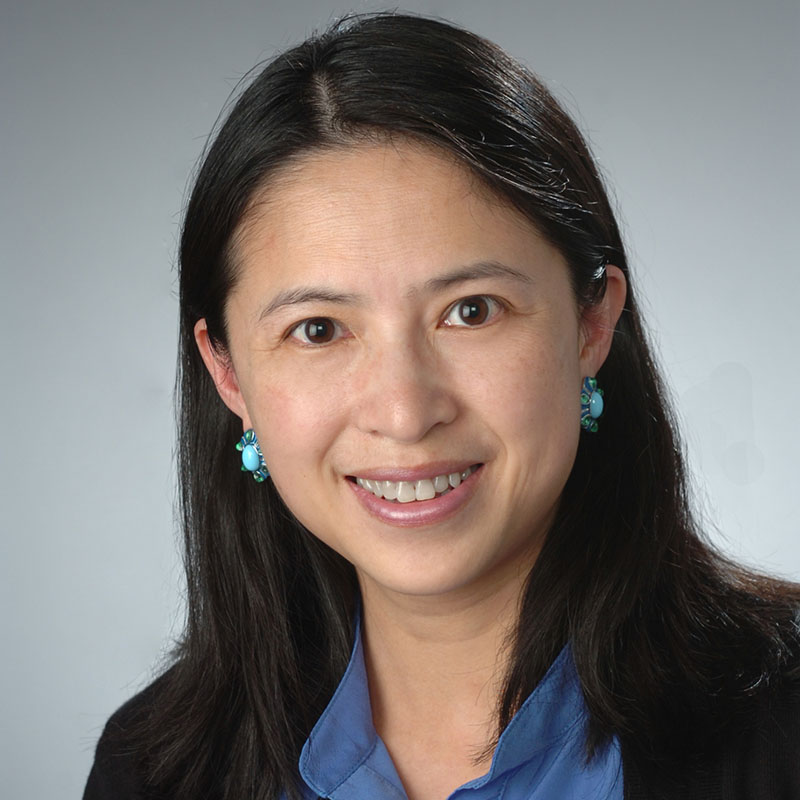
Polina Kozyreva, a doctoral student in Electrical Engineering and Computer Science Professor Endadul Hoque’s research group, was selected to receive a scholarship from the Computing Research Association (CRA) to attend the 2026 CRA-WP Grad Cohort Workshop, held March 5–7 in Seattle, Washington.
The CRA-WP Grad Cohort Workshop is a multi-day event designed to provide graduate students in computing with mentoring, networking, and professional development opportunities, equipping participants with the skills and connections needed to navigate graduate school, advance in research, and build successful careers in computing.
Kozyreva’s scholarship covered registration fees and travel expenses as part of recognizing her potential as an emerging researcher in the field.
“Attending the CRA-WP Grad Cohort gave me the opportunity to connect with people who were willing to share their experiences and offer advice regarding the PhD journey ahead,” said Kozyreva. “I also had the chance to meet with a mentor who is a senior researcher at a government lab, and my session with her helped me set additional goals that will guide me as I navigate and work toward success in my research. Finally, the abundance of resources, talks, and presentations taught me many valuable lessons that I am eager to apply in my life, not only as a PhD student but also as a professional pursuing a career in computer science.”
Alex K. Jones is the Klaus Schroder Endowed Professor and Chair of Electrical Engineering and Computer Science at Syracuse University. He previously served as a Program Director and Deputy Division Director at the National Science Foundation and was a professor for over two decades at the University of Pittsburgh. Since joining Syracuse in 2024, he has helped secure $4.5 million in research funding in AI hardware acceleration, semiconductor design, and workforce development. He is a Fellow of the IEEE Computer Society. He thanks Paulo Shakarian, the KG Tan Professor of AI at Syracuse University, for his comments on this piece.
For years, the formula seemed simple: get a computer science (CS) degree, walk into a high-paying job, and watch your career take off. It was the kind of promise parents could get behind and students could count on, but that story is changing. Uncertainty in the job market is partially to blame, but we also cannot ignore the rise of AI. The cumulative result has made it more difficult for new graduates to land the kinds of coding positions that used to feel almost guaranteed.
The hiring slowdown is real, and it is not just because companies are cutting budgets. Large language models and other AI tools can now do much of the work that used to go to entry-level programmers. In the past, the tech industry could absorb wave after wave of new CS grads because every product and service seemed to need more software. When that demand dipped, we could point to earlier disruptions like the switch from mainframes to personal computers, the outsourcing rush after the dot-com bust, and the rise of cloud computing and say, “We’ve been through this before.” But this time it feels different. The disruption is arriving alongside something new: a flood of people who can code.
Over the past decade, universities have expanded CS programs at a record pace. Bootcamps promised to turn novices into developers in months. Coding became part of the standard toolkit for engineers, scientists, and researchers. That was good for broad technical literacy, but it also meant the job market was suddenly saturated with candidates with programming skills. Now that AI can write, debug, and optimize code on demand, that skill is no longer a differentiator. Yet the big companies are not finding that AI solutions are revealing a substantial cost savings. Why?
Computer science has never just been about coding. AI itself is a product of computer science. It is a discipline built on algorithms, data structures and the architecture of complex systems. People who understand these foundations are in a position not only to use AI tools but to improve them, adapt them, and build the next generation of breakthroughs. Computer science also intersects with other technical areas like quantum technologies, semiconductors, the Internet of Things, and wireless communications. Technologies succeed where theory, software and hardware meet, where computer science principles beyond coding are necessary, and the demand for talent is still strong.
Wireless communications is a great example, blending theory, protocols, and real-world system design. Fifth-generation wireless, or 5G, is an enabler of AI’s computing power in the cloud to connect instantly to the phone in your pocket. The wireless network is not just a backdrop for AI; it is the stage. Building it, securing it, and making it faster takes expertise that cannot be replaced with a few lines of generated code and is a place where job opportunities remain plentiful.
Deep domain knowledge can even make AI better. Some researchers are combining symbolic reasoning with machine learning to preserve complex concepts that traditional AI tends to lose. Others are adding “sanity checks” so systems can spot their own bad logic. And there are big, open problems on which only humans can lead the charge: reducing the energy footprint of large models, addressing bias in training data, and determining when and where AI should be trusted at all.
The problem is that current employers have created a false equivalency between computer science and coding. This is why the design of a CS program matters. Degrees that focus narrowly on coding risk leaving graduates exposed to job insecurity. A better approach is to combine a broad foundation across computing with the chance to go deep in a field where demand will last, like AI, wireless, cybersecurity, quantum computing and others. At Syracuse University, students have the full range of computer science at their fingertips with the opportunity to explore one of these high-impact areas. This breadth gives them flexibility. The depth gives them an edge.
A good degree program is not just a hedge against automation. It is a way to shape the future. The fundamentals of understanding context, solving problems, and thinking critically still determine who succeeds. “Just learn to code” is not a recipe for career security anymore. You can get that here at Syracuse, or almost anywhere in the country, if you want it. But, that’s not the CS degree we strive for or recommend to our students. We teach the discipline, for sure, but that’s not our target differentiator. We want our graduates to see a pathway to success through skills like coupling their foundational knowledge with adaptability, continuous learning, and how to see opportunities where others see threats.
The value proposition for computer science has not vanished. It has evolved. It is not something coding bootcamps can replicate, nor is it something AI can replace. A good CS degree does not just prepare students for the jobs of today, it provides them the skills to be ready for the jobs of tomorrow. A great CS degree prepares their graduates to design the jobs of tomorrow.
Syracuse University’s College of Engineering and Computer Science and the School of Information Studies (iSchool) have been ranked 26th for Best Online Graduate Information Technology Programs by U.S. News & World Report for 2024.
Syracuse University moved up eight spots in the rankings from 2023.
In the rankings for Best Online Graduate Information Technology Programs for Veterans, Syracuse University was ranked 14th, an increase of one spot from 2023.
Electrical Engineering and Computer Science (EECS) Professor Farzana Rahman was honored by the Technology Alliance of Central New York (TACNY) as the organization’s College Educator of the Year at the 23rd Celebration of Technology awards banquet in October 2023.
Rahman joined the College of Engineering and Computer Science in the spring of 2020. Since then, she has taught critical core gateway courses involving foundational knowledge of the computing discipline to all three majors of the EECS department. Central to her teaching approach is an active learning style, which pairs hands-on programming exercises with challenging projects that demand students to cultivate skills in problem-solving, debugging, and software engineering in general. She is dedicated to creating equitable education and learning experiences for all students by providing inclusive, educational opportunities that support women, genderqueer, non-binary, underrepresented and minority (URM) students.
As a diversity spokesperson of the department, Rahman spearheads various DEIA initiatives. One of her most impactful initiatives is Research Exposure on Socially Relevant Computing (RESORC), funded by Google Research, to increase both the exposure and visibility of undergraduate research at EECS. With more than 200 students participating in RESORC over the past 3 years, she has designed and facilitated multiple virtual workshops to help undergraduate students develop computing identity, research skills, practice teaching strategies, and explore research topics in the computing and engineering domains. The project formalizes best practices in research experiences to reach more students, particularly women from historically excluded groups and prepares them for graduate study.
Rahman’s research and mentoring initiatives have been supported by many funding agencies, including the National Science Foundation, Google, NCWIT, Google TensorFlow, and the American Association of Colleges and Universities to develop effective pedagogy in undergraduate computer science (CS) education. She’s won the NCWIT Extension Services (NCWIT ES-UP) award, ABI Systers PIO (Pass-It-On) award, Google ExploreCSR Award, and NCWIT educator award. She published numerous peer-reviewed articles in venues, including the Special Interest Group of the Association of Computing Machinery (ACM SIGCSE), IEEE RESPECT, and IEEE Frontiers in Engineering Education, the American Society for Engineering Education (ASEE) conference.
Her overarching research interests are:
To explore the impact of active learning pedagogy in undergraduate computing courses.
The effectiveness of online and inverted classrooms.
How different pedagogical practices can increase underrepresented student performance in computing courses.
How effective re-entry pathways can facilitate the transition of returning women in computing-based discipline.
Within weeks of arriving in London, computer science student Jovanni Mosca ’24 knew his semester abroad would be a life changing experience. He was living just outside central London, had traveled to multiple other countries in Europe and getting an up-close look at how global companies operate.
“We have a global major since we are creating software and technologies that spread around the world but we often don’t have knowledge of all the context that our work is going to be part of. So this is a valuable experience,” says Mosca.
A program uniquely designed for Syracuse University computer science students allows them to take courses they need in London and stay on track for a four year graduation. Kwaku Amofah-Boafo ’24 was thrilled to be taking his required classes mixed in with experiences across the United Kingdom.
“The best part of Study Abroad is interacting with the city,” says Amofah-Boafo. “Seeing that my major is computer science, visiting these places has given me the opportunity to see if I want to work abroad or work oversees in the future.”
Syracuse University’s London Center is based out of Faraday House in the West End. Students can take classes there and receive support from Syracuse University faculty and staff.
“I feel like Faraday House is your own little home space in London,” says Mosca. “Having the diverse faculty is cool. They are people of all different backgrounds who are either working in industry or teaching.”
“The classes are smaller, you interact more and I think that leads to better experiences in the classroom and the work you do,” says Amofah-Boafo.
The Syracuse Abroad computer science program is London is designed for the fall semester of a student’s junior year.
“Getting a chance to see what it is like to live here on a day to day basis and see people working has made me think about it in the future,” says Amofah-Boafo.
“It is an opportunity that will change your life, how you look at the world and it is invaluable,” said Mosca.
Yuzhe Tang, associate professor of electrical engineering and computer science in the College of Engineering and Computer Science, and his research team have been awarded a grant by the Ethereum Foundation for research to advance the Ethereum blockchain ecosystem. This grant will support Tang and his Ph.D. students in designing, developing, and evaluating the security hardening code to protect the Ethereum network stack.
Ethereum is a network made up of several communities and toolsets that allow users to communicate or make transactions with digital money. Since the network is decentralized, users are in complete control of their data and what’s being shared, so they don’t need to give up any personal information – all users need to access Ethereum is an internet connection.
Denial of service security is critically important to the Ethereum blockchain ecosystem, and the research will explore ways to protect the Ethereum network from cyberattacks, involving systematic vulnerability discovery using applied formal methods. As cyber criminals attack networks like Ethereum and security concerns grow, Tang believes this research could have a lasting impact on the current landscape of cybersecurity and blockchain platforms.
“With this grant, we can help solve some of the most critical problems in the real world. We expect to continue developing code merged into Ethereum codebase,” Tang says. “I am most excited about making real-world impacts out of the research works from my group.”
Electrical engineering and computer science Professor Qinru Qiu has been named a Distinguished Member of the Association for Computing Machinery (ACM), the world’s largest and most prestigious association of computing professionals.
Qiu was selected by her peers for her outstanding scientific contributions to computing. The ACM Distinguished Member program recognizes up to 10 percent of ACM worldwide membership based on professional experience and significant achievements in the computing field. To be nominated, a candidate must have at least 15 years of professional experience in the computing field, five years of professional ACM membership in the last 10 years and must have achieved a significant level of accomplishment or made a significant impact in the field of computing, computer science, or information technology. A Distinguished Member is expected to have served as a mentor and role model by guiding technical career development and contributing to the field beyond the norm.
“This is an important and well deserved honor for Dr. Qiu,” said Engineering and Computer Science Dean J. Cole Smith. “Throughout her career she has been an innovator in the field of green computing, and I have been fortunate to learn about some of her contributions in brain-inspired neuromorphic computing techniques. In addition to her brilliant scholarly innovations, the College of Engineering and Computer Science has also benefited from her very significant leadership and instruction efforts. Dr. Qiu is thoughtful and reliable in every component of her job, and we are thrilled to see her honored by the ACM.”
The Caspar Bowden PET award is presented annually to researchers whose work makes an outstanding contribution to the theory, design, implementation, or deployment of privacy enhancing technology. The judges said Fioretto’s team received the award for advancing the understanding of differential privacy and fairness trade-offs in decision making, providing a theoretical framework and exploring a highly relevant practical problem.
“I am honored for our work to receive this prestigious award which recognizes influential research in privacy-enhancing technologies, especially for a project that means so much to me and my group,” said Fioretto.
The awarded paper was published in the International Joint Conference of Artificial Intelligence (IJCAI) in 2021. It looks at the role of a privacy-enhancing technology (called differential privacy) in the context of Census data release for decision tasks with profound societal benefits. Some of these benefits may be the allocation of funds and resources, the distribution of therapeutics, or the assignment of congressional seats. Fioretto’s research team showed that differential privacy may induce or exacerbate biases and unfairness in many classes of decision processes and proposed a theoretical framework to audit and bound these fairness impacts.
“I am very honored and humbled to receive this prestigious award. This is one of my favorite projects and it involved a lot of hard work. Our results suggest that the US government might need to consider ethical consequences when applying differential privacy techniques to protect our privacy,” said doctoral student Cuong Tran, who was one of the authors of the paper. “I am also grateful to my advisor, collaborators, friends and staff from the electrical engineering and computer science department for helping us push this work into fruition.”
One of the main contributions of their work was to examine the roots of the induced unfairness as well as proposing guidelines to mitigate the negative fairness effects of the decision problems studied.
“I am also happy to see that the analysis proposed in our work has inspired a line of follow-up works in the field of privacy-preserving machine learning to understand why private machine learning algorithms may induce or exacerbate disparate impacts,” said Fioretto. “We are continuing our efforts in this area and are currently working with policy-makers to better understand when and how our solutions may be adopted. I am very excited to see how this direction evolves and look forward to the efforts that our community will make to build better tools to address these fairness issues in privacy-preserving processes.”
Electrical engineering and computer science professor Fioretto has received an NSF CAREER Award to aid in the resolution of challenging optimization problems using machine learning.
Syracuse University’s School of Information Studies (iSchool) and the College of Engineering and Computer Science have been recognized as No. 13 in the rankings for Best Online Graduate Information Technology Programs for Veterans and have been ranked No. 24 for Best Online Graduate Information Technology Programs by U.S. News & World Report for 2022.