Five Questions with IBM Senior Vice President Bob Lord ‘85

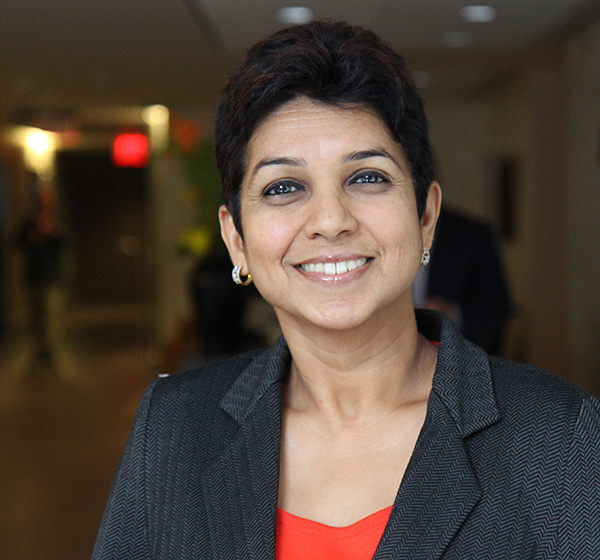
IBM Senior Vice President Bob Lord

2021 Engineering and Computer Science convocation speaker Bob Lord ’85 is IBM’s Senior Vice President, Worldwide Ecosystems.

He is focused on ensuring the success of IBM customers, partners and developers using the company’s hybrid cloud and AI software as well as The Weather Company, which is an IBM business.

At the center of Bob’s work is a commitment to the open source community. He is responsible for IBM’s participation and leadership in dozens of open source communities; contribution and donation of open source code; and overall industry advocacy. A prime example is Call for Code, which Bob launched in 2018 to give developers and problem solvers access to IBM tools and technologies as a means to solve global, societal challenges. Since launch, over 400,000 developers and problem solvers from over 179 nations have built solutions for an immediate and lasting impact in society.

We asked Bob five questions about his experience at Syracuse and advice for current undergrads:

How did you know Syracuse University was the best place for your undergraduate degree?

From the moment I stepped on campus nearly four decades ago, I knew Syracuse was the place for me.

Without question it was the perfect undergraduate environment because it provided so many opportunities for me to discover what I was most passionate about. I wasn’t pigeonholed into one area of study at the tender age of 18, but rather was encouraged to take advantage of the many options available at SU. And without that breadth of exposure, who knows… maybe instead of speaking to new graduates of the College of Engineering and Computer Science this past weekend I might have become a dentist or criminal defense lawyer, which I explored as a freshman. SU helped me realize what I wanted to become, but more importantly allowed me to decide what I didn’t want to do.

What are some of your favorite memories from your time on campus as a student?

There are so many great memories. I’ll start at the beginning: move-in day my freshman year. My dad dropped me at Kimmel Hall alone for the first time in my life. But just as that reality began to set in, my new roommate arrived, followed by a slew of other new students. I quickly realized I was surrounded by people who were going through the same thing as me. That was the day I began to build some of the most enduring friendships of my life… friendships that remain strong to this day and I will be eternally grateful for.

It was also the day that I was first introduced to a population that was much more diverse than my Catholic neighborhood in Northern New Jersey. It was the beginning of my understanding of the power of diversity and inclusion. The more I learned from others, the more critical my thinking became and the more I grew as a human being.

How did your Syracuse experience help you in the early stages of your career?

I credit Syracuse for getting my career started. I was fortunate to be accepted into the engineering co-op program, so in the summers I would work at General Motors as a shift supervisor and engineer. Being immersed in that setting had a powerful effect on me. It validated that I was absolutely on the right career path, exposed me to a high-performance workplace, and gave me the relevant experience and confidence I needed to ultimately land a full-time position as an industrial engineer at Corning Glass Works.

I had countless experiences as an undergrad that equipped me to succeed in my first job and that I draw upon to this day. For instance, thanks to the rigorous and challenging course load that had me in Bird Library so much, I developed the skill of managing massive volumes of work, prioritizing what required immediate attention and developing a systematic approach to completing assignments.

What are some of the lasting influences Syracuse University has had on you?

That’s easy. I met my wife of 29 years, Robin, at Syracuse. Talk about a lasting influence! Both of my daughters also went to SU, and in fact my youngest graduated this weekend with a dual degree from the Falk and Whitman schools. I suppose you could say orange runs through the Lord family and I wouldn’t want it any other way.

I also attribute much of my development as a person and as a leader to what I learned during my formative years at Syracuse. It’s where the seeds of what I now refer to as a “growth mindset” were planted – something I strive to embrace in both my personal and professional life. It can be summarized by three core tenets:

First, be a problem solver, not a problem explainer. The world doesn’t need more people to talk about the problems we’re faced with; we need people who will take action. This was ingrained in me at the College of Engineering and Computer Science, where we were presented with problems and held accountable to finding solutions. And it’s why I’m so passionate now about initiatives like Call for Code.

Second, learn it all, don’t know it all. At Syracuse, I got a healthy dose of humility early on, and it became quickly apparent that I had SO much to learn. Once I accepted that, I experienced exponential growth, and I’ve committed myself to being a perpetual student to learn all that I can.

Third, be open and transparent. Some of the best development of my life has come from constructive criticism. It’s something I was no stranger to at Syracuse and I’ve found that accepting feedback as helpful guidance has gotten me a lot further than being defensive and viewing it as an attack. On the flipside, as a manager I take care to provide candid feedback to those around me so they may also grow.

What advice would you give to current engineering and computer science students?

I cannot emphasize enough to current students that they have a golden opportunity. They have the ability to take advantage of all this world-class institution has to offer, from renowned educators and facilities, to innovative programs and activities, and an array of courses and experiences. Seize that opportunity!

Go beyond your comfort zone, keep an open mind, and challenge yourself. Take electives that force you to learn something completely different and trigger another part of your brain. Explore ways you can get exposure to the industry’s best and brightest, like through the Blackstone LaunchPad & Techstars. Join clubs and pursue activities that pique your interest or that you’re even just mildly curious about because it may ignite a passion you didn’t know existed.

All of these things will contribute to the quest I encourage you all to pursue: to find your purpose, and to begin charting a path to develop skills you can apply in service of that purpose.

This is perhaps the only time in your life you’ll be able to partake in such a wide range of experiences in a condensed period of time. Don’t let it pass you by. Trust me, you’ll find yourself frequently drawing upon those experiences for years to come.

A Lifetime of Service: Remembering Dean Emeritus Bradley Strait ’58, G’60, G’65

Dean Emeritus Brad Strait

For many years Dean Emeritus Bradley Strait ’58, G’60, G’65 led the Syracuse University academic procession at Syracuse University’s commencement as the Mace Bearer. The Mace Bearer is a role that recognizes the importance of the University’s mission as an education institution. It was also a role that symbolized Strait’s relationship of more than 60 years with the College of Engineering and Computer Science, helping lead students, faculty, research and academic programs forward.

“Brad exemplified what it means to be Orange.  I do not know anyone else who commanded such complete respect across campus than he did,” says electrical engineering and computer science Professor Shiu-Kai Chin ’75, G’78, G’86.

Strait passed away in his hometown of Canandaigua, NY on May 6th, 2021. He leaves behind an unparalleled legacy as a student, professor and as dean of the College from 1981-1984 and again from 1989-1992.

He came to Syracuse University after serving in the U.S. Navy from 1951-1955 as an electronics technician. After being discharged, he studied electrical engineering. Syracuse University Life Trustee Charles Beach ’58, G’67 was his roommate and fraternity brother in Phi Gamma Delta. They remained close friends for the next 67 years.

“He really bled orange. He loved Syracuse University, he loved teaching and loved his students,” says Beach.

While he was an undergraduate student, Strait met Nancy Brown, who was a student in the University’s College of Fine Arts. Brad and Nancy married in 1957 and graduated in 1958. They moved to the Syracuse suburb of Jamesville where they raised their children, Andy and Martha. Brad and Nancy later established the Jamesville Museum which collected important pieces of the town’s history and memories of its neighbors.

After graduation, Strait worked briefly at Eastman Kodak before returning to Syracuse for a master’s degree and his doctorate. He then became a faculty member known for taking extra time to work with students and young researchers and making sure they were successful in all aspects of their life, not just the classroom.

He was a member of the university’s world-renowned electromagnetics research group and became chair of the then department of electrical and computer engineering in 1974. One of his early hires was current electrical engineering and computer science Distinguished Professor Pramod K. Varshney.

“Brad did a marvelous job in his role as the leader of a premier department,” says Varshney. “As department chair, he established a close relationship with the Rome Air Development Center (now Air Force Research Laboratory) resulting in significant research funded by US Air Force at Syracuse University.”

“Brad was my first academic advisor when I came to SU in the Fall of 1971.  He remained a near and dear mentor throughout my academic career,” says Chin. “His advice to me was always straightforward and direct. Always do what is best for the academic program, always teach a course even if you are in a leadership role and remember that the people you see on the way up are the same people you see on the way down.”

Strait went on to serve as the Dean of the College of Engineering and Computer Science from 1981-1984 and 1989-1992. He was a relentless advocate and recruiter for Syracuse University, always looking to bring the best students and faculty to Central New York.

“Brad was one of the main reasons why I came to Syracuse University as a faculty member,” says mechanical and aerospace engineering Professor Ed Bogucz. “Brad’s personality was a big factor.”

In addition to recruiting for academic roles, Strait was always recruiting for the College’s softball team and a weekly basketball league.

“Many of the players, including myself, were young people who looked at Brad as a role model of how to live an active and fulfilling life balancing family, employment, faith and active recreation,” says mechanical and aerospace engineering Professor Alan Levy. “On the court Brad was a fierce competitor and, like all of us, he liked to win. But he was gracious in victory and defeat. Brad played in the game until he was about 80 years-old and he never lost his spark racing up and down that full court.”

Strait took pride in building connections across the university through softball games played against other colleges and departments.

“A lot of relationships were cemented by getting to know people during those games,” says Beach.

Always looking forward, Strait expanded collaborations with industry partners and worked to connect them with current research activity at Syracuse University. During his tenure as Dean, New York State designed the Centers of Advanced Technology (CAT) program and under Strait’s leadership the University received one of the 6 CATS. To make sure the center got off the ground, he left his Dean position and became the Founding Director of the Computer Applications and Software Engineering Center (CASE).

“He was instrumental in getting state funds to build the Center for Science and Technology (CST). Without his vision of CASE and his leadership, CST would not be built,” says Varshney. “CASE continues to flourish even today as a preeminent center that champions economic growth in the state of New York via its outstanding research activities with New York State.”

“When I became Dean of Engineering and Computer Science, I developed the concept for the Syracuse Center of Excellence following the approach that Brad had pioneered for the CASE Center,” says Bogucz.

Strait retired but always remained an active member of the Engineering and Computer Science family, serving as Dean Emeritus. He and Nancy also established the Bradley J. and Nancy B. Strait Scholarship to assist future generations of Syracuse University students.

He leaves behind a legacy of supporting and mentoring generations of young engineers and computer scientists. During a devoted life of service to Syracuse University, he provided guidance and encouragement at a crucial point in countless lives.

“I am forever blessed because he was part of my life. Those of us who are left must do our best to help the others who come after us like Brad did,” says Chin “Every time I am in the Dome during Commencement. I can still see Brad faithfully leading the procession as Mace Bearer guiding us to where we need to be.”

A memorial service at for Bradley Strait at Hendricks Chapel is planned for June 17th, 2021 at 5:00pm. A livestream of the event will be available.  

Mechanical and Aerospace Engineering Research Team Receives $1.5 Million NSF Grant to Establish Research Center for Solid-State Electric Power Storage at Syracuse University

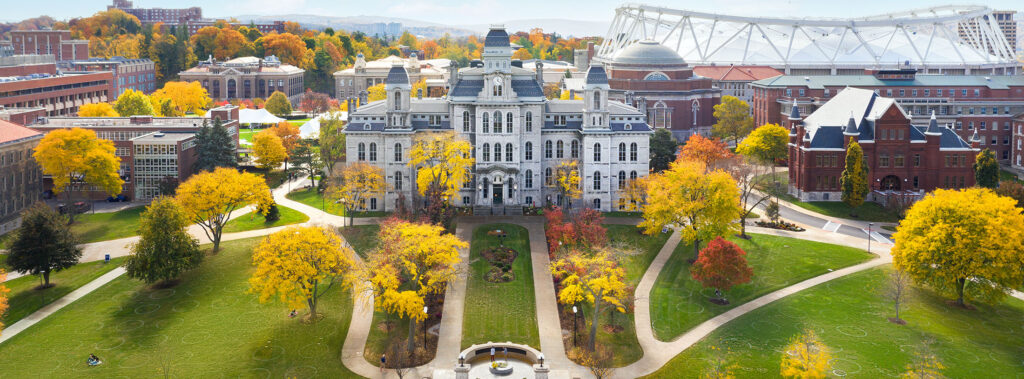
Aerial View of Syracuse University

Mechanical and aerospace engineering Professor Quinn Qiao and a research team from the College of Engineering and Computer Science received a $1.5 million award from the National Science Foundation (NSF) and industry members to develop an Industry/University Collaborative Research Center (IUCRC) for solid-state electric power storage with a site at Syracuse University. Syracuse University will partner with South Dakota School of Mines & Technologies and Northeastern University to build this NSF-sponsored center. The center will focus on developing eco-friendly, safe, and economically feasible all-solid-state energy storage technology for portable and medical applications, automotive industry, centralized and decentralized electric grids, military applications, and energy security.

Potential research projects will include materials design and testing with particular focus on interface engineering, solid electrolytes development, electrode materials synthesis, advanced mathematical modeling, and in-situ imaging to characterize performance, manufacturing process testing, battery system development, and fabrication of intrinsically combined solar/battery devices. In addition to the study of traditional materials, the center will also explore those relevant to earlier stage design and development of promising newer glass ceramic materials.

“Energy storage is critically needed to deploy renewable energies such as solar and wind, as well as development of electric vehicles. Energy storage allows clean energy to be available when sunlight is unavailable at night or cloud days, or when wind is not sufficient,” said Qiao. “Current lithium batteries typically use liquid electrolytes that may lead to safety issues from explosions or fires.  This NSF IUCRC will provide Syracuse University a great platform to work with industry partners, which offers numerous opportunities for our faculty and students. Industry members will also help to guide the research directions and projects that will lead to commercialization of solid-state batteries. This center will also help us to build the Cluster for Materials for Energy Applications.”

The center will work closely with industry partners in New York, across the United States and globally to develop high capacity, fast charging, safe and cost-effective solid-state batteries. The batteries developed by the center will be aligned with the energy storage set by the State of New York: 1,500 Megawatts (MW) of energy storage by 2025 and 3,000 Megawatts (MW) by 2030.

Qiao will be the principal investigator and site director for the NSF award. Mechanical and aerospace engineering professors Jeongmin Ahn, Bing Dong, Shalabh Maroo, Weiwei Zheng, Teng Zhang and Jianshun Zhang will be co-co-principal investigators or senior investigators.

“Mechanical and aerospace engineering faculty have a tradition of conducting a quality research in energy systems,” said mechanical and engineering department chair Young B. Moon. “With the establishment of this center, the faculty plans to elevate the research to the next level of international prominence working with other faculty members at Syracuse University.”

“We are very excited about this new IUCRC center,” said Associate Dean for Research and Graduate Programs Dacheng Ren. It extends our established strength in energy research and elevates it to a higher level. Besides research innovation, the center also brings industry insights and new training opportunities for our students.”

“This center positions Syracuse University on the leading edge of solid-state power storage. It is not only a fast growing field but an increasingly important one as we look to meet the need for safer, higher capacity batteries,” said College of Engineering and Computer Science Dean J. Cole Smith.

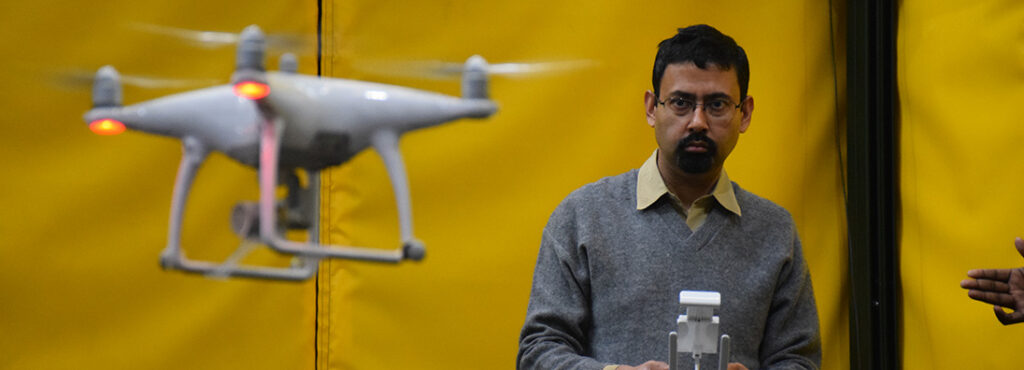
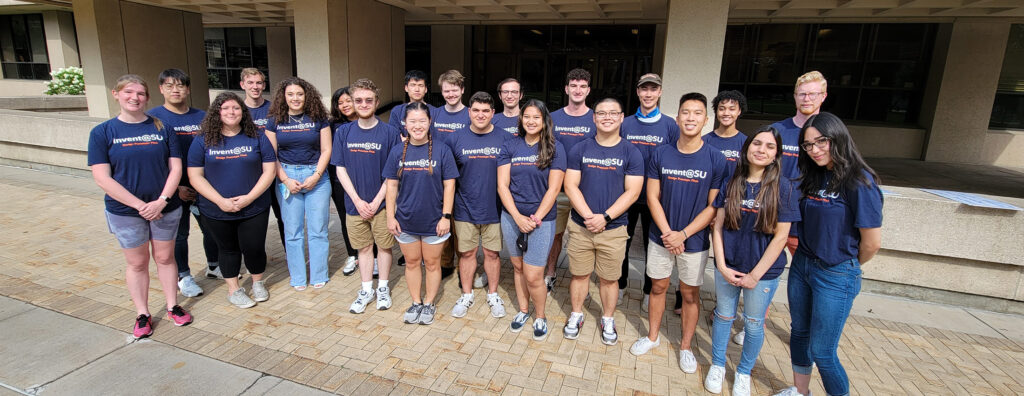
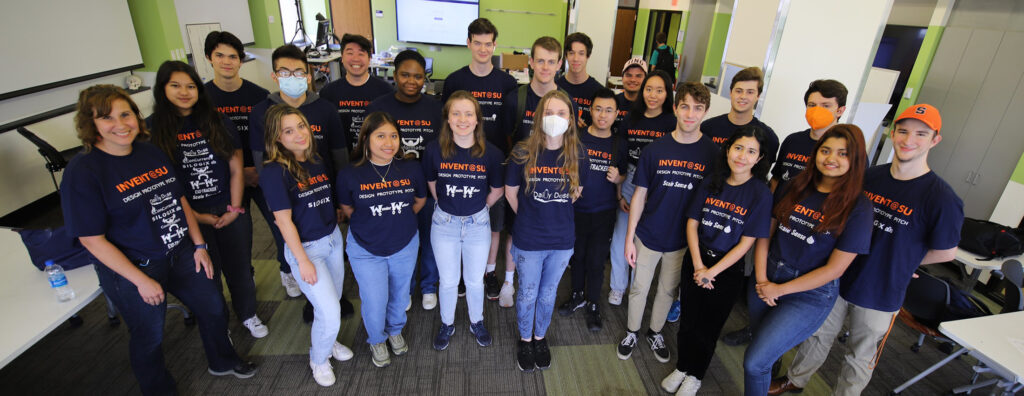
Wearable Dehydration Monitoring Device Takes First Place at Invent@SU 2021

Students in the Invent@SU Program

For the first few weeks of Invent@SU, physics major Paul Franco ’22, aerospace engineering student Zach Stahl ’23 and computer science student Anthony Mazzacane ’24 were not always sure their concept would work out. They had identified a clear problem – 80% of NCAA athletes had suffered from dehydration but finding a solution was not simple. They wanted to design a wearable device that could monitor an athlete’s hydration level so coaches and trainers would have better information and keep athletes safe – but would also need to prove their invention worked.

“We knew the scientific principle worked, but in the first few weeks we had logistical problems with the prototype,” said Franco.

As they pushed forward, they leveraged their different skill sets to solve problems with sensors, data collection and a prototype model.

“Being interdisciplinary forces you out of your comfort zone in a really good way,” said Mazzacane.

“Sweatration” was one of seven interdisciplinary teams of undergraduate inventors competing in the six week Invent@SU program. Before the first week of the program, faculty help form three-person interdisciplinary teams that balance different skill sets. Each team comes up with a concept for an original invention, research existing patents to make sure their idea is unique, develop a prototype and pitch it to weekly guest evaluators before “Shark Tank” style final judging at the end of week six.

The Sweatration team was concerned that initial evaluators were skeptical and knew they needed to back up their idea with hard data. They also met with a Syracuse University athletic trainer to gain their input.

“After every time we pitched, I wanted as much feedback as we could get,” said Franco.

The trainer was very supportive of the idea and didn’t believe there was anything like it that existed currently. As their pitch improved, the technical challenges were also being overcome. During a week five test of their prototype at the Barnes Center, the team saw it was collecting meaningful data – and their prototype could reliably show when the wearer was getting dehydrated.

“We had improved the prototype for a better fit and better connections for the technology inside,” said Stahl. “When I saw it was delivering data and consistently indicating dehydration I was thrilled.”

The notable alumni, entrepreneurs and innovators who served as final judges awarded the Sweatration first place and a $7500 prize. They plan on continuing with their invention and will work with both the Blackstone Launchpad in Bird Library and the Innovation Law Center as they move forward.

Second place at Invent@SU went to Ambiflux – a device that can both monitor asthma conditions and deliver medication.

“It felt good that we were rewarded for all the time and energy we put into this,” said bioengineering and neuroscience major Victoria Hathaway ’22. “It is an important device that is needed for a real cause.”

“To see that the judges saw what we saw – it was very gratifying,” said computer engineering student Aidan Mickleburgh ’23. Mickleburgh is also in the H. John Reilly Dual Engineering/ MBA program.

“It felt nice they appreciated the way all the concepts and elements came together,” said chemical engineering student Trinity Coates ’24.

The third place went to Sense-A, a monitoring and alert device that can help people caring for a family member with Alzheimer’s Disease.

“It was a great experience, different from anything else I have done in college,” said computer science student Hong Yang Chen ’22. “Building a physical prototype was a great challenge.”

“Good feedback from judges and evaluators was very helpful and they saw the difficulties caregivers currently face,” said chemical engineering student Simran Lakhani ’22.

“We are definitely going to move forward with this and work with Blackstone Launchpad,” said biomedical engineering student Gabriela Angel ’21 G’22.

Honorable mention at Invent@SU went to Glisten. They designed a device aimed at helping people monitor their dental health at home and provide pre-diagnostic information to a dentist.

“To be able to research, design and build a functioning prototype in six weeks is intense, but the expertise of the faculty and the evaluators made it possible,” said bioengineering student Bianca Andrada ’22.

“Our team was a good balance of different skills and perspectives,” said industrial and interaction design major Ahn Dao ’23.

“We have a passion to keep the world smiling,” said biology student Justin Monaco ’21 G’22.

Invent@SU was sponsored by Syracuse University Trustee Bill Allyn G’59 and Janet “Penny” Jones Allyn ’60, Dr. Deborah L. Pearce and William J. Sheeran ’60, G’63, G’66, Matthew Lyons ’86, Haden Land G’91 and Cathy Land, Ralph Folz ,90, Michael Lazar G’65 and Avi Nash G’77. For more information on the program, you can visit invent.syr.edu.

Spring 2021 Engineering and Computer Science Dean’s List

In recognition of superior scholarship, the following students have been entered on the Engineering & Computer Science Dean’s List for Spring 2021.

To be eligible for Dean’s List recognition, the minimum semester grade point average must be 3.40 or higher, must have earned a minimum of 12 graded credits and must have no missing or incomplete grades.

College of Engineering and Computer Science Spring 2021 Dean’s List

Aerospace Engineering 

Zar Nigar Ahmad

Juanitta Acheampomah Bekoe

Justin Douglas Blowers

Madeline Constance Brooks

Richard L Bruschi

Jakob Samuel Bryant

Nishkreenchan Chowdhury

Owen P Clyne

Nicholas Daniel Crane

Brian James Cronin

Ryan Demis

Aleksandar Dzodic

Kaleb Jonah Eddy

Hans-Christian Esser

Jacob Fastov

Kassidy Fields

Christian Scott Fitzgerald

Benjamin Daniel Gerard

Alexandre J Gill

Sareta Rose Gladson

Jacob D Gomez

Hali Morgan Goodwin

Zachary William Haas

Aidan Hoff

Sydney F Jud

Hunter John Adam Knarr

Trevor Anthony Knight

Zachary Andrew Kubala

Thomas Matthew Lane

Isaac Alan Lehigh

Xinyu Liu

Powers Craig Lynch

Noah Martel

Maxwell Joseph Martin

William Armstrong Martin

Phillip Anthony Mazany

Mariana C McManus

Gian Ettore Mecca

Alexander T Metcalf

Romeo Michelson

John P Michinko

Vincent Anthony Miczek

Kendra Teresa Miller

Paul Robert Mokotoff

Evan Gregory Moore

Brendan Pierce Murty

Mark Namatsaliuk

Jarod I Okamura

Daniel Oluwalana

Randall McGinnis Osborn

David Dang Pham

Madeline G Phelan

Logan D Prye

Nicholas Christopher Richard

Brandon Walker Riley

Kip Risch-Andrews

Emily Muriel Rivard

Tracey Josephine Rochette

Andrew Douglas Rockafellow

Gregory Joseph Ruef

William J Saueressig

Fred Evan Schaffer

Justine John A Serdoncillo

Vraj Shah

Prabha Singh

Gregory C Slodysko Jr

Amanda Marie Stafford

Zachary Michael Stahl

Christopher Stawarski

Ethan J Stocum

Marco Svolinsky

Maria Tarulli

Richard A Tedeschi

Anthony R Tricarico

Cody Joseph VanNostrand

Nicklas M Vinci

Mason Alexander Weber

John T Whitney

Aliza Marie Willsey

Cameron M Woodbury

Melissa Yeung

Bioengineering 

Samantha Abate

Jordyn Danielle Abrams

Bianca Louise Andrada

Gabriela Angel

Colin J Babick

Eric A Benaroch

Paige Bencivenga

Ailla Frances Bishop

Anna Mae Brunson

Zeynep Sue Cakmak

Britnie Jean Carpentier

Jade Ashlee Carter

Elizabeth Ann Clarke

Mya R Cohen

Lukas Cook

Shane A Corridore

Linzy M Dineen

Anthony Mark Dragone

Alejandro J Durand

Jillian P Durand

Bailey M Felix

Mia-Marie Fields

Akweshie A Fon-Ndikum

Gabriela Renee Gonzalez-Beauchamp

Skyla Gordon

Grace Haas

Lauren Elizabeth Hamilton

Victoria Li Rui Hathaway

Brenna Henderson

Avinash Jagroo

Madeline Jones

Simran Karamchandani

Gabriel Khan

Mohamed F Khan

Sara Anne Leonardo

Isabelle S Lewis

Trevor Daniel Amnott Liimatainen

Xinyan Lin

Alejandra Eugenia Lopez

Ethan L Masters

Aelish McGivney

Ian G McHugh

Caitlin R Mehl

Lindy M Melegari

Connor G Mulligan

Hannah V Murphy

Alexander Patrick Musselman

Jeffrey Ng

Jonathan Ngo

Mark Nicola

Nicole E Nielsen

Matthew Evan Orlando

Megan Isabel Perlman

Natalie Marie Petryk

Connor Preston

Beatrice Elizabeth Reilly

Lillian Kilmer Rhuda

Gavin David Richards

Rebecca A Schaefer

Brielle L Seidel

Alyssa Shelburne

Adam M Spadafora

Justin N Stock

Elizabeth Tarami Su

Bearett Ann Tarris

Kimberly Tlayaca

Zhuoqi Tong

Edgardo Velazquez

Carly J Ward

Royce Robert Weber-Pierson

Nathaniel D Wellington

Maximillian Meier Wilderman

Haven M Wittmann

Lauren Margaret Woodford

Rui Xie

Alina Zdebska

Julian Marcus Smucker Zorn

Samantha Zysk

Chemical Engineering

Daud Ansarovich Abdullayev

Paige O Adebo

Keerthivanan Annadorai

Adriana M Archilla

Athena Andrea Basdekis

Lilly Basgall

Sandy Ynhu Cao

Karley M Chambers

Trinity Joy Coates

Olushola Coker

Hao Dai

Dennis Dao

Samantha Esparza

David Anthony Fikhman

Edward Coleman Fluker

Priya S Ganesh

Brent Tadao Gosselin

Hannah Grossman

Avery Gunderson

Oduduabasi James Isaiah

Aiden A Jacobs

Stanley Jimenez

Jake Tyler Jock

Sayf Karim

Laxmi Khatiwada

Adam J Klinger

Simran Dharmendra Lakhani

Gabriel Lipsitz

Nicole Helene Llewellyn

Rawia F A M Marafi

Angela L Martinez

Oliver Mutu

Thomas A O’Brien Jr

Sean O’toole

Fabiana Nohelia Perez

Seth Reed

Ryan Gordon Ryersen

Ivan Yankov Sarbinov

Jacob Matthew Shellhamer

Dakota Alexander Story

Jason Tan

Spencer T Tardy

Megan Varcoe

Briana Nicole Vlacich

Elizabeth M Wall

Connor Andrew Wescott

Melita Zejnilovic

Civil Engineering 

Orges Agolli

Cassie Agren

Anna Rose Arcaro

Nicole Ayora-Gonzalez

Lucas Bellandi

John Blum

Luke S Bonenberger

Arielle Bramble

Matthew Emmet Brewster

Emma Jane Brown

Alycia Joline Bruce

Joli L Cacciatore

Brett M Carney

Trevor Caviness

David Coghiel

Alejandro E Correa

Aymeric P Destree

Thomas Driscoll

Brendan Dwyer

Bradley Charles Frederick

Maraea K Garcia

Stephen Goffredo

Elliane Reut Greenberg

Alyssa Jeannine Griffin

Bensen Gu

Shawn G Gulamerian

Zelin Guo

Matthew Paul Hauser

Qifan He

Catherine E Henn

Maxwell J Karl

Joshua Michael Kaufman

Alexander Gregory Klee

Christopher J Klein

Adam Paul Landry

Abigail G Laschalt

Haben Legesse

Daniel Leyva

Emma Marie Liptrap

Emilija Alise Lizins

Erick Lojano-Quispe

Lluvia Margarita Lopez Garces

John M Mazza

Jessica M McGowan

Amira A Mouline

Mazin F Moya

Marissa R Nicole

Erin E O’Brien

Kevin B Ordonez

Gabriel Jacques Prepetit

Svetislav Radovic

Alexander David Ruppe

Isabella Salgado

Cassie Elizabeth Saracino

Stephanie D Schein

Emma Hayes Schoonover

Juha Wesley Schraden

Ravyn Smith

Caitlin Jane Spillane

Adrian Stiefelmann

Alec Spencer Thompson

Anand Veeraswamy

Christian Viola

Nathan Viramontes

Abigail Meghan Wischerath

Isabelle Wong

Paige H Yamane

Computer Engineering

Chikeluba K Anierobi

Malkiel Asher

Mergim Azemi

Gavin M Beaudry

Kyle J Betten

Jackson Thomas Bradley

Jinzhi Cai

Dynasty Da’Nasia Chance

Yifei Che

Dana Marie Castillo Chea

Guoliang Chen

Hossain Delwar

Xavier Evans

Elizabeth A Fatade

Aidan Robert Harrington

Mehak Jetly

Virkin Jimenez

Benjamin N Johnson

Bikash Khatiwoda

Nicholas Gerard Lee Landry

Jessica K Lat

Matthew B Leight

Jiaxiong Li

Nicholas Kent Magari

Kyle David Maiorana

Isabel M Melo

Nicholas J Mohan

Benjamin Hudson Murray

Jose L Olivera

Jiannuo Pei

Jessica A Reslan

Alfonso E Rivas

Brian Rodriguez

Daniel Rose

Samuel M Rosenthal

Hongyi Ruan

Alexander Segarra

Ritwik Takkar

Shu Wang

Ryan Wolff

Hanyi Xu

Renjie Xu

Ziyun Zhang

Andy Zheng

Computer Science 

Aaron Alakkadan

Sajjad Abdullah Albadri

Kwaku Amofah-Boafo

Giovanna Elizabeth Barsalona

Brian H Belluscio

Dazhi Bi

Maxwell William Hans Bockmann

Joshua Jordan Boucher

Spencer H Bradkin

Bryan Bladimir Bueno Reyes

Bryce Cable

Christopher Manuel Calderon Suarez

Liam M Calnan

Megan J Campbell

Yuecheng Cao

Abby Chapman

Jackie Chen

Runzhou Chen

Siyu Chen

Yixing Chen

Yuhao Chen

Doung Lan Cheung

Season Chowdhury

Konstantinos Chrysoulas

Matthew Cufari

William Stuart Devitt

Ting Dong

Russell Carl Doucet

Nathan B Fenske

Evan Garvey

Grant Thomas Gifford

Brianna S Gillfillian

Brian J Giusti

Justin S Glou

Justin Gluska

Dayong Gu

Tighe Gugerty

Alexander Peter-Anthony Haas

Athanasios Hadjidimoulas

Erika R Hall

Andrew Hamann

Jillian Elizabeth Handrahan

Miranda Rose Heard

Wendy Hesser

Cameron Hoechst

Laurel Howell

Jacob Howlett

Natalie Huang

Xuanye Huang

Nathakorn Jitngamplang

Michael Wesley Jones

Jamed K Kamara

Jaehun Kim

Ekaterina Kladova

Gavin William Kline

Polina Kozyreva

Miksam Kurumbang

Rami L Kuttab

Eric C Lee

Andy Li

Jiaqi Li

Ruowen Li

Arvin Lin

Haochen Lin

Erxi Liu

Jiaming Liu

Jing Liu

Junzhang Liu

Steven Liu

Tiara I Logan

Vikas Gautam Lohana

Cayden Thomas Lombard

Yiheng Lu

Runzhi Ma

Hunter O’Neal Malley

Kanoa Matton

Ryan M May

Anthony Louis Mazzacane

Noah Mechnig-Giordano

Preston Mohr

Thomas J Montfort

Jacob Morrison

Jovanni Nicholas Mosca

Andi Muhaxheri

Paige C Mundie

Krutartha Nagesh

Zoe Anne Neale

Maduakolam Nicholas Onyewu

Maya Ostoin

Daniel Pae

William Anderson Palin

Xiaofeng Pan

Michael J Panighetti

Brian Joseph Pellegrino

Siwei Peng

Anthony Perna

Fiona Colleen Powers Beggs

Akshay Hari Prasad

Shane Michael Race

Lauryn Ashley Rivers

Eric Rodriguez

Sadikshya Sanjel

Jonathan Lee Schwenk

Benjamin William Smrtic

Louanges Essohana Marlene Takou-Ayaoh

Melissa Li Tang

Jonathan Richard Constantine Templeton

Jonathan Ezra Thomas

Kyra Danielle Thomas

Griffin E Timm

Courtney Patricia Tuozzo

Randy C Vargas

Bermalyn Maricel Vicente

Christopher Mark Vinciguerra

Puxuan Wang

Ruobing Wang

Xinyi Wang

Robert Ward

Daniel Weaver

Jonathan Williams

Ethan Wong

Yurui Xiang

Yujie Xu

Chen Yang

Jintao Yang

Jishuo Yang

Stella R Yaunches

Elin J Yaworski

Yian Yu

Yulun Zeng

Chengyuan Zhang

Liaotianbao Zhang

Rixiang Zhang

Weikun Zhang

Zhiyuan Zhang

Hang Zhao

Junjie Zheng

Liuyu Zhou

Xinqian Zhou

Raymond Zhu

Sida Zhu

Joseph Patrick Zoll

Engineering Undeclared

Olivia R Conlin

Michael J McElroy

Electrical Engineering

Minghao Ai

Rebecca Corrine Andino

Tianle Bu

Kevin E Buciak

Yushang Cai

Vincent Alec Camarena

Arianna Maxine Cameron

Yuang Cao

Brendan Robert Ciarlone

Eli Aiden Clark

Nicholas Shawn Connolly

Alex Lev Cramer

Trevonne Davis

Henry C Duisberg

Nicholas Fazzone

Justin P Geary

Matthew R Gelinas

Christopher Gill

Jose I Ginorio

Jack Orlando Guida

Emerson Iannone

Jemma Mallia

Liam Fuller Marcato

Tyler Sean Marston

Zixun Nian  Nian

Kylie Elizabeth Nikolaus

Dylan D Palmer

Julia Pepin

Matthew Piciocchi

Stephen Joseph Rogers

Gilberto E Ruiz

Gabriel E Ruoff

Kayla Ann Saladyga

Jenna Mei Stapleton

Jaime S Sued Jr

Jared William Welch

Ernest C Whitbeck

Abigail Wile

Chongfang-James Xu

Zheyuan Zhang

Environmental Engineering

Ana Cristina Baez Gotay

Luke M Borden

Benjamin R Cavarra

Bessie Chen

Evan James Cibelli

Cambre Rae Codington

Elizabeth Bryant Cultra

Cameron Nicole Edwards

Anna Feldman

Allyson Greenberg

Jessenia Paola Guzman

Brady E Hartnett

Christopher Graham Harvey

Anna M Holdosh

Erica G Jenson

Eva Rose Kamman

Abigail Rose King

Nicholas Colin Axel Kohl

Birch Lazo-Murphy

Audrey B Liebhaber

Samuel Robert Livingston

Carleigh Ann Lutz

Kevin A Lynch

Jiayu Ma

Nicole A Mark

Molly M Matheson

Steph Ricky Millan

Sydney Mitchell

Matthew Edward Nosalek

Scott M Potter

Yongfang Qi

Kaura Yanse Reyes

Jacob Thomas Sardino

Mary H Schieman

Noah Michael Sherman

Husna M Tunje

Jacob M Tyler

Maria Antonia Villegas Botero

Anna Wojcik

Savannah Marie Wujastyk

Yifan Zhong

Qiuyu Zhou

Reilly Zink

Mechanical Engineering

Owyn Phillip Adams

Arfeen Armaghan

Joshua Carl Arndt

Arda Arslan

Rachael O Beresford

Charles Shaw Bowman

Arnaud Buard

Ryan G Burns

Adrian L Caballero

Alexander Joseph Callo

Joseph Timothy Capra

Caleigh J Casey

Rishov Chatterjee

Samuel Joseph Corrigan

Cooper P Crone

David Matthew Denneen

Madeline Doyle

Andrew J Esposito

Cameron Barry Frechette

Elan Fullmer

Clinton Edward Farina Garrahan

Samuel Ryan Getman

Emily Ann Greaney

David M Griffin

Connor Hayes

Zhao Jin

Dong Myeong Kang

Jeremy C Kang

Macauley J Kastner

Daniel Jacob Kenney

Finnian James Kery

Teagan L Kilian

Cherry Kim

Jason T King

Savannah Mae Kreppein

Elizabeth Marcy Kretzing

Trevor D Kroells

Lily Larkin

Peter Le Porin

Honorata Lubecka

Bei Luo

Katherine Elizabeth Macbain

Lauren Mack

Ryan Patrek Martineau

Sarah Ann Michael

Georgios Michopoulos

Leilah Miller

Nicholas Mink

Wiley Robert Moslow

Allison Mullen

Beau M Norris

Aidan T O’Brien

Nicholas Joseph Papaleo

Corey A Phung

Pei Ren

Aidan Riederich

Jeremy Vinton Rosh

Jeffrey Ryu

Colin Santangelo

Nitish Sachin Satpute

Nathan Schnider

Shane M Sefransky

William Kaspar Sherfey

Zachary Ryan Shuler

Eric Silfies

Nathaniel Slabaugh

Owen Nicholas Smith

Ian Storrs

Austin James Sumner

Yiyuan Sun

Matthew K Swanson

Ethan William Tracey

Evan R Tulsky

Taj Asim Whitney

Michael Wong

Tszho Wong

Sean T Wuestman

Maxwell James Yonkers

Xiaoqing Yu

Antony Zheng

Systems & Information Science

Yiyang Dai

Jonathan Richard Deiss

Rodcliff Hall

Skyler Marie Hall

Luke Gregory Hedges

Stacy Kim

Niara A Phoenix

Nadia Olivia Shelburne

Zachary Tyler Williams

Utpal Roy

Degree(s):

  • Ph.D., Purdue University

Research Interests:

  • Geometric tolerances
  • Solid modeling
  • Computer aided design and manufacturing
  • Intelligent CAD
  • Product design/Design & manufacturing
  • Sustainable manufacturing
  • Application of artificial intelligence

Teaching Interests:

  • CAD/CAM systems
  • Design for manufacturing

Honors:

  • Received the FIRST L. C. SMITH Award for Faculty Excellence, 2008
  • Selected as an Associate Editor for the International Journal of Product Development from 2004
  • Selected as an Associate Editor for the SME’s Journal of Manufacturing Systems (JMS) from 2001-2004
  • 1993 Pi Tau Sigma Outstanding Professor in Mechanical Engineering Award

Select Publications:

“Enriching STEP Product Model with GD & T Information for 1-D Tolerance Analysis”, M. I. Sarigecili, U. Roy and S. Rachuri, the ASME Trans., The ASME Journal of Computing and Information Science in Engineering (In press)

“Ontology-based Disassembly Information System for Enhancing Disassembly Planning and Design,” Bicheng Zhu and Utpal Roy, the International Journal of Advanced Manufacturing Technology, DOI 10.1007/s00170-014-6704-8, Jan 15, 2015

“Development and Utilization of a Product Information Model for Sustainable Manufacturing,” Heng Zhang, Bicheng Zhu, Omer Yaman and Utpal Roy, the SME Journal of Manufacturing Systems, Vol. 37, pp. 459-466, October 2015

“Information Models for Processing Product Life Cycle Functionalities and Interfaces for Sustainable Manufacturing”, Utpal Roy and Mehmet I. Sarigecili, the ASME Transactions, the ASME Journal of Computing and Information Science in Engineering, March, 2016, Vol. 16, pp. 011005-1 to 011005-11

“A Novel Use of Geo-solar Energy and Storage Technology (GEST) in Existing Housing Applications: A Conceptual Study,” Lowell E. Lingo, Jr. and Utpal Roy, submitted for publication in the ASCE Journal of Energy Engineering, May 10, 2016 (the direct link to the paper’s page: http://ascelibrary.org/doi/abs/10.1061/%28ASCE%29EY.1943-7897.0000271

“Design for Implementation Strategy for Designing a Sustainable Building Using the Geosolar Exergy Storage Technology (GEST): A Case Study,” Lowell E. Lingo, Jr. and Utpal Roy, ASCE Journal of Energy Engineering.

“Development of the Integrated Product Information Model for Product Sustainability Assessment,” U. Roy, M.M. Baysal, M.I. Sarigecili, M. Shuaib, Fazleena Badurdeen and I.S. Jawahir, International Journal of Sustainable Manufacturing, Vol. 3, No. 2, 2014.

“A Multi-Objective Optimization Methodology Towards Product Design for Sustainability,” Yunpeng Li and Utpal Roy, IJSEAM Special Issue in Sustainable Manufacturing (in press)

“Interpreting the Semantics of GD & T Specifications of a Product for Tolerance Analysis,” Mehmet I. Sarigecili, Utpal Roy and Sudarsan Rachuri, Computer-Aided Design, Vol. 47, pp. 72-84, 2014

“A Ground-Coupled Wall System for New and Existing Structures,” the American Society of Heating, Refrigerating and Air-Conditioning Engineers (ASHRAE) Trans., DA-13-004

“Disassembly Information Model Incorporating Dynamic Capabilities for Disassembly Sequence Generation,” Bicheng Zhu, Mehmet I. Sarigecili and Utpal Roy, Int. Journal of Robotics and Computer Integrated Manufacturing, Vol. 29, No. 5, pp. 396-409, 2013

“A Disassembly Process Model for End-of-Life Activities of Manufactured Products, ” Mehmet Sarigecili, M. M. Baysal, B. Zhu and Utpal Roy, International Journal of Sustainable Manufacturing, Vol. 3, No.1, pp. 37-56, 2013

“Energy Management Between a Building Envelope and its Environment for Residential HVAC,” Lowell E. Lingo and Utpal Roy, ASCE Journal of Energy Engineering (in press; already available in electronic format, 10.1061/(ASCE)EY.1943-7897.0000149 , 04013023. , 2013.)

“A Multi-Objective Optimization Methodology Towards Product Design for Sustainability,” Yunpeng Li and Utpal Roy, IJSEAM Special Issue in Sustainable Manufacturing

“Role of Behavioral Analysis in the Product Repair and Replacement Process: the Preliminaries,” Utpal Roy and Lowell E. Lingo, Jr., International Journal of Sustainable Manufacturing, Vol. 3, No. 1, pp. 74 – 93, 2013

“A Ground-Coupled Wall System for New and Existing Structures,” Lowell E. Lingo and Utpal Roy, American Society of Heating, Refrigerating and Air-Conditioning Engineers (ASRAE) Transc., 2012

“Disassembly Process Model for End-of-Life (EOL) Activities for Manufactured Products,” Mehmet I. Sarigecili, Mehmet M. Baysal, Bicheng Zhu. and Utpal Roy, International Journal of Advanced Manufacturing Technology, 2012

“Disassembly Information Model Incorporating Dynamic Capabilities for Disassembly Sequence Generation,” Bicheng Zhu, Mehmet I. Sarigecili, and Utpal Roy, Robotics and Computer Integrated Manufacturing, 2012

Quinn Qiao

Degrees:

  • Ph.D. Virginia Commonwealth University, 2006
  • M.S. Shanghai Institute of Optics and Fine Mechanics, Chinese Academy of Science, 2003
  • B.S. Hefei University of Technology, Hefei, 1999

Center Affiliation: NSF IUCRC Center for Solid-State Electric Power Storage (CEPS)

Research Interests:

  • Batteries
  • Solar cells
  • Micro/ nano fabrication
  • Biomedical sensors
  • Precision agriculture

Dr. Quinn Qiao is a professor in the department of mechanical and aerospace engineering and an affiliate professor in the department of electrical engineering and computer science at Syracuse University. He is the site director for the NSF Industry University Cooperative Research Center (IUCRC) for Solid State Electric Power Storage (CEPS), and SU campus lead for NSF Engine project. Before moving to Syracuse University, he was the Harold C. Hohbach Professor of Electrical Engineering at South Dakota State University and the Director of the U.S. Economic Development Center at the University. He has also been working on batteries (lithium ion, lithium metal, solid state, etc.), solar cells, and biosensors. He has published more than 300 peer reviewed papers in leading journals including Science, Nature Communications, Energy and Environmental Science, Journal of the American Chemical Society, Advanced Materials, Advanced Energy Materials, Advanced Functional Materials, Nanoscale, Joule, ACS Energy Letters, Nano Energy, IEEE Sensors Journal, IEEE Transactions on Electron Devices, IEEE Journal of Photovoltaics, IEEE Electron Device Letters, etc. He has more than 16,200 citations on Google Scholar and a H-index of 69.

Honors:

  • 2019 Commercialization Award, SDSU
  • 2016 Faculty Excellence for Global Engagement in International Research, SDSU
  • 2015 Distinguished Researcher of the Year, SDSU
  • 2014 F O Butler Award for Excellence in Research, SDSU
  • 2014 Visiting Professorship from Hefei University of Technology, China.
  • 2013 Best Poster Award at 3rd International Conference on Nanotek and Expo, Las Vegas, NV, USA.
  • 2012 Best Paper Award, Inter-Continental Advanced Materials for Photonics (I-CAMP) Summer School on renewable and sustainable energy
  • 2012 3M Non-tenured Faculty Award
  • 2012 Young Investigator Award
  • 2010 NSF CAREER Award
  • 2009 Bergmann Memorial Research Award from US-Israel Binational Science Foundation
  • 2009 Doctor New Investigator Award from American Chemical Society Petroleum Research Fund
  • 2006 Chinese Government Award for Outstanding Self-financed Student Abroad, China Scholarship Council (CSC)
  • 2006 ASME Solar Energy Division Graduate Student Award

Select Publications:

Sung-Doo Baek, Wenhao Shao, Weijie Feng, Yuanhao Tang, Yoon Ho Lee, James Loy, William B Gunnarsson, Hanjun Yang, Yuchen Zhang, M Bilal Faheem, Poojan Indrajeet Kaswekar, Harindi R Atapattu, Jiajun Qin, Aidan H Coffey, Jee Yung Park, Seok Joo Yang, Yu-Ting Yang, Chenhui Zhu, Kang Wang, Kenneth R Graham, Feng Gao, Quinn Qiao, L Jay Guo, Barry P Rand, Letian Dou, Grain engineering for efficient near-infrared perovskite light-emitting diodes, Nature Communications volume 15, Article number: 10760 (2024).

Zeyu Chen, Fan Wu, Rajesh Pathak, Lu Chen, Jinxin Bian, Sally Mabrouk, Jeffrey W Elam, Quinn Qiao, In Situ Exploration of Dipole Field Effects on Weak Hysteresis in 3D/2D Perovskites, Adv. Electron. Mater. 10, 2400107, 2024.

Tarif Anam, Md Tawabur Rahman, Liang Dong, Quinn Qiao, Low-Temperature Detection of Carbon Monoxide With Enhanced Sensitivity Using Ag-Loaded ZnO/rGO-Modeling, Simulation, and Validation, IEEE Sensors Journal, 18827 – 18834, 24 (12), 2024.

Hanjie Lin, Shuya Li, Yuchen Zhang, Chun Chu, Walker MacSwain, Robert W Meulenberg, Quinn Qiao, Dong Zhao, Weiwei Zheng, Epitaxial Growth of Lead-Free Double Perovskite Shell for CsPbX3/Cs2SnX6 (X = Cl, Br, and I) Core/Shell Perovskite Nanocrystals with Enhanced Photoelectric Properties and Stability, Adv. Funct. Mater. 2024, 34, 2309480.

Jinyu Zhao, Rajesh Pathak, Zhenxin Zhao, Xu Chen, Madan Bahadur Saud, Hansheng Li, Fan Wu, Quinn Qiao, Jeffrey W Elam, Xiaomin Wang, Advanced nano-bifunctional electrocatalyst in Li-air batteries for high Coulombic efficiency, Green Chem., 2023,25, 10182-10208.

Quasi‐homojunction organic nonfullerene photovoltaics featuring fundamentals distinct from bulk heterojunctions, Yifan Wang, Michael B Price, Raja Sekhar Bobba, Heng Lu, Jingwei Xue, Yilin Wang, Mengyang Li, Aleksandra Ilina, Paul A Hume, Boyu Jia, Tengfei Li, Yuchen Zhang, Nathaniel JLK Davis, Zheng Tang, Wei Ma, Quinn Qiao, Justin M Hodgkiss, Xiaowei Zhan, Advanced Materials 34 (50), 2206717, 2022.

Yifan Wang, Michael B Price, Raja Sekhar Bobba, Heng Lu, Jingwei Xue, Yilin Wang, Mengyang Li, Aleksandra Ilina, Paul A Hume, Boyu Jia, Tengfei Li, Yuchen Zhang, Nathaniel JLK Davis, Zheng Tang, Wei Ma, Quinn Qiao, Justin M Hodgkiss, Xiaowei Zhan, Simultaneously enhancing exciton/charge transport in organic solar cells by an organoboron additive, Advanced Materials 34 (42), 2205926, 2022.

M Bilal Faheem, Bilawal Khan, Jaweria Z Hashmi, Abiral Baniya, WS Subhani, Raja Sekhar Bobba, Abdullah Yildiz, Quinn Qiao, Insights from scalable fabrication to operational stability and industrial opportunities for perovskite solar cells and modules, Cell Reports Physical Science 3 (4), 2022

Rajesh Pathak, Ke Chen, Fan Wu, Anil U Mane, Ratnakumar V Bugga, Jeffrey W Elam, Quinn Qiao, Yue Zhou, Advanced strategies for the development of porous carbon as a Li host/current collector for lithium metal batteries, Energy Storage Materials 41, 448-465, 2021

Wei He, Ke Chen, Rajesh Pathak, Matthew Hummel, Khan Mamun Reza, Nabin Ghimire, Jyotshna Pokharel, Shun Lu, Zhengrong Gu, Qiquan Qiao, Yue Zhou, High-mass-loading Sn-based anode boosted by pseudocapacitance for long-life sodium-ion batteries, Chemical Engineering Journal 414, 128638, 2021.

Zhenxin Zhao, Zonglin Yi, Huijun Li, Rajesh Pathak, Xiaoqin Cheng, Junliang Zhou, Xiaomin Wang, Qiquan Qiao, Understanding the modulation effect and surface chemistry in a heteroatom incorporated graphene-like matrix toward high-rate lithium–sulfur batteries, Nanoscale 13 (35), 14777-14784, 2021

Yi Hou, Erkan Aydin, Michele De Bastiani, Chuanxiao Xiao, Furkan H Isikgor, Ding-Jiang Xue, Bin Chen, Hao Chen, Behzad Bahrami, Ashraful H Chowdhury, Andrew Johnston, Se-Woong Baek, Ziru Huang, Mingyang Wei, Yitong Dong, Joel Troughton, Rawan Jalmood, Alessandro J Mirabelli, Thomas G Allen, Emmanuel Van Kerschaver, Makhsud I Saidaminov, Derya Baran, Qiquan Qiao, Kai Zhu, Stefaan De Wolf, Edward H Sargent, Efficient tandem solar cells with solution-processed perovskite on textured crystalline silicon, Science, 367 (2020) 1135-1140.

Rajesh Pathak, Ke Chen, Ashim Gurung, Khan Mamun Reza, Behzad Bahrami, Jyotshna Pokharel, Abiral Baniya, Wei He, Fan Wu, Yue Zhou, Kang Xu, Qiquan Quinn Qiao, Fluorinated hybrid solid-electrolyte-interphase for dendrite-free lithium deposition, Nature Communications, 11 (2020) 1-10.

Yinhua Lv, Ruihan Yuan, Bing Cai, Behzad Bahrami, Ashraful Haider Chowdhury, Chi Yang, Yihui Wu, Qiquan Qiao, Shengzhong Liu, Wen-Hua Zhang, Angew. Chem. Int. Ed., (2020). doi:10.1002/anie.201915928

Yilei Wu, Sebastian Schneider, Christopher Walter, Ashraful Haider Chowdhury, Behzad Bahrami, Hung-Chin Wu, Qiquan Qiao, Michael F Toney, Zhenan Bao, Fine-Tuning Semiconducting Polymer Self-Aggregation and Crystallinity Enables Optimal Morphology and High-Performance Printed All-Polymer Solar Cells, J. Am. Chem. Soc., 2020, 142, 1, 392-406.

Md Ashiqur Rahman Laskar, Wenqin Luo, Nabin Ghimire, Ashraful Haider Chowdhury, Behzad Bahrami, Ashim Gurung, Khan Mamun Reza, Rajesh Pathak, Raja Sekhar Bobba, Buddhi Sagar Lamsal, Ke Chen, Md Tawabur Rahman, Sheikh Ifatur Rahman, Khalid Emshadi, Tingting Xu, Mao Liang, Wen‐Hua Zhang, Qiquan Qiao, Phenylhydrazinium Iodide for Surface Passivation and Defects Suppression in Perovskite Solar Cell, Advanced Functional Materials, 2020, 2000778. https://doi.org/10.1002/adfm.202000778

Rajesh Pathak, Ke Chen, Ashim Gurung, Khan Mamun Reza, Behzad Bahrami, Fan Wu, Ashraf Chaudhary, Nabin Ghimire, Bin Zhou, Wen‐Hua Zhang, Yue Zhou, Qiquan Qiao, Ultrathin Bilayer of Graphite/SiO2 as Solid Interface for Reviving Li Metal Anode, Advanced Energy Materials, 9 (2019) 1901486.

Fan Wu, Rajesh Pathak, Ke Chen, Guiqiang Wang, Behzad Bahrami, Wen-Hua Zhang, Qiquan Qiao, Inverted Current-Voltage Hysteresis in Perovskite Solar Cells, ACS Energy Letters, 3(10):2457-2460, 2018.

Hytham Elbohy, Behzad Bahrami, Sally Mabrouk, Khan Mamun Reza, Ashim Gurung, Rajesh Pathak, Mao Liang, Qiquan Qiao, and Kai Zhu. Tuning Hole Transport Layer Using Urea for High‐Performance Perovskite Solar Cells. Advanced Functional Materials, 2019, 29, 1806740. https://doi.org/10.1002/adfm.201806740.

Evan T Vickers, Thomas A Graham, Ashraful H Chowdhury, Behzad Bahrami, Benjamin W Dreskin, Sarah Lindley, Sara Bonabi Naghadeh, Qiquan Qiao, Jin Z Zhang, Improving charge carrier delocalization in perovskite quantum dots by surface passivation with conductive aromatic ligands, ACS Energy Letters, 3 (2018) 2931-2939.

Ashim Gurung, Qiquan Qiao, Solar Charging Batteries: Advances, Challenges, and Opportunities, Joule, 2 (7), 1217-1230, 2018.

Md Faisal Kabir, Md Tawabur Rahman, Ashim Gurung, and Qiquan Qiao, Electrochemical Phosphate Sensors using Silver Nanowires Treated Screen Printed Electrodes, IEEE Sensors Journal, 18 (9), 3480-3485, 2018.

Upendra Neupane, Behzad Bahrami, Matt Biesecker, Mahdi Farrokh Baroughi, and Qiquan Qiao, Kinetic Monte Carlo Modeling on Organic Solar Cells: Domain Size, Donor-Acceptor Ratio and Thickness, Nano Energy, 35, 128-137, 2017.

Roya Naderi, Ashim Gurung, Zhengping Zhou, Geetha Varnekar, Ke Chen, Jiantao Zai, Xuefeng Qian, Qiquan Qiao, Activation of passive nano-fillers in composite polymer electrolyte for higher performance lithium ion batteries, Advanced Sustainable Systems, 1, 8, 1700043, 2017.

Ashim Gurung, Ke Chen, Geetha Varnekar, Reza Khan, Salem Saad Abdulkarim, Rajesh Pathak, Roya Naderi, Qiquan Qiao, Highly Efficient Perovskite Solar Cell Photo-Charging of Lithium Ion Battery using DC-DC Booster, Advanced Energy Materials, 1602105, 2017.

Mukesh Kumar, Ashish Dubey, Nirmal Adhikari, Swaminathan Venkatesan and Qiquan Qiao, Strategic review of secondary phases, defects and defect-complexes in kesterite CZTS-Se solar cells, Energy & Environmental Science, 8, 3134-3159, 2015.

Qi Wang, Iain W. H. Oswald, Xiaolong Yang, Guijiang Zhou, Huiping Jia, , Qiquan Qiao, Yonghua Chen, Jason Hoshikawa-Halbert, Bruce E. Gnade, A Non-Doped Phosphorescent Organic Light-Emitting Device with Above 31% External Quantum Efficiency, Advanced Materials, 26: 8107–8113, 2014, doi: 10.1002/adma.201402947 .

Jing Li, Min Yan, Yu Xie, and Qiquan Qiao, Linker Effects on Optoelectronic Properties of Alternate Donor-Acceptor Conjugated Polymers. Energy & Environmental Science, 4 (10), 4276-4283, 2011.

Mahbube Siddiki, Jing Li, David Galipeau, and Qiquan Qiao*, A review of polymer multijunction solar cells (invited review, among top ten most-read paper in July 2010). Energy & Environmental Science, 3(7): p. 867-883, 2010.

Prakash Joshi, Yu Xie, Mike Ropp, David Galipeau, Shelia Bailey, and Qiquan Qiao. Dye-sensitized Solar Cells based on Low Cost Nanoscale Carbon/TiO2 Composite Counter Electrode. Energy & Environmental Science (invited and cover article, among top ten most-read paper in August 2010), 2, 426 – 429, 2009.

Prasad Taranekar, Qiquan Qiao, Hui Jiang, Ion Ghiviriga, Kirk S. Schanze, and John R. Reynolds, Hyperbranched Conjugated Polyelectrolyte Bilayers for Solar-Cell Applications, Journal of the American Chemical Society (communication), 129(29), pp 8958 – 8959, 2007.
Young B. Moon

Degree(s):

  • Ph.D., Purdue University
  • M.S., Stanford University
  • B.S., Seoul National University

Areas of Expertise:

  • Cyber-Manufacturing Systems
  • Cyber-Manufacturing Security
  • Systems Modeling and Simulation
  • Application of Machine Learning and Artificial Intelligence
  • Sustainable Product Realization Processes and Systems

Professor Moon teaches courses and conducts research in the areas of Cyber-Manufacturing Systems, Cyber-Manufacturing Security, Sustainable Manufacturing, Product Realization Processes and Systems, Enterprise Resource Planning (ERP) Systems, Systems Modeling and Simulation, Computer Integrated Manufacturing (CIM), Product Lifecycle Management (PLM), and Application of Artificial Intelligence and Machine Learning. He has had extensive interactions with industry and has published over 130 journal and conference publications. Dr. Moon is a licensed P.E. (Professional Engineer) registered in the State of New York, a CFPIM (Certified Fellow in Production and Inventory Management), and a CMfgE (Certified Manufacturing Engineer). He is active in numerous professional organizations such as INCOSE, ABET, SME, ASME, ASEE, and IFIP. He has served as a Commissioner for ABET’s Engineering Accreditation Commission and is serving on ABET’s Board of Delegates and Engineering Area Delegation. A Fulbright Scholar, he has also held visiting positions in various organizations across the globe.

Honors and Awards:

  • Outstanding Service Award from INCOSE (International Council on Systems Engineering)

Selected Publications:

Prasad R., Seyed, S.A.Z. and Y.B. Moon, “Recovery systems architecture for cyber-manufacturing systems against cyber-manufacturing attacks,” Manufacturing Letters, Vol. 31, pp. 851–860, The 51st SME North American Manufacturing Research Conference (NAMRC 51), New Brunswick, NJ, June 12–16, 2023.

Espinoza-Zelaya, C. and Y.B. Moon, “Framework for enhancing the operational resilience of cyber-manufacturing systems against cyber-attacks,” Manufacturing Letters, Vol. 31, pp. 843–850, The 51st SME North American Manufacturing Research Conference (NAMRC 51), New Brunswick, NJ, June 12–16, 2023.

Prasad R. and Y.B. Moon, “Comprehensive Analysis of Cyber-Manufacturing Attacks using a Cyber-Manufacturing Testbed,” Proceedings of the ASME International Mechanical Engineering Congress and Exposition, Columbus, OH, October 30–November 3, 2022.

Espinoza-Zelaya, C. and Y.B. Moon, “Assessing Severity of Cyber-Attack Threats against Cyber-Manufacturing Systems,” Proceedings of the ASME International Mechanical Engineering Congress and Exposition, Columbus, OH, October 30–November 3, 2022.

Espinoza-Zelaya, C. and Y.B. Moon, “Resilience Enhancing Mechanisms for Cyber-Manufacturing Systems against Cyber-Attacks,” The 10th IFAC Triennial Conference on Manufacturing Modeling, Management and Control (MIM 2022), Nantes, France, June 22–24, 2022.

Prasad, R. and Y.B. Moon, “Architecture for Preventing and Detecting Cyber-Attacks in Cyber-Manufacturing Systems,” The 10th IFAC Triennial Conference on Manufacturing Modeling, Management and Control (MIM 2022), Nantes, France, June 22–24, 2022.

Song, J., Wang, J. and Y.B. Moon, “Blockchain Applications in Manufacturing Systems: A Survey,” Proceedings of the ASME International Mechanical Engineering Congress and Exposition, Virtual, November 1–4, 2021.

Wu, M., Song, J., Sharma, S., Di, J., He, B., Wang, Z., Zhang, J., Lin, L., Greaney, E., and Y.B. Moon, “Development of Testbed for Cyber-Manufacturing Security Issues,” International Journal of Computer Integrated Manufacturing, vol. 33, no. 3, pp. 302–320, 2020.

Wu, M. and Y.B. Moon, “Alert Correlation for Detecting Cyber-Manufacturing Attacks and Intrusions,” Journal of Computing and Information Science in Engineering, Transactions of the ASME, vol. 20, no. 1, pp. 011004-1–011004-12, 2020.

Wu, M., Song, Z., and Y.B. Moon, “Detecting Cyber-Physical Attacks in CyberManufacturing Systems with Machine Learning Methods,” Journal of Intelligent Manufacturing, vol. 30, no 3, pp. 1111–1123, 2019.

Wu, M. and Y.B. Moon, “Intrusion Detection for Cyber-Manufacturing System,” Journal of Manufacturing Science and Engineering, Transactions of the ASME, vol. 141, no. 3, pp. 031007-1–031007-9, 2019.

Song, Z. and Y.B. Moon, “Sustainability Metrics for Assessing Manufacturing Systems: A Distance-to-Target Methodology,” Environment, Development and Sustainability, vol. 21, no. 6, pp. 2811–2834, 2019.

Wu, M. and Y.B. Moon, “DACDI (Define, Audit, Correlate, Disclose, and Improve) Framework to Address Cyber-Manufacturing Attacks and Intrusions,” Special Issue on Industry 4.0 and Smart Manufacturing, Manufacturing Letters, vol. 15, Part B, pp. 155–159, 2018.

Moon, Y.B., “Simulation Modeling for Sustainability: A Review of the Literature,” International Journal of Sustainable Engineering, vol. 10, no. 1, pp. 2–19, 2017.

Moon, Y.B., “Enterprise Resource Planning (ERP): A Review of the Literature,” International Journal of Management and Enterprise Development, vol. 4, no. 3, pp. 235–264, 2007.

Shalabh C. Maroo

Degrees/Post-doc:

  • Post-doctoral Associate, Mechanical Engineering, Massachusetts Institute of Technology (MIT), 2010-2011
  • Ph.D. in Mechanical Engineering, University of Florida, 2009
  • M.S. (thesis) in Mechanical Engineering, University of Florida, 2006
  • B.Tech in Mechanical Engineering, Indian Institute of Technology (IIT) Bombay, 2003

Lab/Center Affiliations:

  • Syracuse Center of Excellence

Areas of Expertise:

  • Thermal management
  • Heat transfer
  • Nano and micro-technology
  • Energy conversion
  • Desalination

Energy and water are two of the most important necessities to maintain global security, prosperity and equity in human civilization. The global energy use is estimated to increase by ~60% while nearly 4 billion people are expected to live under severe water stress by 2050. Drinking water production from seawater is a highly energy intensive process and is inherently coupled with increased energy consumption. Thus, energy efficiency plays an ever more important and critical role in limiting energy demand growth. My research primarily focuses on two fundamental aspects of science and engineering which manifests into a wide variety of applications: 1) thermal management and energy conversion, and 2) water desalination. My research group at Syracuse University is highly multidisciplinary which conducts experiments, nano/micro scale fabrication, and performs molecular and continuum numerical simulations, in the areas of thermal management, heat transfer, energy conversion, transport phenomena, desalination, and optics.

Honors:

  • 2015 NSF CAREER Award

Selected Publications:

  • Sajag Poudel, An Zou & Shalabh C. Maroo, Thermal Management of Photovoltaics using Porous Nanochannels, ACS Energy & Fuels, 36, 8, 4549–4556, 2022
  • An Zou, Manish Gupta, and Shalabh C. Maroo, Passive nano-heat pipes for cooling and thermal management of electronics and power conversion devices, US Patent 10,881,034
  • Sajag Poudel, An Zou & Shalabh C. Maroo, Disjoining Pressure Driven Transpiration in a Simulated Tree, Journal of Colloid and Interface Science, 616, 895-902, 2022
  • Durgesh Ranjan, An Zou & Shalabh C. Maroo, Vapor Generation via Porous Nanochannel Wicks, accepted for publication in Cell Reports Physical Science, 3, 2, 100738, 2022
  • An Zou, Sajag Poudel, Manish Gupta & Shalabh C. Maroo, Disjoining Pressure of Water in Nanochannels, Nano Letters, 21, 18, 7769–7774, 2021
  • Sajag Poudel, An Zou & Shalabh C. Maroo, Droplet Evaporation on Porous Nanochannels for High Heat Flux Dissipation, ACS Applied Materials & Interfaces, 13, 1, 1853–1860, 2021
  • An Zou, Manisha Gupta & Shalabh C. Maroo, Transpiration Mechanism in Confined Nanopores, Journal of Physical Chemistry Letters, 11, 9, 3637-3641, 2020
  • An Zou, Manish Gupta & Shalabh C. Maroo, Origin, Evolution, and Movement of Microlayer in Pool Boiling, Journal of Physical Chemistry Letters, 9 (14), 3863-3869, 2018
  • An Zou, Ashish Chanana, Amit Agrawal, Peter C.Wayner, Jr. & Shalabh C. Maroo, Steady State Vapor Bubble in Pool Boiling, Scientific Reports, 6, 20240 2016
  • Sumith YD & Shalabh C. Maroo, Surface-Heating Algorithm for Water at Nanoscale, Journal of Physical Chemistry Letters, 6, p. 3765-3769, 2015
  • Joel L. Plawsky, Andrei G. Fedorov, Suresh V. Garimella, Hongbin B. Ma, Shalabh C. Maroo, Chen Li & Youngsuk Nam, Nano- and Microstructures for Thin-Film Evaporation – A Review, Nanoscale and Microscale Thermophysical Engineering, 18 (3), p. 251-269, 2014
  • Matthew McCarthy, Konstantinos Gerasopoulos, Shalabh C. Maroo & A. John Hart, Materials, Fabrication, and Manufacturing of Micro/Nanostructured Surfaces for Phase-Change Heat Transfer Enhancement, Nanoscale and Microscale Thermophysical Engineering, 18 (3), p. 288-310, 2014
  • An Zou & Shalabh C. Maroo, Critical Height of Micro/Nano Structures for Pool Boiling Heat Transfer Enhancement, Applied Physics Letters, 103, 221602, 2013
  • Rishi Raj, Shalabh C. Maroo & Evelyn N. Wang, Wettability of Graphene, Nano Letters, 13 (4), pp 1509–1515, 2013
  • Shalabh C. Maroo & D. Yogi Goswami, Theoretical Analysis of a Single-stage and Two-stage Solar Driven Flash Desalination System based on Passive Vacuum Generation, Desalination, 249 (2), 635-646, 2009
  • Shalabh C. Maroo & Jacob N. Chung, Molecular Dynamic Simulation of Platinum Heater and Associated Nano-scale Liquid Argon Film Evaporation and Colloidal Adsorption Characteristics, Journal of Colloid and Interface Science, 328 (1), 134, 2008

Xiyuan Liu

Degrees

  • Ph.D. Mechanical Engineering, Michigan State University
  • M.S. Mechanical Engineering, Clemson University, USA
  • B.S. Electrical Engineering and Automation, Hefei University of Technology, China

Areas of Expertise:

  • Microfluidics
  • Point of care diagnosis
  • Wearable biosensor

Xiyuan specializes in microfluidics, point-of-care diagnosis and flexible wearable biosensor development. Specifically, her work focuses on developing biosensing, lab-on-a-chip systems for the emerging applications in clinical diagnosis, wearable sensing and mobile heath (mHeath) technology.

Honors

  • Council of Graduate Student (COGS) Conference Reward, 2017
  • MSUFCU Award of Research Translation in Engineering Graduate Research Symposium, 2016
  • Recognition for Outstanding Research in Engineering Graduate Research Symposium, 2016
  • Annals of Biomedical Engineering Award – Most Downloaded Article, 2015

Selected Publications:

  • A. Kowalczewski, C.M. Sakolish, P. Hoang, X. Liu, S. Jacquir, I. Rusyn, Z, Ma. Integration of nonlinear analysis and machine learning for human iPSC-based drug cardiotoxicity testing. (2022) Journal of Tissue Engineering and Regenerative Medicine, 16(8): 732-743.
  • X. Liu. Introducing Data Analytics into Mechanical Engineering Curriculum. Proceedings of American Society for Engineering Education 2022 Annual Conference and Exposition, Minneapolis, MN, 2022.
  • X. Liu. Implementation of interactive technology tools to improve students’ active learning and engagement in MATLAB programming. Extended Abstract of ASEE conference St. Lawrence section Annual Conference, Syracuse, NY, 2022
  • X. Liu and P.B. Lillehoj. Embroidered electrochemical sensors on gauze for rapid quantification of wound biomarkers. (2017) Biosensor and Bioelectronics, 98: 189-194.
  • X. Liu and P.B. Lillehoj. Embroidered electrochemical sensor for biomolecular detection. (2016) Lab on a Chip, 16:2093-98

Zhenyu Gan

Lab/ Center/ Institute affiliation:

  • Dynamic Locomotion and Robotics Lab, Syracuse University
  • Form & Function Focus Group Leader, BioInspired Institute
  • Senior Research Associate, Autonomous Systems Policy Institute

Areas of Expertise:

  • Gait Analysis
  • Legged Locomotion
  • Robotics
  • Multibody Dynamics
  • Trajectory Optimization

Dr. Gan’s general research interests lie at the intersection of robotics and nonlinear dynamics. He enjoys studying systems with interesting dynamical behavior and applying the resulting knowledge to robotic systems such as legged robots and robotic exoskeletons.

Selected Publications:

  • Alqaham, Yasser G., Jing Cheng, and Zhenyu Gan. “Energetic Analysis on the Optimal Bounding Gaits of Quadrupedal Robots.” arXiv preprint arXiv:2303.04861 (Accepted by RA-L 2024).
  • Ding, Jiayu, and Zhenyu Gan. “Breaking symmetries leads to diverse quadrupedal gaits.” IEEE Robotics and Automation Letters (2024).
  • Cheng, Jing, et al. “Practice Makes Perfect: an iterative approach to achieve precise tracking for legged robots.” 2023 American Control Conference (ACC). IEEE, 2023.
  • Gan, Zhenyu, et al. “All common bipedal gaits emerge from a single passive model.” Journal of The Royal Society Interface 15.146 (2018): 20180455.
  • Gan, Zhenyu, et al. “Passive dynamics explain quadrupedal walking, trotting, and tölting.” Journal of computational and nonlinear dynamics 11.2 (2016): 021008.

Victor Duenas

Degrees:

  • Ph.D., 2018, University of Florida

Areas of Expertise:

  • Nonlinear and Adaptive Control
  • Rehabilitation Robotics
  • Powered Exoskeletons
  • Functional Electrical Stimulation (FES)

Areas of expertise include design, analysis, and implementation of intelligent closed-loop control methods for physical human-robot interaction. Research interests involve an integration of powered lower-limb exoskeletons, motorized cycling, functional electrical stimulation (FES), wearable devices, and neuromuscular control.

Honors and Awards:

  • 2019 IEEE Control Systems Technology Award
  • MAE Department Best Dissertation Award 2018, University of Florida
  • 2016 Vodovnik Best Student Paper Award, Third Place International Conference of Electrical Stimulation Society

Selected Publications:

  • C. Chang, J. Casas, A. Sanyal, and V. H. Duenas, “Motorized FES-Cycling and Closed-Loop Nonlinear Control for Power Tracking using a Finite-Time Stable Torque Algorithm,” Front. Control Eng., Vol. 3, Article 910126,August 2022, doi: 10.3389/fcteg.2022.910126.
  • C. Chang, J. Casas, S. Brose, and V. H. Duenas, “Closed-loop Torque and Kinematic Control of a Hybrid Lower-limb Exoskeleton for Treadmill Walking,” Front. Robot. AI, Vol. 8, Article 702860, January 2022, doi: 10.3389/frobt.2021.702860.
  • C. Cousin, V. H. Duenas, and W. E. Dixon, “FES Cycling and Closed-Loop Feedback Control for Rehabilitative Human-Robot Interaction,” Robotics, Vol. 10, No. 61, 2021, doi.org/10.3390/robotics10020061.
  • V. H. Duenas, C. Cousin, V. Ghanbari, E. J. Fox, and W. E. Dixon, “Torque and Cadence Tracking in Functional Electrical Stimulation Induced Cycling using Passivity-Based Spatial Repetitive Learning Control,” Automatica, Vol. 115, May 2020, DOI:10.1016/j.automatica.2020.108852.

Bing Dong

Degrees:

  • Ph.D. in Building Performance and Diagnostics, Carnegie Mellon University
  • M.S. in Building Science, National University of Singapore
  • B.E. in Electrical and Mechanical Engineering, Nanjing University of Technology

Lab/Center Affiliations:

  • Built Environment Science and Technology (BEST) Lab
  • Syracuse Center of Excellence in Energy and Environmental Systems

Research interests:

  • Modeling occupant behavior in buildings
  • Intelligent building operation
  • Fault detection and diagnostics
  • Buildings-to-grid integration
  • Grid-interactive Efficient Buildings
  • Urban mobility
  • Urban building energy modeling
  • Modeling and optimization of urban energy system
  • Human performance

Current Research:

Prof. Dong’s current research goal is to explore how smart buildings play an active role in urban scale cyber-physical energy system considering human behavior, renewable energy, energy storage, smart grid, health and resilience through physics-based modeling, optimization and controls, heterogeneous sensing and data-driven models. Current major research topics are: (1) Human-Building-Interactions including Detecting, Modeling and Simulating Occupant Behavior in Buildings and Behavior-driven Control and Optimization for Energy Systems and (2) System-level Modeling, Optimization and Control for Urban Built Environment including Buildings-to-Grid Integration Control and Optimization Framework, Modeling of Occupancy Behavior at a Community Level and Connect with other Urban Infrastructures and Community energy planning and management.

Major ongoing research projects are (1) NSF CAREER: Holistic Assessment of the Impacts of Connected Buildings and People on Community Energy Planning and Management, (2) Department of Energy – Argonne National Lab: Spatial-temporal data-driven weather and energy forecasting for improved implementation of advanced building controls, and (3) ARPA-E: Quantification of HVAC Energy Savings for Occupancy Sensing in Buildings through An Innovative Testing Methodology.

Teaching Interests:

  • HVAC design
  • Building performance modeling and diagnostics

Honors and Awards:

  • 2023 IBPSA World Fellow
  • 2023 ASHRAE Distinguished Service Award (DSA)
  • 2023 Best Paper Awards (Journals of Building and Environment, Building Simulations)
  • 2019 NSF CAREER Award
  • 2018 IBPSA-USA Emerging Contributor Award

Select Publications:

Jiang, Z. and Dong, B., 2024. Modularized neural network incorporating physical priors for future building energy modeling. Patterns.

Wang, X. and Dong, B., 2024. Long-term experimental evaluation and comparison of advanced controls for HVAC systems. Applied Energy371, p.123706.

Liu, Y. and Dong, B., 2024, January. Modeling urban scale human mobility through big data analysis and machine learning. In Building Simulation (Vol. 17, No. 1, pp. 3-21). Beijing: Tsinghua University Press.

Liu, Y., Dong, B., Hong, T., Olesen, B., Lawrence, T. and O’Neill, Z., 2023. ASHRAE URP-1883: Development and Analysis of the ASHRAE Global Occupant Behavior Database. Science and Technology for the Built Environment29(8), pp.749-781.

Deng, Z., Wang, X. and Dong, B., 2023. Quantum computing for future real-time building HVAC controls. Applied Energy334, p.120621.

Wang, X., Dong, B. and Zhang, J.J., 2023, February. Nationwide evaluation of energy and indoor air quality predictive control and impact on infection risk for cooling season. In Building Simulation (Vol. 16, No. 2, pp. 205-223). Beijing: Tsinghua University Press.

Wu, W., Dong, B., Wang, Q.R., Kong, M., Yan, D., An, J. and Liu, Y., 2020. A novel mobility-based approach to derive urban-scale building occupant profiles and analyze impacts on building energy consumption. Applied Energy278, p.115656.

Wagner, A., O’Brien, W. and Dong, B. eds., 2018. Exploring Occupant Behavior in Buildings: Methods and Challenges. Springer.

Dong, B., Li, Z.*, Taha, A. and Gatsis, N., 2018. Occupancy-based buildings-to-grid integration framework for smart and connected communities. Applied Energy, 219, pp.123-137.(IF: 7.182)

John F. Dannenhoffer III

Degrees:

  • Sc.D., Computational Fluid Dynamics, Massachusetts Institute of Technology, 1987;
  • M.E., Aerospace Engineering, Rensselaer Polytechnic Institute, 1978;
  • B.S., Aerospace Engineering, Rensselaer Polytechnic Institute, 1976

Lab/Center Affiliation:

  • Aerospace Computational Methods Lab (ACML)

Areas of Expertise:

  • Multi-disciplinary Analysis and Optimization (MDAO)
  • Computational Geometry (CG)
  • Computational Fluid Dynamics (CFD)
  • Aerospace vehicle analysis and design

Dr. John Dannenhoffer is the principal author of the Engineering Sketch Pad (ESP), which is a computer-based system for the optimal design and analysis of complex configurations, such as aerospace vehicles.  ESP is a feature-based solid modeler that generates the fully-associative models needed for multi-fidelity and multi-disciplinary design and analysis.  A key feature of the ESP are that it is the first CAD-like system that directly provides the sensitivities needed for gradient-based optimization.  The ESP, which is available as an open-source projects, is in routine use by over a thousand users, in dozens of organizations.

Honors and Awards:

  • Syracuse University ECS Dean’s Award for Excellence in Engineering Education “in recognition of his creative use of active and engaging techniques in the classroom, development of teaching tools, and his unwavering commitment to the undergraduate program in Aerospace Engineering.” April 2016.
  • AIAA Shahyar Pirzadeh Memorial Award for Outstanding Paper in Meshing Visualization and Computational Environments for “Design Sensitivity Calculations Directly on CADBased Geometry”, 2015.
  • AIAA Shahyar Pirzadeh Memorial Award for Outstanding Paper in Meshing Visualization and Computational Environments for “Conservative Fitting for Multi-Disciplinary Analysis”, 2014.

Selected Publications:

  • Mokotoff, P.R., and Dannenhoffer, J.F., “GLOVES: A Graphical Layout of Vehicle Systems for the Engineering Sketch Pad”, AIAA-2022-3493, presented at the AIAA Aviation Meeting, June, 2022.
  • Dannenhoffer, J.F., “Parallelization Strategies for Efficiently Computing CFD-based Sensitivities for Design Optimization”, AIAA-2022-0971, presented at the 2022 AIAA SciTech Forum, January 2022.
  • Dannenhoffer, J.F., and Bhagat, N., “Towards Modeling for Design: Using Real-time Collaborative Environment in CAPS”, AIAA-2022-2248, presented at the 2022 AIAA SciTech Forum, January 2022.
  • Bryson, D.E., Haimes, R., and Dannenhoffer, J.F., “Toward the Realization of a Highly Integrated, Multidisciplinary, Multifidelity Design Environment”, AIAA-2019-2225, presented at AIAA SciTech 2019, January 2019.
  • Blum, M.M., and Dannenhoffer, J.F., “Integrated use of programming in Machine Design Course”, presented at the 124th ASEE Annual Conference & Exposition, June 2017.
  • Dannenhoffer, J.F., “The Creation of a Static BRep Model Given a Cloud of Points”, AIAA-2017-0138, presented at the AIAA SciTech 2017, January 2017.
  • Dannenhoffer, J.F., and Haimes, R., “Using Design-Parameter Sensitivities in Adjoint-Based Design Environments”, AIAA-2017-0139, presented at the AIAA SciTech 2017, January 2017.
  • Dannenhoffer, J.F, and Green, M.A., “Use of a Full-motion Flight Simulator for Teaching Aircraft Performance and Dynamics”, AIAA-2017-0299, presented at the AIAA SciTech 2017, January 2017.
  • Alyanak, E., Durscher, R., Haimes, R., Dannenhoffer, J.F., Bhagat, N, and Allison, D., “Multi-fidelity Geometry-centric Multi-disciplinary Analysis for Design”, AIAA-2016-4007, presented at AIAA Aviation 2016, June 2016.
  • Dannenhoffer, J.F., and Haimes, R., “Design Sensitivity Calculations Directly on CAD-based Geometry”, AIAA-2015-1370, presented at AIAA SciTech 2015, January 2015.
  • Dannenhoffer, J.F., and Haimes, R., “Conservative Fitting for Multi-Disciplinary Analysis”, AIAA-2014-0294, presented at AIAA SciTech 2014, January 2014.
  • Haimes, R., and Dannenhoffer, J.F., “The Engineering Sketch Pad: A Solid-Modeling, Feature-Based, Web-Enabled System for Building Parametric Geometry”, AIAA-2013-3073, presented at the 21st AIAA Computational Fluid Dynamic Conference, June 2013.

Ed Bogucz

Degrees:

  • PhD, Mechanical Engineering, Lehigh University, 1985.
  • MSc, Heat Transfer Engineering, Imperial College, University of London, 1980.
  • BS, Mechanical Engineering, Lehigh University, 1978.

Lab/Center Affiliation(s):

  • Executive Director, Syracuse Center of Excellence

Research Interests:

  • Energy efficiency of building technologies
  • Green building design, construction, and operation
  • Indoor environmental quality
  • Revitalization and resilience of urban neighborhood
  • Collaborative research and development
  • Regional economic development

Current Research:

Bogucz is Principal Investigator or co-PI, or has served in these roles, for projects totaling more $60 million to date from sponsors including U.S. Environmental Protection Agency, U.S. Department of Energy, U.S. Economic Development Administration, NASA, National Science Foundation, NYSTAR, New York State Energy Research and Development Authority, Empire State Development, New York Power Authority, Carrier/United Technologies Corp., and National Grid.

Honors:

  • Leadership Award in the Non-Governmental Sector, awarded to SyracuseCoE by the U.S. Green Building Council in 2010.

Selected Publications:

Bogucz, E.A. “Driving innovations for data-driven built environments,” New York Academy of Sciences, May 30, 2012.

Hercules, J., Bogucz, E.A., Loomis, E., Queeley, D., “Show me the money: Advancing economic development goals with LEED-ND,” EcoDistricts Summit, Boston, Nov. 12, 2013.

Bogucz, E.A, Hollander, H., “The historical heritage of technology in Central New York,” John Edson Sweet Lecture, Technology Alliance of Central New York, Onondaga Community College, Dec. 10, 2013.

Bogucz, E.A., “Clean air for China, exported from New York: A case study in accelerating innovations for advanced buildings,” Advanced Energy 2014, Albany, NY, April 2014.

Bogucz, E.A., “Sustainable buildings—from local to global,” Syracuse University-Nanjing University 3rd Forum on Green Buildings and Urban Environments,” Syracuse, NY, Oct. 20, 2015.

Michelle M. Blum

Degrees:

  • May 2012 Ph.D., Mechanical Engineering, University of Notre Dame, Notre Dame, IN
  • Jan. 2011 M.S., Mechanical Engineering, University of Notre Dame, Notre Dame, IN
  • May 2007 B.S., Mechanical Engineering, Rensselaer Polytechnic Institute, Troy, NY
  • May 2007 B.S., Physics, University of New York at Albany, Albany, NY

Areas of Expertise:

  • Engineering Education
  • Inquiry Based Learning Methods
  • Mechanical Characterization of Materials
  • Tribology & Lubrication

Dr. Blum is interested in research in improving undergraduate engineering education, including development of inquiry-based activities for first year engineering courses, improvement of student design projects, hands-on activities, professional skills development and inclusion and outreach activities. Her expertise includes developing inquiry-based educational materials that enables students to learn by actively engaging with course content, as well as creating streamlined materials for instructors. Dr. Blum also specializes in high performance materials development and characterization for tribological (friction and wear), structural, and biomedical applications.

Honors and Awards:

  • 2016 Syracuse University Laura J. and L. Douglas Meredith Professorship Teaching Award
  • 2017 TACNY College Educator of the Year
  • 2017 SU Dean’s Award for Excellence in Engineering Education
  • 2018 The Filtertech, Pi Tau Sigma, and Sigma Gamma Tau Award for Excellence in Education in Mechanical and Aerospace Engineering.
  • 2022 Award for Outstanding Assessment, Mechanical Engineering B.S. program, One University Assessment Awards.

Selected Publications:

  • Michelle M. Blum, An Inquiry-Based Introduction to Engineering, Published by Springer, 2022.
  • Dawn R. Johnson, Michelle M. Blum, Katharine E. Lewis, and Sharon W. Alestalo, Chapter Nineteen: Intersectionality as Praxis for Equity in STEM: A WiSE Women of Color Program, in Intersectionality & Higher Education: Theory, Research and Praxis, Second Edition, Published by Peter Lang, 2019.
  • K. Cadwell, M.M. Blum, C. Stokes-Cawley, J.M. Hasenwinkel, A Gateway Course Redesign Working Group Model, Proceedings of the American Society for Engineering Education 2018 Annual Conference and Exposition, Salt Lake City, UT.
  • Blum M.M., Dannenhoffer, J.F., 2017, Integrated Use of Programing in Machine Design Course, Proceedings of the American Society for Engineering Education 2017 Annual Conference and Exposition, Columbus, OH.
  • Blum, M.M, Cadwell, K.D., Hasenwinkel, J.M., 2015. A mechanics of materials outreach activity: Reconstructing the human body – biomaterials and biomimicry. Proceedings of the American Society for Engineering Education 2015 Annual Conference and Exposition, Seattle, WA.
  • Synthesis and Characterization of Zwitterionic Polymer Brush Functionalized Hydrogels with Ionic Responsive Coefficient of Friction. Allen O. Osaheni, Ariel Ash-Shakoor, Ivan Gitsov, Patrick T. Mather, and Michelle M. Blum, Langmuir 2020 36 (14), 3932-3940
  • Mechanics and Tribology of a Zwitterionic Polymer Blend: Impact of Molecular Weight, A.O. Osaheni, P.T. Mather, M.M. Blum, Materials Science & Engineering C (2020) (In press https://doi.org/10.1016/j.msec.2020.110736
  • The Use of a Hydrogel Implant in the Repair of Osteochondral Defects of the Knee: A Biomechanical Evaluation of Restoration of Native Contact Pressures in Cadaver Knee, R. Sismondo, F. Werner, N. Ordway, A.O. Osaheni, M.M Blum, . Scuderi, Clinical Biomechanics (2018) (in Press: https://doi.org/10.1016/j.clinbiomech.2019.04.016
  • Osaheni A.O., Finkelstein, E.B., Mather P.T., Blum M.M., Synthesis and Characterization of a Zwitterionic Hydrogel Blend with Low Coefficient of Friction. Acta Biomaterialia Volume 46, December 2016, Pages 245–255.

Jackie Anderson

Degrees:

  • Ph.D., Mechanical and Aerospace Engineering, Syracuse University
  • M.S., Mechanical Engineering, Rochester Institute of Technology
  • B.S., Mechanical Engineering, Rochester Institute of Technology

Lab/Center Affiliation:

  • Syracuse University Industrial Training and Assessment Center ITAC (syr.edu)

Teaching interests:

  • Engineering Management
  • Thermo/Fluids

Ben Akih-Kumgeh

Degrees:

  • Ph.D., McGill University

Lab/Center Affiliation:

  • Center of Excellence

Research Interests:

  • Combustion physics and chemistry (chemical kinetics, ignition, flame propagation, extinction, and pollutant formation, turbulent combustion)
  • Applied combustion in gas turbines, internal combustion engines and process burners
  • Fuel technology (formulation, additives and characterization)
  • Thermodynamic analysis of energy systems

Current Research:

Our research interests are in the area of energy conversion, with a special focus on Combustion Physics and Chemistry. Our work is a combination of experiments, combustion theory, and simulations. We determine combustion properties and pollutant formation trends, contribute to detailed and reduced chemical kinetic model development, and use computational fluid dynamics to study turbulence-chemistry interactions in combustion processes.

The ultimate goal is to develop tools for the analysis and design of advanced combustion devices such as gas turbines, internal combustion engines and industrial furnaces. We are also actively involved unravelling the physics of laser-induced initiation of burning processes; an approach that is promising as an alternative reliable ignition source for fuel-flexible engines. Other areas of research include thermodynamic analysis of energy systems and characterization of fuel blends.

Courses Taught:

  • Thermodynamics
  • Advanced thermodynamics
  • Propulsion
  • Combustion phenomena in engineering
  • Selected topics in combustion turbines and internal combustion engines

Honors/Awards:

  • 2014 FilterTech, Pi Tau Sigma, and Sigma Gamma Tau faculty award for Excellence in Engineering Education
  • NSERC Postdoctoral Fellowship, Canada, 2012-2014, declined in favor of faculty position at Syracuse University
  • MITACS/CRIAQ/NSERC internships for doctoral & postdoctoral scholars, held at Rolls-Royce Canada, 2010-2011
  • FQRNT doctoral fellowship in energy research (Provincial fellowship, Quebec, Canada), 2009-2010
  • Sigma Xi Grant-in-Aid-of research, 2010

Selected Publications:

Propanol isomers: Investigation of ignition and pyrolysis time Scales (authors: S. Jouzdani, A. Zhou, Akih-Kumgeh), Combustion & Flame, 176:229-244 2016, 2017.

An experimental and chemical kinetic modeling study of dimethylcyclohexane oxidation and pyrolysis (authors: M.A. Eldeeb, S. Jouzdani, Z.Wang, M. Sarathy, Akih-Kumgeh), Energy & Fuels, 30:86488657, 2016.

Toward improved understanding of the physical meaning of entropy in classical thermodynamic (author: Akih-Kumgeh), Entropy, 18:270(16 pages), 2016.

Unsteady RANS and Scale Adaptive Simulations of Turbulent Spray Flames in a Swirled-Stabilized Gas Turbine Model Combustor using Tabulated Chemistry (authors: A. Fossi, A. deChamplain, and Akih-Kumgeh), Int. J. Numerical Methods for Heat and Fluid Flow, 25:1064–1088, 2015.

Comparative Analysis of Chemical Kinetic Models Using the Alternate Species Elimination Approach (authors: N.D. Peters, Akih-Kumgeh, J.M. Bergthorson), J. Eng. Gas Turbines & Power, 137:021505-1–021505-9, 2014.

Jeongmin Ahn

Degree(s):

  • Ph.D. in Aerospace Engineering, University of Southern California
  • M.S. in Aerospace Engineering, University of Michigan
  • B.S. in Mechanical Engineering, Rensselaer Polytechnic Institute

Lab/Center Affiliation:

  • Combustion and Energy Research Laboratory (COMER)

Areas of Expertise:

  • Energy conversion
  • Electrochemistry
  • Combustion
  • Thermal management

Professor Ahn’s research primarily concerns electrochemistry, combustion, power generation, propulsion and thermal management, with a recent emphasis on advanced energy conversion systems using solid oxide fuel cells (SOFCs). Prof. Ahn has performed an experimental investigation of catalytic and non-catalytic combustion in heat recirculating combustors, fuel cells: fabrication, test and characterization of all types of SOFCs (dual-chamber, single-chamber and no-chamber, which is also called as a flame-assisted fuel cell), micro heat engines, thermoacoustic engines, thermal transpiration based pumping/propulsion and power generation, all solid state batteries, bio/electro corrosion of implants, and bio based materials for energy applications. 

Honors and Awards:

  • 3rd place of the Poster Competition at Research Day, 2022
  • 1st place of the Health and Well-being and 2nd place of the Energy, Environment, and Smart Materials in the Presentation Awards, 2021
  • 2nd, and 3rd place of the Student Pitch Competition at Research Day, 2020
  • People’s Choice Award for Best Paper at the ASME 2020 Power Conference & Nuclear Engineering Conference, 2020
  • Best Paper Winner of the Student Paper Competition at the ASME 2018 Power and Energy Conference & Exhibition, 2018
  • 2nd place of the Mechanical and Aerospace Engineering Department Poster Contest, 2018
  • Recipient of Advisory Board Award, 1st place of the Mechanical and Aerospace Engineering Department Poster Contest, 2018
  • 1st place of the SyracuseCoE Symposium Poster Competition, 2017
  • Recipient of Advisory Board Award, 1st place of the Mechanical and Aerospace Engineering Department Poster Contest, 2017
  • 2nd place of the Student Pitch Competition at Research Day, 2017
  • 1st, and 2nd place of the SyracuseCoE Symposium Poster Competition, 2016
  • Best Prototype Winner of the Research Summit at the General Electric (GE) Global Research, 2016
  • 2nd place of the Mechanical and Aerospace Engineering Department Poster Contest, 2016
  • Practical Application Winner of the Nunan Lecture and Research Day Poster Competition, 2016
  • Recipient of ASME Fellowship, 2016
  • Recipient of the Sustainable Aviation Research Society Science Award, 2016
  • 1st, and 2nd place in the graduate student category at the CNY ASHRAE Poster Competition, 2016
  • Recipient of SyracuseCoE Faculty Fellowship, 2015
  • 1st place of the SyracuseCoE Symposium Poster Competition, 2015
  • Best Poster Winner of the Research Summit at the General Electric (GE) Global Research, 2015
  • 1st, 2nd, and 3rd place of the SyracuseCoE INSPIRE Competition, 2015
  • 2nd place of the Mechanical and Aerospace Engineering Department Poster Contest, 2015
  • High Impact Idea Award of the Earth Week Sustainability Research Poster Competition, 2015
  • 2nd place of the SyracuseCoE Symposium Poster Competition, 2014
  • Best Poster Winner of the Nunan Lecture and Research Day Poster Competition, 2014
  • ASEE Best Paper Award of the ASEE St. Lawrence Section, 2013
  • Recipient of the Ralph R. Teetor Educational Award, 2013
  • Named AIAA’s Spotlight Member of the Month, 2012
  • Recipient of AIAA Associate Fellowship, 2012
  • Recipient of Faculty Excellence Award, 2012
  • Grand Prize Winner of the Nunan Lecture and Research Day Poster Competition, 2011
  • Recipient of WSU MME Excellence in Teaching Award, 2008 – 2009
  • Awarded in WSU Faculty Excellence Recognition Program, 2008

Selected Publications:

  • Alexander R. Hartwell, Cole A. Wilhelm, Thomas S. Welles, Ryan J. Milcarek, and Jeongmin Ahn, “Effects of Synthesis Gas Concentration, Composition, and Operational Time on Tubular Solid Oxide Fuel Cell Performance”, Sustainability, Vol. 14, pp. 7983 (2022).
  • Thomas S. Welles, and Jeongmin Ahn, “Comparison of In Vitro Corrosion Products on CoCrMo generated via Oscillatory Electric Fields Before and After Removal of Proteinaceous Layer”, Materialia,Vol. 22, pp. 101400 (2022).
  • Brent B. Skabelund, Hisashi Nakamura, Takuya Tezuka, Kaoru Maruta, Jeongmin Ahn, and Ryan J. Milcarek, “Thermal Partial Oxidation of n-Butane in a Micro-Flow Reactor and Solid Oxide Fuel Cell Stability Assessment”, Energy Conversion & Management, Vol. 254, pp. 115222 (2022).
  • Thomas S. Welles, and Jeongmin Ahn, “Driving Electrochemical Corrosion of Implanted CoCrMo Metal via Oscillatory Electric Fields without Mechanical Wear”, Nature-Scientific Reports, Vol. 11, pp. 22366 (2021).
  • Alexander R. Hartwell, Thomas S. Welles, and Jeongmin Ahn, “The Anode Supported Internal Cathode Tubular Solid Oxide Fuel Cell: A Novel Cell Geometry for Combined Heat and Power Applications”, International Journal of Hydrogen Energy, Vol. 46, Issue 75, pp. 37429-37439 (2021).
  • Thomas S. Welles, and Jeongmin Ahn, “Investigation of the Effects of Electrochemical Reactions on Complex Metal Tribocorrosion within the Human Body”, Heliyon, Vol. 7, Issue 5, pp. e07023 (2021).
  • Thomas S. Welles, and Jeongmin Ahn, “Novel Investigation of Perovskite Membrane Based Electrochemical Nitric Oxide Control Phenomenon”, Nature-Scientific Reports, Vol. 10, Issue 1, pp. 18750 (2020).
  • Brent B. Skabelund, Hisashi Nakamura, Takuya Tezuka, Kaoru Maruta, Jeongmin Ahn, and Ryan J. Milcarek, “Impact of Low Concentration Hydrocarbons in Natural Gas on Thermal Partial Oxidation in a Micro-Flow Reactor for Solid Oxide Fuel Cell Applications”, Journal of Power Sources, Vol. 477, pp. 229007 (2020).
  • Ryan J. Milcarek, Vincent P. DeBiase, and Jeongmin Ahn, “Investigation of Startup, Performance and Cycling of a Residential Furnace Integrated with micro-Tubular Flame-assisted Fuel Cells for Micro-Combined Heat and Power”, Energy, Vol. 196, pp. 117148 (2020).
  • Ryan J. Milcarek, Hisashi Nakamura, Takuya Tezuka, Kaoru Maruta, and Jeongmin Ahn, “Investigation of Microcombustion Reforming of Ethane/Air and Micro-Tubular Solid Oxide Fuel Cells”, Journal of Power Sources, Vol. 450, Issue 29, pp. 227606 (2020).

Industrial Assessment Center

The Syracuse Industrial Assessment Center (IAC) is one of 37 centers across the country supported by the U.S. Department of Energy. All IAC locations are housed at a college or university and managed by faculty members, graduate students, and undergraduates in ABET accredited engineering and computer science schools.

The Syracuse IAC was established in 2001 and is committed to assisting manufacturing facilities in New York State, generating recommended savings based on energy reduction, waste stream minimization, productivity optimization and overall efficiency increases.

We have experienced and have performed over 400 audits since the center’s founding. Our assessments have saved companies an average of $66,000 annually and our implementation rate is approximately 50%. Our assessments include a comprehensive technical report that addresses a wide breadth of recommendations tailored to fit each of our client’s specific needs.

Syracuse Center of Excellence in Environmental and Energy Systems

The Syracuse Center of Excellence (CoE) is a collaborative organization that accelerates the development of innovations for a sustainable future. As New York State’s Center of Excellence in Environmental and Energy Systems, we engage more than 200 private companies, organizations, and academic institutions to create new products and services in indoor environmental quality, clean and renewable energy, and water resource management.

With a staff based at its headquarters in downtown Syracuse, the CoE has three specialized teams that focus on research, industry collaboration, and sustainable community solutions. In research, we are at the forefront of groundbreaking new clean technologies—leveraging world-class R&D facilities from the iconic, high-performance, LEED™ Platinum “living laboratory” that is the CoE headquarters to the state-of-the-art labs of our academic and industry partners. We drive and accelerate innovative research to the marketplace through strategic industry collaborations regionally, nationally, and internationally. We create sustainable community solutions by implementing new technologies and bringing the latest knowledge on environmental sustainability to the public through educational and training programs.

At our Syracuse site, we provide laboratory and office space for research and business collaborations involving new environmental and energy systems products and services. Research areas include systems that monitor and control comfortable air temperature, air quality, lighting, sound and water quality in built and urban environments, and innovative energy systems, including clean technologies and renewable fuel sources.

The work of the CoE and its members impacts the essentials of our human existence in harmony with nature. We improve the energy that powers our lives, the air we breathe, the water we drink, and the buildings in which we live, work, learn, and play.

Building Energy and Environmental Systems Laboratory (BEESL)

The Building Energy and Environmental Systems Laboratory (BEESL), in the Department of Mechanical and Aerospace Engineering, is a key research lab associated with the Syracuse Center of Excellence in Environmental and Energy Systems, the New York Strategically Targeted Academic Research Center for Environmental Quality Systems (NY-STAR EQS) and the New York Indoor Environmental Quality Center (NYIEQ). It was established in November 1999 with funds from the U.S. Environmental Protection Agency, New York State Assembly, National Grid, and Syracuse University.

The mission of BEESL is three-fold:

  • Advance the science and develop innovative technologies in the areas of indoor environmental quality (IEQ), building energy efficiency (BEE), and building protections by conducting leading-edge academic and industrial research.
  • Enhance scholarly learning and professional training for graduate and undergraduate students via integration of research and teaching.
  • Help relevant industries in product development and innovation by providing objective and unbiased product testing and evaluation services.

Faculty

Center for Advanced Systems and Engineering (CASE)

CASE is New York State’s premier applied research center for interdisciplinary expertise in complex information-intensive systems, including monitoring and control, predictive analysis, intelligence, security, and assurance.
CASE has been a designated New York State Center of Advanced Technology (CAT) since 1984, bringing together traditional academic strengths in research and education to promote strong university-industry interaction and generate positive economic impact across New York State and beyond.

Faculty

Dr. Young Moon Reappointed as Chair of the Mechanical and Aerospace Engineering Department

Dr. Young Moon has been reappointed as the chair of the mechanical and aerospace engineering (MAE) department in the College of Engineering and Computer Science through June 2025. Dr. Moon has served as MAE department chair since 2016.

“I’m grateful to have his leadership, guidance and experience as we move forward during these challenging times,” said Dean J. Cole Smith. “Dr. Moon is an internationally respected scholar and mentor who values all our students and their success. In the short time I’ve been here, I have seen first-hand how he selflessly dedicates his time and energy to Syracuse students.”

Moon is the William J. Smith Professor in Manufacturing Enterprises and teaches courses and conducts research in the areas of cyber-manufacturing systems, sustainable manufacturing, product realization processes and systems, enterprise resource planning (ERP) systems, systems modeling and simulation, computer integrated manufacturing (CIM), product lifecycle management (PLM) and engineering education. He has been instrumental in launching the new Engineering Management online master’s program and helped launch the incredibly successful Invent@SU program.

“I am very grateful for all the support and help that I have received from MAE faculty, staff, advisory board, and students over the years,” said Moon. “I would like to thank Dean Smith for his support and giving me the opportunity to continue advancing the mission of the department. I look forward to continuing working with all college and department colleagues and students during this uniquely challenging period and beyond.”

He has had extensive interactions with industry and has published over 100 refereed journal and conference publications. He is serving as an Engineering Accreditation Commissioner of ABET. He is active in a variety of capacities with numerous professional organizations, including INCOSE, SME, ASEE, IFIP, and IEEE.

Moon holds a bachelor of science degree in industrial engineering from Seoul National University, a master of science degree in industrial engineering and engineering management from Stanford University, and a Ph.D. degree in industrial engineering from Purdue University. He is a licensed Professional Engineer, Certified Fellow in Production and Inventory Management, and Certified Manufacturing Engineer. A Fulbright Scholar, Dr. Moon has held visiting positions in many different universities, including MIT, KAIST, University of Pennsylvania, Boğaziçi University, Universidad Carlos III de Madrid, Univerzitet u Sarajevu, and Universidade de São Paulo.

Aerospace Engineering Senior Selected for National Ammon S. Andes Award

Aerospace engineering senior Daniel Oluwalana ‘21 has been selected as the 2021 Ammon S. Andes National Award Winner from the national aerospace engineering honor society, Sigma Gamma Tau. The award is highly competitive and designed to recognize the top undergraduate aerospace engineering student in the United States.

There are 54 current chapters of Sigma Gamma Tau across the country and each chapter nominates one student for the Ammon S. Andes Award each year.  The national award winner is chosen from the above 54 nominees based on GPA, rank in their graduating senior AE class, academic honors and distinctions, engineering and non-engineering extracurricular activities and length of service in each, technical achievements such as published works, projects and technical hobbies, with emphasis on engineering creativity used, and on an essay written by the candidate about “near-term and long-range career goals and how you hope to use your aerospace education.” The Syracuse chapter of Sigma Gamma Tau is advised by mechanical and aerospace engineering Professor Barry Davidson.

“I am very honored to be recognized in such a manner as an aerospace engineering major,” said Oluwalana. “I am extremely grateful for Dr. Davidson’s support as the Sigma Gamma Tau advisor and appreciate everyone else who supported me throughout the process.”

“Daniel displays the strength of character, the academic excellence, the research skills, and the compassion for others that are the hallmark of a great individual and a great scholar,” said Davidson. “It has been a pleasure for me to teach, mentor and interact with him over the past three years. I was so proud to have Daniel represent SU in this competition, and I’m so incredibly pleased that Sigma Gamma Tau recognized and honored him with this award.  It is certainly well-deserved.”

Oluwalana is the president of the Syracuse chapter of the National Society of Black Engineers, an Academic Excellence Workshop facilitator and has worked in two research labs in the College of Engineering and Computer Science as an undergraduate.

“Syracuse University exposed me to amazing research opportunities and instilled in me a balanced mindset. I have developed a deeper knowledge about my field and have become a better communicator by being a student here,” said Oluwalana.

While multiple Syracuse University students have won Sigma Gamma Tau’s Northeastern Regional Award in recent years, Oluwalana is the first Syracuse University student to receive the Ammon S. Andes National Award since the national honor society began recording winners on its website in 2001.

“Daniel is an incredible young engineer, leader and person. He is being honored for the ‘visible’ work that people notice, including his NSBE leadership, grades, and research. For each of those achievements, there is also the ‘invisible’ work where he supports his classmates, greets prospective students, and counsels other leaders about issues that are vital to our College,” said Engineering and Computer Science Dean J. Cole Smith. “I’m so excited for Daniel and for impact he will make in his next phase of life.”

Engineering and Computer Science 2021 Research Day Award Winners

Thank you to everyone who took part in the Engineering and Computer Science 2021 Research Day on March 12th! We would also like to give a special thanks to Dr. Joseph Helble, Provost of Dartmouth College, for the keynote presentation. Here are the winners as chosen by our panel of judges.

Energy, Environment and Smart Materials

First Prize: Light-Induced Self-Writing: A Novel Approach to Develop Organized Polymer Composite Materials. Shreyas Pathreeker; Advisor Dr. Ian Hossein

Second Prize: Development of Inside Out Solid Oxide Fuel Cells for Combined Heat and Power Systems. Alexander Hartwell, Advisor Dr. Jeongmin Ahn

Third Prize: HYDRUS-1D Modeling to Represent Hydrologic Performance of the OnCenter Green Roof. Courtney Gammon; Advisor Dr. Cliff Davidson

Communication and Security

First Prize: Optimized Virtual Antenna Array of Wideband Narrow Beam MIMO System for Overlapped Virtual Elements. Richard Tanski, Advisor: Dr. Jay Lee

Second Prize: Coverage in Networks with Hybrid Terahertz, Millimeter Wave, and Microwave Transmissions. Xueyuan Wang, Advisor: Dr. M. Cenk Gursoy

Third Prize: An Efficient Deep Capsule Network with Interleaved Sparse Connections and Attention-Based Routing. Chenbin Pan, Advisor: Dr. Senem Velipasalar

Sensors, Robotics and Smart Systems

First Prize: Towards Disaster Recovery: Incorporating the Uncertainties Caused by Cyber Attacks in Controlled Islanding. Sagnik Basumallik, Advisor: Dr. Sara Eftekharnejad

Second Prize: Real-Time Adaptive Sensor Attack Detection in Autonomous Cyber-Physical Systems. Francis Akowuah, Advisor: Dr. Fanxin Kong

Third Prize (tie): Data Generation for Transient Stability Assessment to Address Lack of Training Data. Rui Ma, Advisor: Dr. Sara Eftekharnejad AND Soft Crawling Inchworm Robot Enabled by Dynamically Tunable Friction. Siavash Sharifi, Advisor: Dr. Wanliang Shan

Health and Well-being

First Prize: Investigation of the Effects of Electrochemical Reactions on Complex Metal Tribocorrosion within the Human Body. Thomas Welles; Advisor Dr. Jeongmin Ahn

Second Prize: Prediction of Tight Junction Strand Architecture. Nandhini Rajagopal, Advisor Dr. Shikha Nangia

Third Prize: Persister Control by Leveraging Dormancy Associated Reduction of Antibiotic Efflux. Sweta Roy; Advisor Dr. Dacheng Ren

U.S. Army Awards Meritorious Civilian Service Medal to Mechanical and Aerospace Engineering Professor Mark Glauser

Mechanical and aerospace engineering Professor Mark Glauser was awarded a Meritorious Civilian Service Medal award by the U.S. Army for his work with the Army Science Board. Glauser joined the Army Science Board in 2013 as a contractor after a colleague reached out to him to see if he would be interested.   He became a full member of the board in 2014 and just finished his second 3 year term this past year.  The Army Science Board provides independent recommendations to the Secretary of the Army, the chief of Staff of the Army and the Secretary of Defense on important science, technology and management issues.

Glauser had previously worked as a program manager for the Air Force Office of Scientific Research from 1996 to 1999 and the Army Science Board was looking for someone who had experience at a leading research university and an understanding of how the Department of Defense operates.

“When I had the opportunity, I was pleased to be able to do it. I felt I wanted to use a skill set I have to contribute to our soldiers,” said Glauser.

In an announcement of the award, the Army described Glauser’s commitment to the Army Science board. “He has earned a remarkable reputation for selfless service throughout the United States Army and the Department of Defense. His exceptional devotion and dedication to duty reflect great credit upon him, the United States Army and our Nation.”

Glauser’s experience with current technologies, especially his work with UAVs and research on turbulent flows and nonlinear stochastic systems in general was valuable to a number of Army Science Board studies. On multiple instances, Glauser was asked to brief high-level Army leaders on next generation technology or research.

“It has been a great experience for me, I have been able to make some significant contributions and work on some interesting problems,” said Glauser.

Glauser just completed 6 years of service on the Army Science Board in 2020 and is open to returning to full board member status in the summer of 2021 and providing guidance for years to come.

“It is a nice way for me to contribute and stay active,” said Glauser.

Fall 2020 Engineering and Computer Science Dean’s List

In recognition of superior scholarship, the following students have been entered on the Engineering and Computer Science Dean’s List for Fall 2020.

To be eligible for Dean’s List recognition, the minimum semester grade point average must be 3.40 or higher, must have earned a minimum of 12 graded credits and must have no missing or incomplete grades.

Students: Please email engineering@syr.edu if you have questions about your current Dean’s List status.

Aerospace Engineering

Sean  Adams

Zar Nigar  Ahmad

Mukhammed Shamil  Askarov

Justin Douglas Blowers

Katherine Elizabeth Braun

Madeline Constance Brooks

Richard L Bruschi

Owen P Clyne

Nicholas Daniel Crane

Brian James Cronin

Ryan  Demis

Aleksandar  Dzodic

Kaleb Jonah Eddy

Hans-Christian  Esser

Kassidy  Fields

Christian Scott Fitzgerald

Elan  Fullmer

Benjamin Daniel Gerard

Alexandre J Gill

Sareta Rose Gladson

Jacob D Gomez

Zachary William Haas

David Leo Hadley

Alyssa  Henley

Aidan  Hoff

Jiaji  Hu

Sydney F Jud

Harrison  Kayton

Trevor Anthony Knight

Justin  Kohan

Trevor D Kroells

Isaac Alan Lehigh

Jacob Eric Long

Powers Craig Lynch

Noah  Martel

Maxwell Joseph Martin

Jason W McElhinney

Mariana C McManus

Alexander T Metcalf

John P Michinko

Vincent Anthony Miczek

Kendra Teresa Miller

Maximus Jules Mintz

Paul Robert Mokotoff

Evan Gregory Moore

Brendan Pierce Murty

Mark  Namatsaliuk

Daniel  Oluwalana

Randall McGinnis Osborn

David Dang Pham

Madeline G Phelan

Logan D Prye

Kazi Golam Rafee

Kip  Risch-Andrews

Tracey Josephine Rochette

Jared M Rodriguez

Gregory Joseph Ruef

William J Saueressig

Fred Evan Schaffer

Justine John A Serdoncillo

Vraj  Shah

Prabha  Singh

Gregory C Slodysko Jr

Zachary Michael Stahl

Ethan J Stocum

Marco  Svolinsky

Richard A Tedeschi

Darlene A Tinsley

Anthony R Tricarico

Sasha  Valitutti

Cody Joseph Vannostrand

Mason Alexander Weber

Timothy Dwayne Wiley

Aliza Marie Willsey

Xinyu  Wu

Melissa  Yeung

Bioengineering

Samantha Michelle Abate

Jordyn Danielle Abrams

Bianca Louise Andrada

Gabriela  Angel

Oumou  Azika

Colin J Babick

Paige  Bencivenga

Ailla Frances Bishop

Colby James Black

Anna Mae Brunson

Zeynep Sue Cakmak

Britnie Jean Carpentier

Jade Ashlee Carter

Maria G Catalane

Elizabeth Ann Clarke

Dominic Thomas Clinch

Mya R Cohen

Lukas  Cook

Shane A Corridore

Shaila S Cuellar

Linzy M Dineen

Anthony Mark Dragone

Alejandro J Durand

Bailey M Felix

Akweshie A Fon-Ndikum

Gabriela Renee Gonzalez-Beauchamp

Skyla  Gordon

Nathaniel Fee Gur-Arie

Grace  Haas

Lauren Elizabeth Hamilton

Victoria Li Rui Hathaway

Brenna  Henderson

Avinash  Jagroo

Madeline  Jones

Simran  Karamchandani

Gabriel  Khan

Mohamed F Khan

Olivia Lynne Kmito

Kiana Yanira Lally

Sara Anne Leonardo

Isabelle S Lewis

Trevor Daniel Amnott Liimatainen

Xinyan  Lin

Alejandra Eugenia Lopez

Mark Maximilian Macios

Ethan L Masters

Aelish  McGivney

Caitlin R Mehl

Lindy M Melegari

Hallie Teresa Morgan

Connor G Mulligan

Hannah V Murphy

Jonathan  Ngo

Mark  Nicola

Nicole E Nielsen

Matt Evan Orlando

Megan Isabel Perlman

Natalie Marie Petryk

Connor  Preston

Alexander C Rateb

Beatrice Elizabeth Reilly

Gavin David Richards

Rebecca A Schaefer

Brielle L Seidel

Alyssa  Shelburne

Justin N Stock

Elizabeth Tarami Su

Bearett Ann Tarris

Zhuoqi  Tong

Edgardo  Velazquez

Royce Robert Weber-Pierson

Nathaniel D Wellington

Maximillian Meier Wilderman

Lauren Margaret Woodford

Rui  Xie

Alina  Zdebska

Julian Marcus Smucker Zorn

Samantha  Zysk

Chemical Engineering

Paige O Adebo

Adriana M Archilla

Steven Matthew Axelsen

Olivia Anna Babu

Athena Andrea Basdekis

Sandy Ynhu Cao

Karley M Chambers

Trinity Joy Coates

Olushola  Coker

Kelly  Correa

Hao  Dai

Dennis  Dao

Samantha  Esparza

David Anthony Fikhman

Edward Coleman Fluker

Priya S Ganesh

Brent Tadao Gosselin

Avery  Gunderson

Oduduabasi James Isaiah

Aiden A Jacobs

Stanley  Jimenez

Sayf  Karim

Laxmi  Khatiwada

Adam J Klinger

Simran Dharmendra  Lakhani

Rawia F A M  Marafi

Angela L Martinez

Oliver  Mutu

Fabiana Nohelia Perez

Seth  Reed

Ivan  Sarbinov

Arsh Saifahmed Shaikh

Jacob Matthew Shellhamer

Dakota Alexander Story

Jason  Tan

Spencer T Tardy

Megan  Varcoe

Briana Nicole Vlacich

Connor Andrew Wescott

Nia  Williams

Melita  Zejnilovic

Civil Engineering

Orges  Agolli

Osama  Alkasabra

Anna Rose Arcaro

Nicole  Ayora-Gonzalez

Vincent  Barone

Noah J Bonett

Ryan  Bourdeau

Arielle  Bramble

Matthew Emmet Brewster

David Michael Brodsky

Emma Jane Brown

Alycia Joline Bruce

Joli L Cacciatore

Trevor  Caviness

Alejandro E Correa

Aymeric P Destree

Thomas  Driscoll

Bradley Charles Frederick

Maraea K Garcia

Stephen  Goffredo

Bensen  Gu

Zelin  Guo

Kyle Jacob Huff

Zachary Stephen Jodice

Kate Astrid Kemnitz

Alexander Gregory Klee

Adam Paul Landry

Abigail G Laschalt

Haben  Legesse

Daniel  Leyva

Emma Marie Liptrap

Emilija Alise Lizins

Erick  Lojano-Quispe

Lluvia Margarita Lopez Garces

John M Mazza

Michael J McDonough

Jessica M McGowan

Amira A Mouline

Marissa R Nicole

Erin E O’Brien

Kevin B Ordonez

Benjamin Joseph Putrino

Svetislav  Radovic

Victoria Isabella Rea

Isabella  Salgado

Cassie Elizabeth Saracino

Emma Hayes Schoonover

Juha Wesley Schraden

Ravyn  Smith

Caitlin Jane Spillane

Erin Meagan Splaine

Adrian  Stiefelmann

Anand  Veeraswamy

Nathan  Viramontes

Joseph Peter Wollke

Isabelle  Wong

Paige H Yamane

Computer Engineering

Adekunle J Akinshola

Chikeluba K Anierobi

Malkiel  Asher

Mergim  Azemi

Gavin M Beaudry

Kyle J Betten

Jackson Thomas Bradley

Jinzhi  Cai

Edward Patrick Caraccioli

Dynasty Da’Nasia Chance

Yifei  Che

Dana Marie Castillo Chea

Guoliang  Chen

Kongxin  Chen

Hossain  Delwar

Xavier  Evans

Elizabeth A Fatade

Isaiah Armando Fernandez

Aidan Robert Harrington

Ethan  Hensley

Benjamin N Johnson

Fundi  Juriasi

Ryan Anthony Kane

Andrew Edward Kelsey

Bikash  Khatiwoda

Connor  Kinahan

Jason C Kirk

Nicholas Gerard Lee Landry

Jessica K Lat

Matthew B Leight

Jiaxiong  Li

Cayden T Lombard

Nicholas Kent Magari

Kyle David Maiorana

Mrinal  Mathur

Isabel M Melo

Nicholas J Mohan

Benjamin Hudson Murray

Jose L Olivera

Jiannuo  Pei

Jessica A Reslan

Alfonso E Rivas

Kevin  Robertson

Daniel  Rose

Hongyi  Ruan

Alexander  Segarra

Ritwik  Takkar

Shu  Wang

Ryan  Wolff

Renjie  Xu

Andy  Zheng

Xiong Feng  Zhu

Computer Science

Aashutosh  Acharya

Aaron  Alakkadan

Genesis  Alvarez

Kwaku  Amofah-Boafo

Garret W Babick

Simon C Barley

Giovanna Elizabeth Barsalona

Julia R Barucky

Samantha E Bastien

Dazhi  Bi

Maxwell William Hans Bockmann

Joshua Jordan Boucher

Dane B Brazinski

Bryan Bladimir Bueno Reyes

Bryce  Cable

Christopher Manuel Calderon Suarez

Liam M Calnan

Megan J Campbell

Benjamin Elliott Canfield

Ta’Yea A Cano

Yuecheng  Cao

Abby  Chapman

Jackie  Chen

Kelvin  Chen

Siyu  Chen

Xinglin  Chen

Yixing  Chen

Yuhao  Chen

Doung Lan  Cheung

Season  Chowdhury

Konstantinos  Chrysoulas

Melissa  Chu

Bram H Corregan

Matthew  Cufari

Ryan Matthew Czirr

Otitodirichukwu Oto  Darl Uzu

Salvatore  DeDona

Rudolph  DelFavero

William Stuart Devitt

Matthew E Dickson

Ting  Dong

Russell Carl Doucet

Christopher  Edmonds

Xueyan  Feng

Nathan B Fenske

Lucas Kuebler Fox

Jeremy  Gavrilov

Grant Thomas Gifford

Brianna S Gillfillian

Brian J Giusti

Justin S Glou

Justin  Gluska

Dayong  Gu

Athanasios  Hadjidimoulas

Erika R Hall

Andrew  Hamann

Jillian Elizabeth Handrahan

Taisei  Hashimoto

Zitao  He

Miranda Rose Heard

Karen  Herrera

Wendy  Hesser

Cameron  Hoechst

Nicholas A Hoffis

Laurel  Howell

Jacob  Howlett

Natalie  Huang

Xuanye  Huang

Nathakorn  Jitngamplang

Austin Dean Johnson

Michael Wesley Jones

Alan  Jos

Aarya Tara Kaphley

Cynthia Sze Nga  Kar

Jaehun  Kim

Ekaterina  Kladova

Jared Michael Kozak

Polina  Kozyreva

Miksam  Kurumbang

Rami L Kuttab

Eric C Lee

Gaeun  Lee

Janet Jihoo Lee

Andy  Li

Hao  Li

Jiaqi  Li

Modi  Li

Rick M Li

Ruowen  Li

Ziqi  Li

Arvin  Lin

Haochen  Lin

Chang  Liu

Erxi  Liu

Jiaming  Liu

Jing  Liu

Junzhang  Liu

Steven  Liu

Yuyuan  Liu

Yiheng  Lu

Runzhi  Ma

Hunter O’Neal Malley

Kanoa  Matton

Anthony Louis Mazzacane

Noah  Mechnig-Giordano

Jose R Mendoza

Yiheng  Meng

Preston  Mohr

Thomas J Montfort

Gregory Philip Morneault

Jacob  Morrison

Jovanni Nicholas Mosca

Chenxi  Mu

Andi  Muhaxheri

Paige C Mundie

Phuc Nguyen  Nguyen

Kayla  Nieto

Carlyn M O’Leary

Maduakolam  Onyewu

Maya  Ostoin

Daniel  Pae

William Anderson Palin

Xiaofeng  Pan

Yulin  Pan

Michael J Panighetti

Joshua S Park

Jun Hyoung  Park

Brian Joseph Pellegrino

Siwei  Peng

Anthony  Perna

Duy  Phan

Fiona Colleen Powers Beggs

Shane Michael Race

Alexis Hope Ratigan

Maxwell Johnson Reed

Christopher  Rhodes

Lauryn Ashley Rivers

Julia R Ruiz

Sadikshya  Sanjel

Yousaf  Shahid

Huahao  Shang

Benjamin William Smrtic

Yijie  Song

Jeremy P Stabile

Kevin  Sullivan

Tasfia  Sultana

Mohammad Murtaza Ali Syed

Louanges Essohana Marlene Takou-Ayaoh

Melissa Li Tang

Rae  Tasker

Jonathan Ezra Thomas

Kyra Danielle Thomas

Griffin E Timm

Maxwell D Townsend

Brendan J Treloar

Fiona Mirabella Tubiana

Courtney Patricia Tuozzo

Randy C Vargas

Anthony Michael Verdone

Bermalyn Maricel  Vicente

Christopher Mark Vinciguerra

Tristan C Waddell

Puxuan  Wang

Ruobing  Wang

Zicheng  Wang

Robert  Ward

Daniel  Weaver

Jack Andrew Willis

Nolan Gabriel Willis

Ethan  Wong

Sio Iok  Wong

Tianyi  Wu

Zhiang  Wu

Zongxiu  Wu

Yurui  Xiang

Yujie  Xu

Jinyang  Xue

Chen  Yang

Chen  Yang

Jintao  Yang

Jishuo  Yang

Rory  Yang

Yisheng  Yang

Stella R Yaunches

Elin J Yaworski

Linsong  You

Yulun  Zeng

Chengyuan  Zhang

Liaotianbao  Zhang

Rixiang  Zhang

Weikun  Zhang

Liuyu  Zhou

Mochen  Zhou

Yixuan  Zhou

Ziying  Zhou

Raymond  Zhu

Sida  Zhu

Joseph Patrick Zoll

Engineering Undeclared

Olivia R Conlin

Andrew J Esposito

Elliane Reut Greenberg

Nicholas John Jacobs

Gavin Thomas Macisaac

Sean R Maddock

Sean  O’toole

Eric  Rodriguez

Haoran  Wang

Xinyi  Wang

Carly J Ward

Abigail Meghan Wischerath

Haven M Wittmann

Electrical Engineering

Mohammed A Aljohani

Tianle  Bu

Kevin E Buciak

Vincent Alec Camarena

Arianna Maxine Cameron

Yuang  Cao

Mingfu  Chen

Shengran  Cheng

Brendan Robert Ciarlone

Eli Aiden Clark

Nicholas Shawn Connolly

Alex Lev Cramer

Trevonne  Davis

Nicholas  Fazzone

John Charles Garcia

Justin P Geary

Matthew R Gelinas

Christopher  Gill

Jose I Ginorio

Jack Orlando Guida

Emerson  Iannone

Qingwen  Jia

Michael Matthew Kelly

Han Gyul  Kwon

Jemma  Mallia

Liam Fuller Marcato

Tyler Sean Marston

Zixun Nian  Nian

Kylie Elizabeth Nikolaus

Julia  Pepin

Stephen Joseph Rogers

Gilberto E Ruiz

Roberto Alexander Salazar-Ramirez

Jenna Mei Stapleton

Luke J Terris

Jared William Welch

Abigail  Wile

Zheyuan  Zhang

Environmental Engineering

Ana Cristina  Baez Gotay

Luke M Borden

Benjamin R Cavarra

Evan James Cibelli

Cambre Rae Codington

Elizabeth Bryant Cultra

Cameron Nicole Edwards

Anna  Feldman

Allyson  Greenberg

Jessenia Paola Guzman

Brady E Hartnett

Christopher Graham Harvey

Anna M Holdosh

Eva Rose Kamman

Abigail Rose King

Nicholas Colin Axel Kohl

Birch  Lazo-Murphy

Audrey B Liebhaber

Carleigh A Lutz

Kevin A Lynch

Molly M Matheson

Matthew Edward Nosalek

Yongfang  Qi

Kaura Yanse Reyes

Mary H Schieman

Noah Michael Sherman

Ian  Storrs

Husna M Tunje

Jacob M Tyler

Maria Antonia  Villegas Botero

Savannah Marie Wujastyk

Qiuyu  Zhou

Reilly  Zink

Mechanical Engineering

Owyn Phillip Adams

Joshua Carl Arndt

Timothy G Arnold

Arda  Arslan

Michael James Battin Jr

Rachael O Beresford

Renee Allison Brogley

Arnaud  Buard

Meaghan Patricia Loan Burns

Ryan G Burns

Tyler  Burns

Adrian L Caballero

Alexander Joseph Callo

Joseph Timothy Capra

Caleigh J Casey

Rishov  Chatterjee

Artur  Chuvik

Santiago  Correa

Samuel Joseph Corrigan

Cooper P Crone

Peter M Daniels

David Matthew Denneen

Madeline  Doyle

Katherine Grace Driscoll

Henry C Duisberg

Griffin Thomas Estes

Luke Samuel Fink

Andrew John Gagan

Clinton Edward Farina Garrahan

Samuel Ryan Getman

Derrick Edward Goll

Emily Ann Greaney

Daniel Robert Greene

David M Griffin

Connor  Hayes

Melissa Jane Hiller

Elliott J Holdosh

Yongsong  Huang

John Christopher Inzinga

Nicholas W Jebaily

Zhao  Jin

Dong Myeong  Kang

Daniel Jacob Kenney

Finnian James Kery

Teagan L Kilian

Cherry  Kim

Savannah Mae Kreppein

Elizabeth Marcy Kretzing

John  Larkin

Lily  Larkin

Peter  Le Porin

Samuel Robert Livingston

Honorata  Lubecka

Bei  Luo

Katherine Elizabeth Macbain

Ryan Patrek Martineau

Ryan A Melick

Sarah Ann Michael

Georgios  Michopoulos

Leilah  Miller

Wiley Robert Moslow

Allison  Mullen

Yuanhao  Nong

Beau M Norris

Aidan T O’Brien

Nicholas Joseph Papaleo

Scott  Reyes

Aidan  Riederich

Colin  Santangelo

Nathan  Schnider

Shane M Sefransky

William Kaspar Sherfey

Jake Matthew Sheridan

Zachary Ryan Shuler

Eric  Silfies

Nathaniel  Slabaugh

Griffin  Smith

Owen Nicholas Smith

Austin James Sumner

Yiyuan  Sun

Matthew K Swanson

Ethan William Tracey

Evan R Tulsky

Nicholas Erik Vestergaard

Taj Asim Whitney

Michael  Wong

Tszho  Wong

Sean T Wuestman

Ruohan  Xu

Maxwell James Yonkers

Xiaoqing  Yu

Systems & Information Science

Sean  Chen

Ryan Thomas Congdon

Yiyang  Dai

Anuj P Gupta

Connor W Gurnham

Rodcliff  Hall

Skyler Marie Hall

Stacy  Kim

Mitchell F Liang

Anthony  Moon

Niara A Phoenix

Aerospace Engineering Alumni Profile: George Kirby ’92

Great technology requires an equally impressive business plan supporting it. The goal is to have a company led by someone who understands what makes the company innovative and also the business and analytical skill to grow it into an industry leader. It takes passion and drive to lead a large scale, publically held company and keep driving creative solutions. For George Kirby ’92, the business of innovation has defined his career. He currently serves as CEO of Ocean Power Technologies (OPT) and it’s an accomplishment built on a series of transformative steps that began with a single goal.

“I was brought up in a very hands-on environment. I always worked around farms and heavy equipment, and I’ve always had an affinity for engineering. My very first achievement was getting my degree at Syracuse University,” said Kirby. “It was a very emotional time for me and for my family because it was something I wanted to do from a young age. It’s very personal to me.”

As a student, Kirby had an industrious schedule, even by engineering standards. He was taking an average of twenty credit hours while working forty hours a week at multiple jobs. He was on the varsity ski team, and nights and weekends were spent in the sub-basement of Link Hall working with classmates.

“I had originally thought the aerospace program would be very focused, but it ended up being a pretty broad education,” said Kirby. “I ended up spending much of my career in the utility scale electric generation and transmission industries in engineering and product development. A lot of what I learned in my undergrad was directly applicable for design and engineering in that industry.”

Engineering programs are particularly specialized, but enrolling at Syracuse University granted Kirby access to a diverse group of students and a broader collection of programs, which enabled him to study useful skills in other fields.

You’re taking classes with people from all walks of life and it really expands your mind. I took some creative writing courses and I can remember those classes really helped me to develop my written communication skills. Those skills are essential today.” said Kirby. “Overall, my Syracuse University education really provided a solid foundation in engineering fundamentals and problem solving, but I think just as important and something I value today, is how I learned critical thinking.”

The first of a number of pivots in Kirby’s career came right after graduation.

“When I graduated in ’92 the bottom was falling out of the aerospace industry. I took a different route and made my career in civil engineering and learned steel structure design. Then I circled back around and started working for General Electric (GE) in nuclear steam turbine product development,” said Kirby.

Being employed by a company the size of GE came with a key benefit. Kirby had the opportunity to venture into new areas. Outside of engineering and product development, he gained his first experience leading sales teams, he transitioned to project finance, and ended up developing global power projects. The timing was perfect.

“This was in the early 2000’s when onshore wind energy really started to boom and wind farms were being developed all over the world. Wind energy is another field where an aerospace background is so applicable. It’s all the same concepts, but a totally different application.”

While Kirby’s experience at GE built on the foundation he established in college, it also revealed a gap in his skillset. It prompted him to get his MBA, and in combination with his engineering background, sales leadership and product development and finance experience, Kirby had the adaptability necessary to lead OPT and guide the company through a complete strategic pivot.

Initially the role was focused on creating new markets, developing new products, and commercializing. Then, in early 2020 during the global pandemic it immediately became apparent OPT needed to add a new focus.

“Our management team was watching what was happening globally. We had a team coming back from Milan and Rome as Italy was shutting down and we knew we needed to prepare for this,” said Kirby. “We thought we have engineers, designers, and operations people. We understand production, and supply chain. Let’s put that to work here in New Jersey.”

For months OPT teams worked twenty-four hours a day to produce and donate face shields to first responders and the medical community, all while simultaneously keeping the business running and continuing to work with their customers on designing the future.

Autonomous systems, decentralized electrification, connectivity, and data are all areas Kirby sees an opportunity for OPT to provide solutions for global issues like climate change and maritime security. OPT has developed a smart buoy capable of monitoring the ocean to provide environmental intelligence on a myriad of problems.

“We can attach surveillance systems to our buoys and place them in remote locations to track illegal fishing and territory encroachment,” said Kirby. “What we have realized is subsea electrification and digitalization really drive the need to rethink equipment design and connectivity. The industry is quickly moving toward electrifying the sea floor.”

Diversifying his career with skills outside his specialization has been critical to Kirby’s success. Particularly immersing himself in the world of business and understanding data. In 2019 he participated as a judge in Invent@SU and the program’s focus on teaching students to think like entrepreneurs resonated with him.

“It was as much about innovation as it was about how they thought broadly about the applicability and marketability of that innovation. It was really a phenomenal experience to see the talent at Syracuse University,” said Kirby

Kirby credits similar study opportunities for helping him advance. He appreciates as an undergraduate at Syracuse University he was able to engage in industry and work alongside professors working on real world projects.

“The one bit of advice I would give to a class of seniors right now is to be cognizant of everybody that helps you along the way. When you’re done with your career, it’s really a series of helping hands that gets you to where you are,” said Kirby. “I have a list a mile long of people that have helped me to get to where I am today.”

College of Engineering and Computer Science Honored by the American Society for Engineering Education’s Diversity Recognition Program

Syracuse University’s College of Engineering and Computer Science received bronze level status by the American Society for Engineering Education’s (ASEE) Diversity Recognition Program. The program’s goal is to help engineering, engineering technology, and computing programs promote diversity, equity, and inclusion in member colleges and ultimately in the workplace.

“I am thrilled that our collective efforts to support the college’s strategic goals, and the DEI advancements in our policies, procedures, practices and programs, positioned Syracuse University’s College of Engineering and Computer Science to be among select best in class institutions who received this national recognition,” said Assistant Dean for Inclusive Excellence Karen Davis.

Syracuse University’s bronze status from the ASEE is valid for three years and begins in 2021. The ASEE says timetables for silver and gold recognition will be posted in the future.

Innovation & Entrepreneurship at Syracuse University Webinar

A discussion between the Executive Director of the Blackstone LaunchPad, Linda Dickerson Hartsock, and aerospace engineering and Invent@SU alumna Kayla Simon ’19 about the many ways Syracuse University supports students in designing, prototyping and pitching their new businesses.