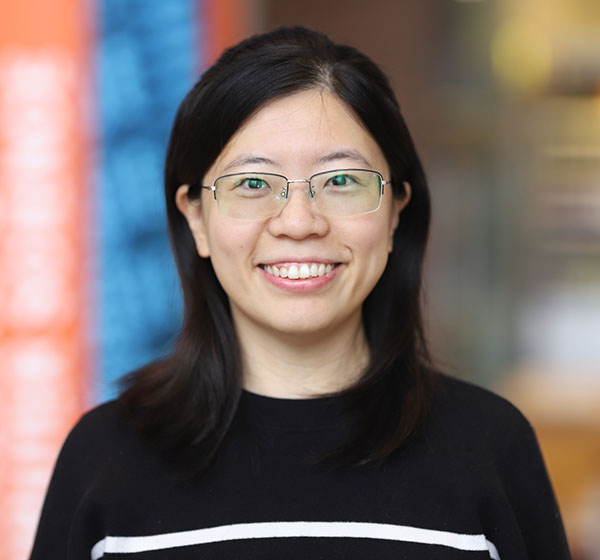
Biomedical and Chemical Engineering Professor Jialiu Zeng together with her former mentors, Boston University Professor Mark Grinstaff and UCLA Professor Orian Shirihai, have been awarded a five-year grant from the National Institutes of Health. The grant supports their innovative research to develop lysosome-targeted nanotherapeutics for metabolic dysfunction–associated steatotic liver disease (MASLD). Zeng serves as a co-investigator on the project.
MASLD is a condition where fat builds up in the liver and can cause health issues such as obesity, diabetes, and high blood pressure. Lysosomes are small structures within cells that contain enzymes that break down waste and keep cells healthy by removing damaged or unnecessary materials, acting as the cell’s garbage disposal. The project aims to use nanotechnology to specifically target lysosomes in liver cells, providing a more precise and effective way to treat MASLD.
Zeng, in collaboration with Professor Chih Hung Lo from the Department of Biology and the Interdisciplinary Neuroscience Program, will focus on designing and testing nanomaterials that improve lysosomal function in liver disease models. Her expertise in lysosomal acidification and nanomedicine will guide the development of responsive nanoparticle systems that enhance the clearance of unwanted cellular materials while restoring healthy metabolic regulation.
At Syracuse University, Zeng leads an interdisciplinary research group that engineers nanoparticle-based treatments for metabolic and neurodegenerative disorders. Her lab integrates materials science, cell biology, and translational medicine to design nanotechnologies that help restore cellular balance. She is especially interested in how lysosomal acidity affects lipid and protein accumulation and metabolic signaling in diseases such as type 2 diabetes, obesity-associated neurodegeneration, and Parkinson’s disease. Together with Lo, Zeng is also extending this nanomedicine strategy to other neurodegenerative disorders, including Alzheimer’s disease and related dementias.
The research team includes Mark Grinstaff (Boston University), Orian Shirihai and Rajat Singh (UCLA), co-investigator Jialiu Zeng (Syracuse University), with collaborators Chih Hung Lo (Syracuse University), Yin Hung (Massachusetts General Hospital), Joseph Pisegna (UCLA), and David Zurakowski (Boston Children’s Hospital).