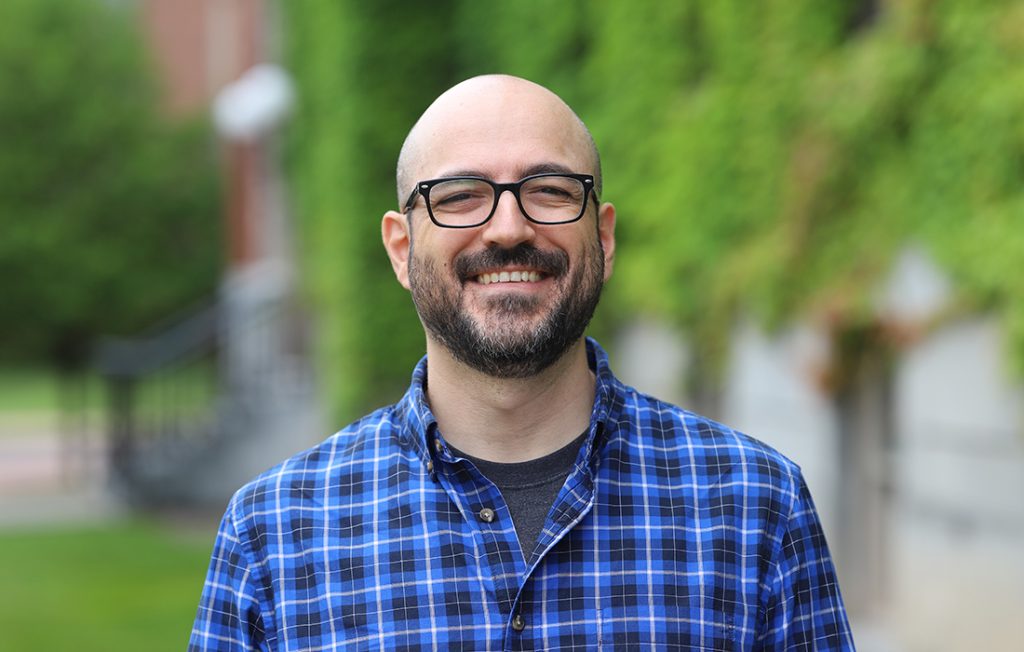
Civil and Environmental Engineering Professor Baris Salman is driven by a passion to transform infrastructure management. With a focus on highways, bridges, and essential water infrastructure, his core research highlights the importance of crucial structures that often go completely unnoticed yet support our everyday lives.
“Civil infrastructure is the backbone of economic development and societal well-being. Everyone relies on the efficient and proper working of stable infrastructure,” says Baris.
Salman and his research team have received two grants from the National Academies of Sciences, Engineering, and Medicine. These grants will allow them to help state Departments of Transportation (DOTs) improve how highways, bridges, and other infrastructure are built and managed. The team will focus on identifying best practices as well as developing new approaches to contribute to the field of civil engineering and better meet state DOTs’ specific needs.
The first project focuses on accelerated bridge construction, which refers to construction methods that shorten the time required to build or repair bridges. This approach reduces traffic disruptions and on-site construction time by using prefabricated and precast materials and/or innovative construction techniques, such as building bridges in one location and then moving the bridge to the final site using slide-in bridge techniques or self-propelled modular transporters (SPMTs).
“Bridge construction is like open-heart surgery. You have to do it while you’re maintaining highway traffic,” says Salman. “Agencies have been looking for ways of accelerating this process to minimize inconvenience on commuters, so the idea behind this project is to develop guidance to the state DOTs to improve the efficiency of accelerated bridge construction (ABC) projects.”
The second project will explore how to use 3D models during construction inspections. With advancements in technology and new software, 3D models have become more common in highway design and construction. The goal of this project is to provide inspectors and state workers with guidance on using these models to check certain aspects of highway construction.
“This project will also address workforce shortages and bridge the gap between generations [of people] with different skillsets: those who know how to use 3D model technology and those who have experience with inspecting civil engineering and construction work out in the field,” explains Salman.
Salman serves as the principal investigator for both projects, and Min Liu, professor and Director of the Infrastructure Institute, is part of the research team in the accelerated bridge construction project. Salman and his research team previously received funding for projects from the New York State DOT and the Water Research Foundation. They have partnered with the University of Kentucky on other projects funded by the National Academies of Sciences, Engineering, and Medicine. They have also partnered with Rutgers University on projects involving New Jersey Transit, one of the largest providers of public transit in the United States.
“I recognize the importance of infrastructure and the challenges we might have in managing and delivering these infrastructure projects in real life,” says Salman. “I think it’s crucial that we continue researching how we can better manage our infrastructure to sustain and to improve our quality of life.”