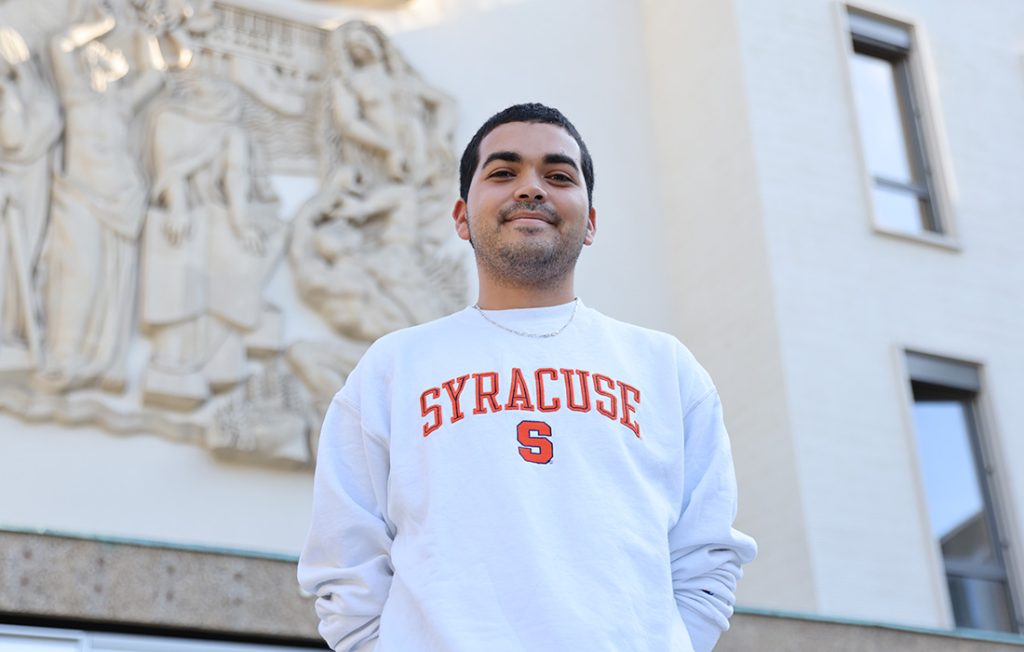
When Jean-Laurent Lareyre was paired with a Syracuse University student for an engineering class assignment in 2023, he had no idea where that connection would lead.
The project at Institut National des Sciences Appliquées (INSA) in Strasbourg, France, sparked something unexpected: a passion for helping American students navigate life abroad. Since that initial pairing, Lareyre – who goes by JoJo – has become an invaluable guide and friend to more than sixty Syracuse University students studying in France.
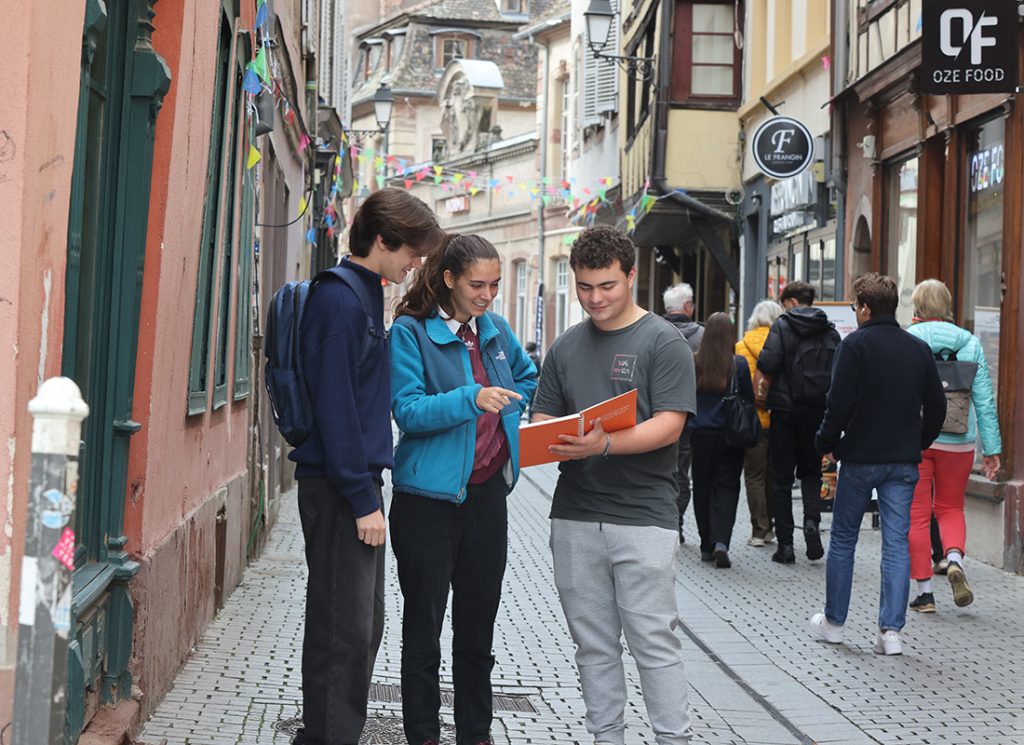
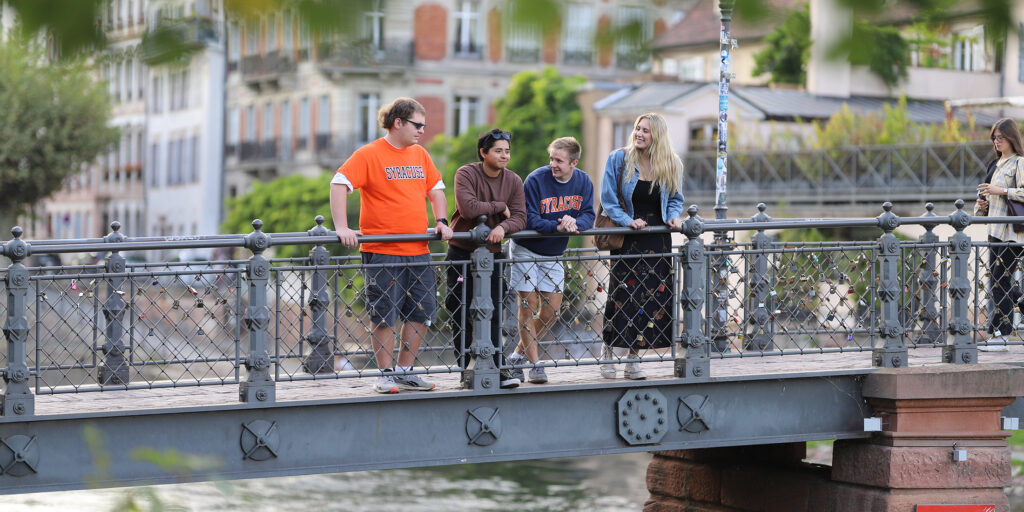
What began as tutoring in physics and electrical engineering classes has evolved into something far richer. Lareyre now helps students explore Strasbourg and the surrounding Alsace region, introducing them to hidden gems and local experiences they might otherwise miss.
“They are curious and want to experience life in Strasbourg,” says Lareyre. “I love when they invite me along. I want them to discover every part of student life at INSA and in Strasbourg.”
Lareyre’s own international background makes him a natural cultural bridge. Originally from Mauritius in East Africa, he also lived in China as a child and now speaks Chinese, French-Creole, German, and English fluently.
“For me, it’s important to communicate with everyone,” he explains. “We’re all engineers. We have the same skills, so we relate to each other well.”
His adventures with Syracuse students and staff have included mountain hiking trips. He understands their desire to make the most of studying abroad—it mirrors his own journey.
“I wanted to go abroad. I didn’t see myself always staying in the same country,” Lareyre reflects. “My parents traveled a lot, and I want to be like them.”
“Jo Jo has been a tutor, mentor, and friend to years of Syracuse and ECS students studying abroad. He has been a wonderful role model – a high-achieving engineering student with an international perspective and a warm, engaging and fun personality. We’ve adopted him as fully Syracuse,” says John Goodman, the director of Syracuse’s program in France.
Now balancing graduate studies at INSA with an engineering position at a pharmaceutical company in Strasbourg, Lareyre isn’t certain where his career will take him next. But he hopes the connections he’s made will come full circle.
“It would be so much fun to reconnect with students I met in Strasbourg when I’m in the United States,” he says. “Maybe someday they’ll be my guides.”
Xavier Eduardo Chardon ’28 is a computer engineering student who studied abroad at the Syracuse University center in Strasbourg, France.
As someone who lives on the small island of Puerto Rico, which is a bit far from mainland United States, most of my trips have been to places with customs and traditions that are generally the same to my own. Yes, there are some big differences like how the Caribbean islands have these beautiful beaches and vibrant colours while somewhere like Mexico is more mountainy and dry, while also having these big, ancient Mesopotamia temples, but the way the people act and think, and how the general vibe is being with them, is more or less the same in many regards, especially when we all either speak English or Spanish. As someone who was born and raised in America and had experienced many different cultures that were still more-or-less similar to my own, I wanted to experience something new and unique that I haven’t seen before, and to fulfill that wish, I looked for opportunities for Europe, and thanks to the Syracuse University study abroad programs, I was able to visit Europe for the first time in my life.
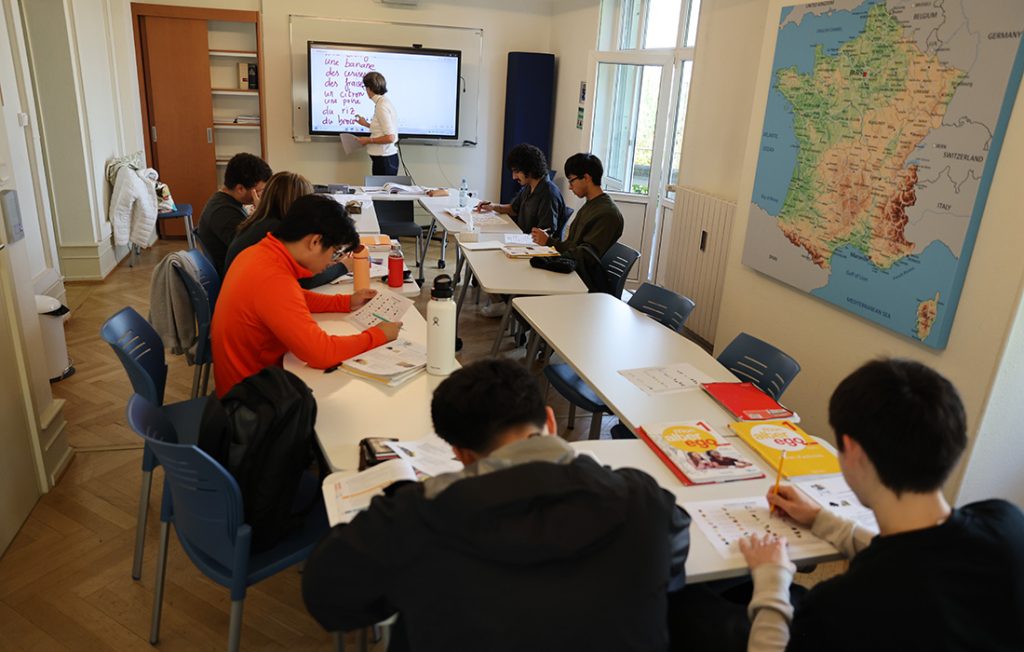
Before I actually went to France, I addressed the main problem I would have – how am I going to communicate with a foreign language I do not know? Since I speak both English and Spanish, I have never had a language problem in my life. If I wanted to learn about a foreign country’s culture, I would have to learn how to at least understand French. Thankfully, “L’Alliance Française” program does have offices in Puerto Rico, so I was able to learn some French during the summer before going to France. It was not enough for me to have a full conversation in French, but it was enough to at least understand how the French language works and to be able to make educated guesses and close enough assumptions on French words and phrases.
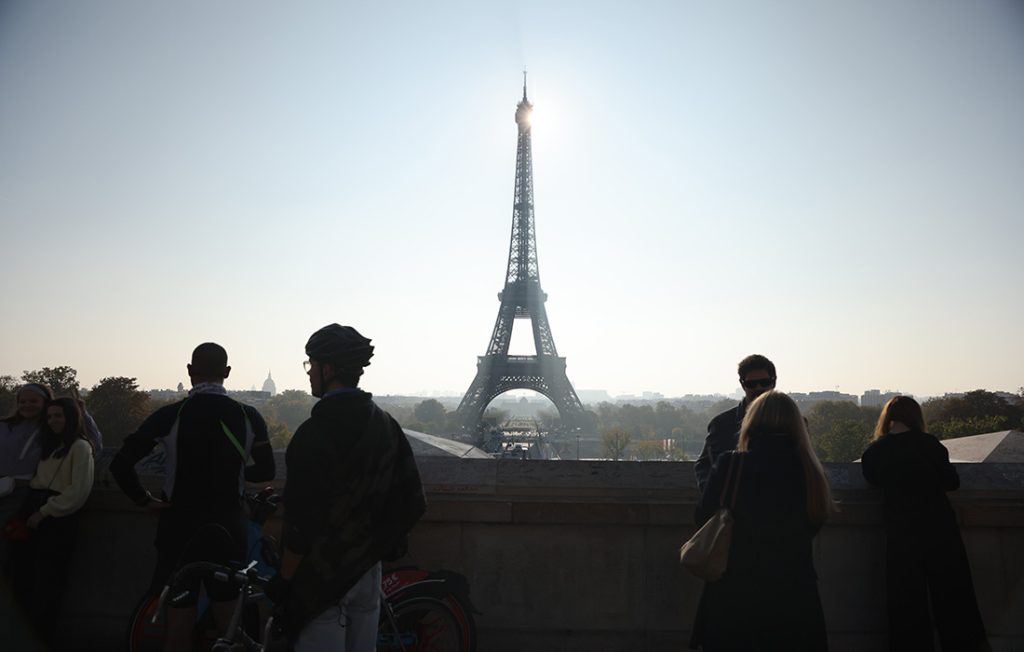
Arriving at France, I was immediately blown away as to how different France is compared to America. The architecture in Paris and Strasbourg was extremely different to what I was used to seeing in America, and most of the people I tried talking to were nice.
Since it was my first time travelling overseas, both of by parents came with me and we had a small vacation in Paris and in Strasbourg before the Syracuse University program started. My mom and I did our best to translate anything we saw (my mom also attended the French classes with me), while my dad could only pray that we were correct with our translations (we tried going from Gallia to Notre Dame without google and only using signs and turned a 15 minute walk to nearly 45 minutes). It was still very scary and stressful to speak with people since we did not know French, but I tried to communicate with the best of my abilities.
As the program started, I was given a host family to stay with for the semester and now I take it as a blessing. I remember the first couple of days it being extremely hard to just say information without having to result to hand signals, acting, and using phrases like “yes, aha” and “no, like *blank*”. We had to result to google translate a bunch for our first couple of weeks, but as I learned more and more French (with not just the Syracuse villa class, but with the experienced I got going out and exploring Strasbourg), I was able to communicate back to them using proper French.
After learning some of the basic verbs like “avoir” and “être”, and after understanding how to use adjectives, subjects, roots, numbers, etc, I was able to speak French with my host family while using my Spanish to more or less “comprendre” the meaning of the complex verbs and predicates they use that I have not heard about yet.
I specifically remember certain days like how I learned about how to say certain medical related things in French, and later that day being able to ask my host mom what she does for work in more detail (before then, she told me she was a doctor but I could not comprehend on what, after that day I learned that she used to work as a foot doctor, but now is retired and instead works as a teacher for future foot doctors). There was also the time I learned how to properly say the time, making it a lot (and I mean a lot) easier to coordinate with my host family about dinner, laundry and at what times we left or came back at. Near the start of the semester, my host parents would do their best to speak in English so that I could understand them, but now it has finally gotten to a point where they would both talk at each other in French, and I can somewhat follow their conversation, discovering new words I could now use and understanding old words I just learned this semester.
Now coming into the end of the semester, I can look back and realize how much I have learned in the past few months. Not only have I learned how to speak French, but by using my French knowledge I was able to talk to and form bonds with people like my host parents and their nieces, and with other people like the local business owners I frequent to buy food snacks. I was able to read and understand museum plaques, magazines and special events like the Notre Dame astronomical clock showcase that happens every weekday and is mainly in French, deeply broadening my knowledge of both France and Strasbourg. I can say, without a doubt, coming to Strasbourg was the best decision I have made educationally in my life so far. I would definitely go back given the option, and am now planning to continue learning French until I reach a desirable proficiency level.
The Syracuse University center in Strasbourg, France offers an incredible study abroad experience for Engineering and Computer Science students. Located in eastern France on the border of Germany, Strasbourg is centrally located with easy access to Switzerland, Belgium and Italy.
“The study abroad program is part of why I choose Syracuse in the first place,” says Emma Crandall ’25. “Strasbourg was one of the places they made it really easy for me as an engineering major.”
“I love the city. One of my favorite things is how easy it is to get around,” says Declan Wavle ’25. “It’s really an amalgamation of all different cultures coming together.”
Specially designed programs for second year students allow them to take required courses they need and remain on track for graduation.
“Syracuse does a very good job of making sure we stay on track as engineers even when we are studying abroad,” says Arturo Venegas ’25. “I am taking almost all my courses I need to take for this sophomore year. Which is amazing since that means there is no disruption to my four-year plan”
“That’s one of the best things about this program. You don’t have to sacrifice anything as an engineer,” says Tyler Lavaway ’25.
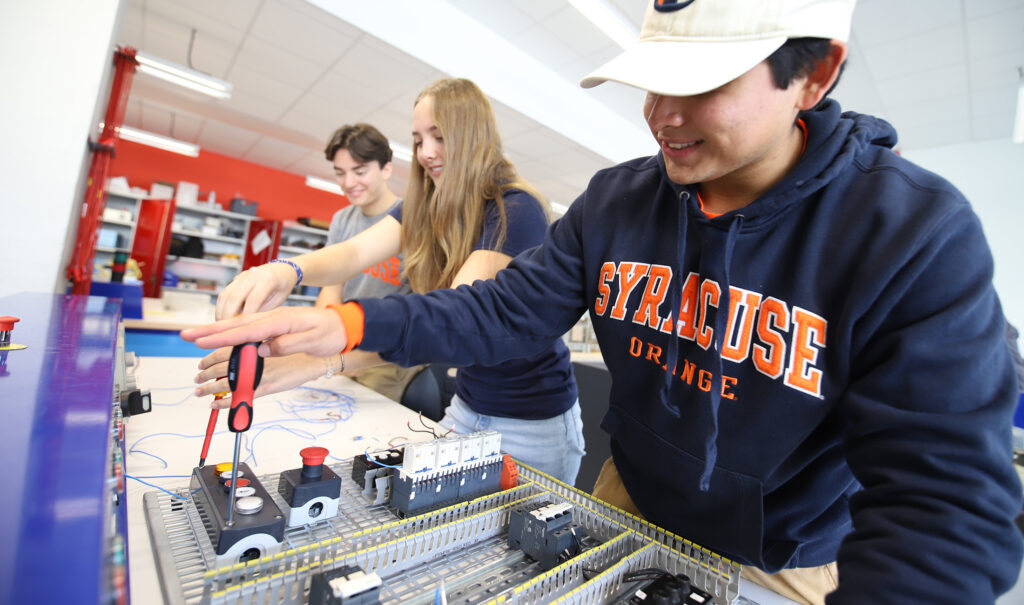
An electrical engineering lab at INSA in Strasbourg, France
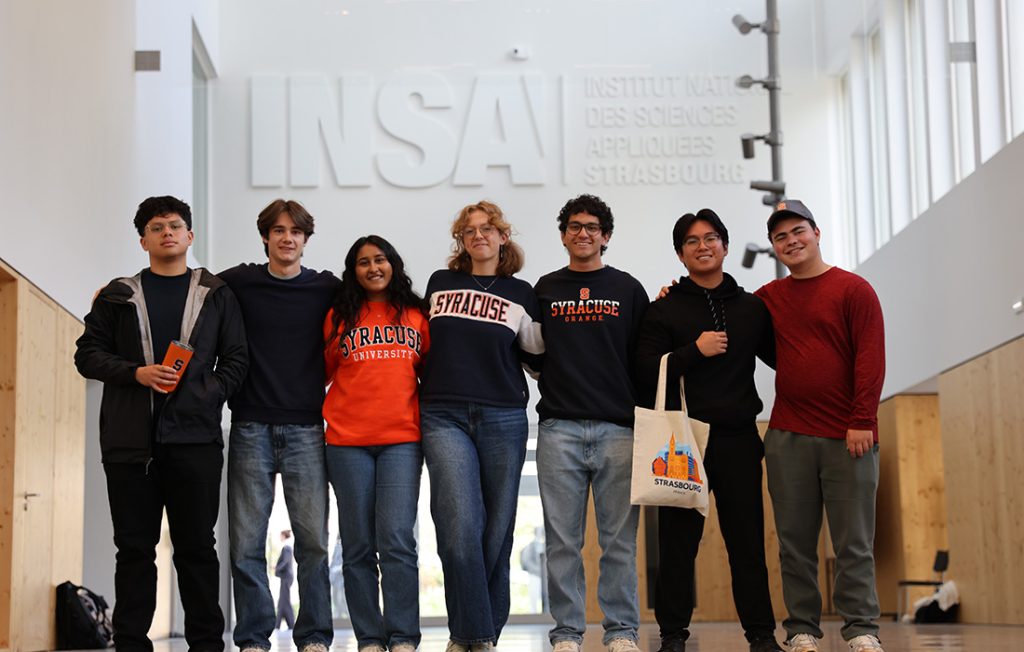
Syracuse University students get to take some of their classes at France’s National Institute of Applied Science. All classes are taught in English.
“You don’t have to speak French to study in Strasbourg, there is no language requirement but I always say you have to want to learn,” says assistant director Mary Boyington. “You can have a wonderful opportunity, take French classes, live with a host family and learn the French language in an everyday environment.”
“It is really cool how you get to see you major done a different way and it is eye opening,” says Wavle. “You know there is a whole other world out there but you don’t experience it until you are actually there.”
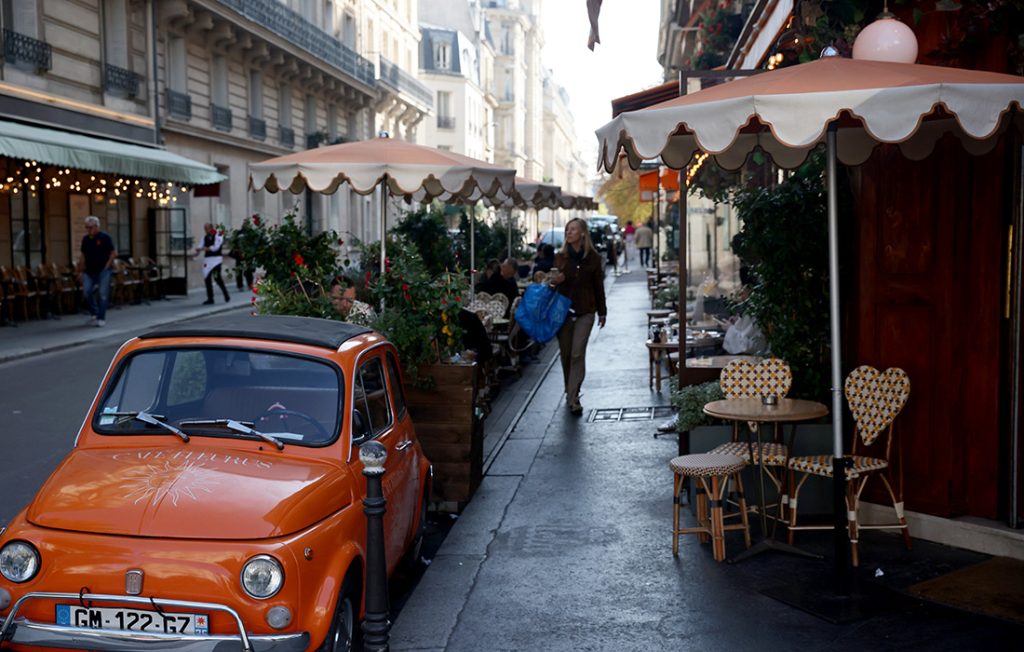
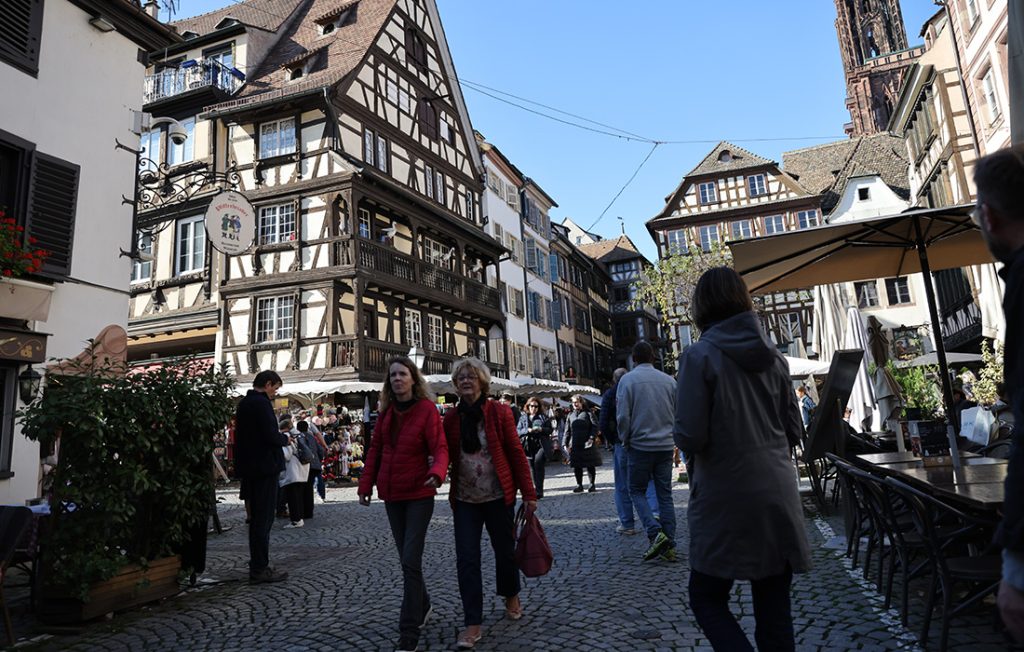
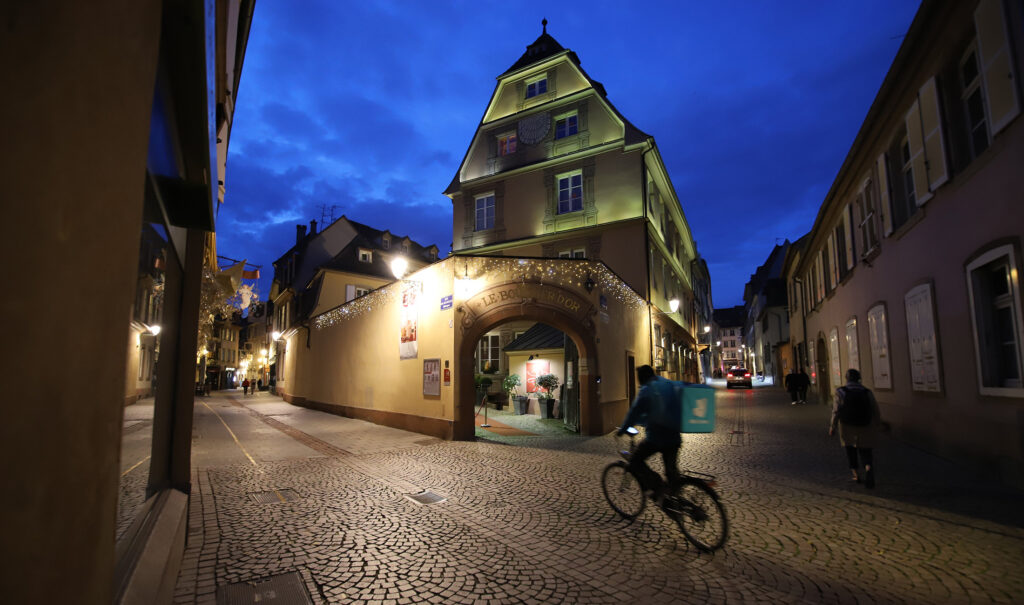
A restaurant in the Petite France area of Strasbourg, France