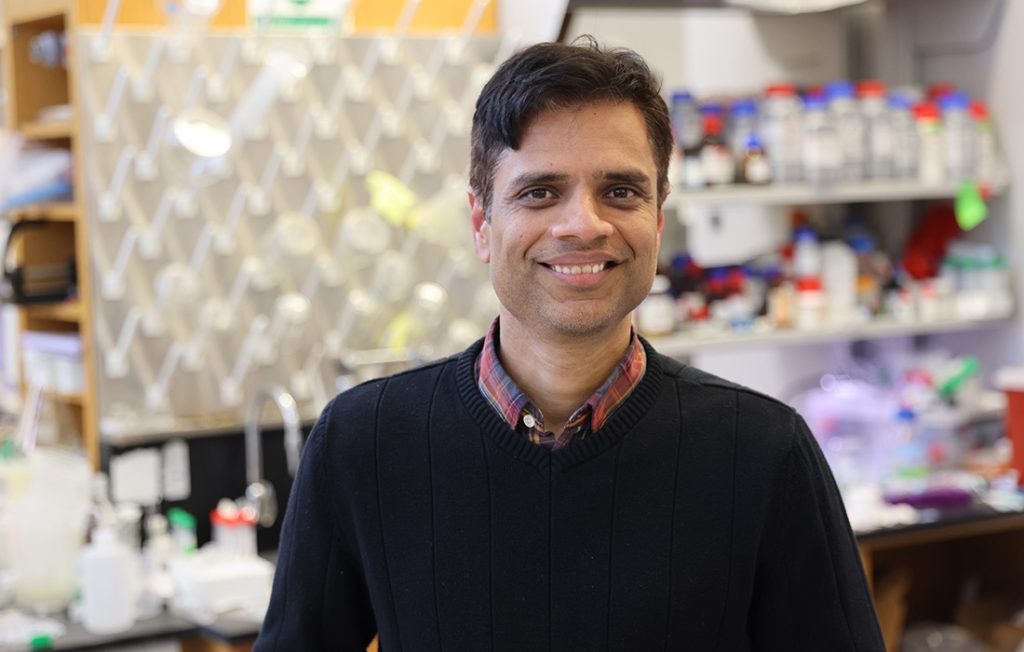
Biomedical and Chemical Engineering Professor Pranav Soman has been awarded funding from the Advanced Research Projects Agency for Health (ARPA-H) to develop a groundbreaking method for fabricating organ-scale bone grafts – one modular unit at a time.
The project, titled “Building Blocks: LEGO-like assembly of perfusable ECM cubes to generate tissue-agnostic, suturable, organ-sized, viable and functional grafts” aims to address a critical shortage in organ transplantation by creating a scalable, on-demand alternative to donor tissue.
“This project could make on-demand and personalized large-size grafts for organ transplantations that will be broadly accessible and cost-effective, compared to the scarcity and expense of human allograft tissues.” says Soman.
The Science
Today’s organ transplantation is limited by stochastic donor availability, short tissue shelf life, and immune incompatibility risks. Soman’s team will develop 3D-printed modular cube units made from extracellular matrix (ECM) that can be assembled into functional, suturable grafts at organ scale – a tissue-agnostic platform applicable across multiple organ types.
If successful, the technology could fundamentally shift how medicine approaches tissue and organ replacement – enabling patient-specific grafts, produced on demand, at a fraction of current costs.
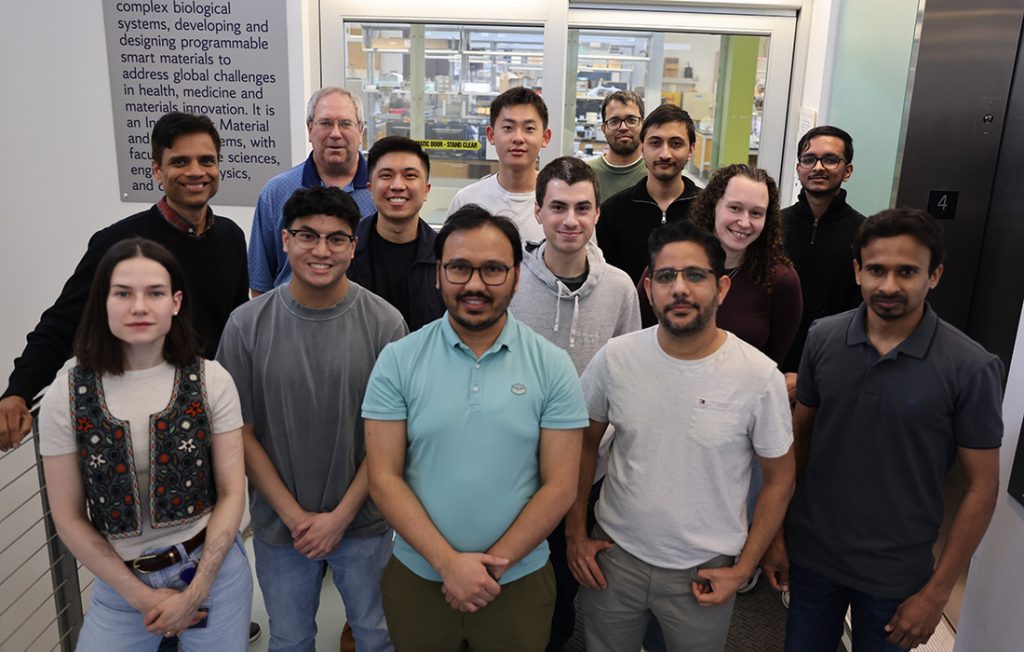
“I am privileged to lead the team of excellent researchers Saikat Basu from South Dakota State University, and Jason Horton and Saeed Mohammad from SUNY Upstate Medical University,” says Soman. “If successful, this breakthrough technology will shift the paradigm of how we presently approach tissue and organ replacement.”
Soman and his research team have also previously published related research in the journal Advanced Functional Materials on macroscale assembly of individually printed hydrogel modules.