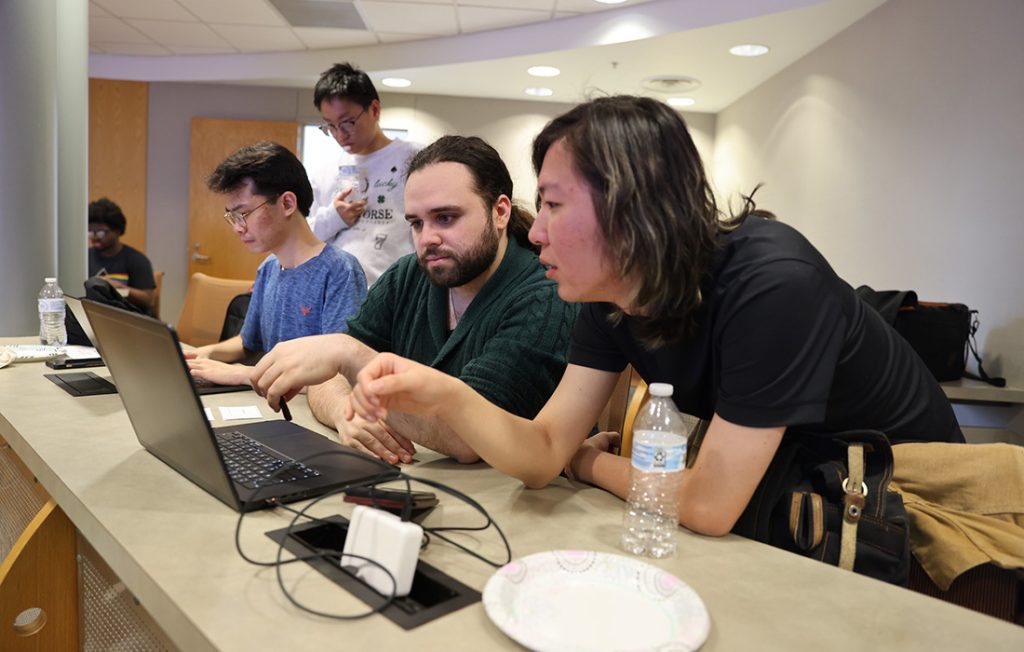
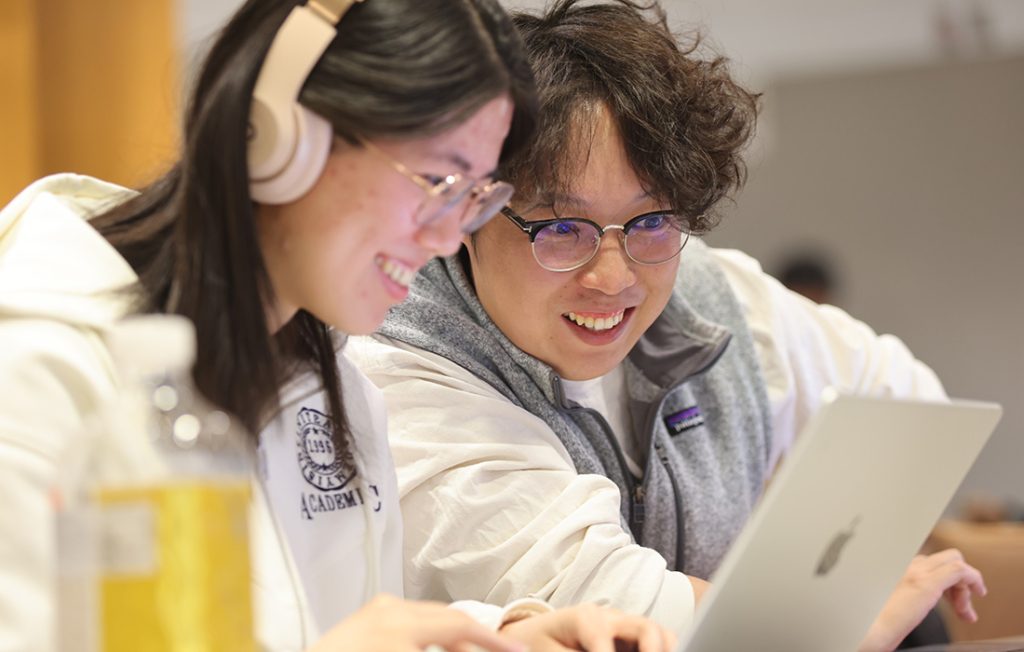
What happens when students are allowed to use artificial intelligence to solve cybersecurity challenges? That question took center stage as Electrical Engineering and Computer Science (EECS) Professor Endadul Hoque hosted a Capture-the-Flag (CTF) cybersecurity competition at the College of Engineering and Computer Science, bringing together 20 undergraduate, master’s, and Ph.D. students.
Unlike traditional CTF competitions, participants in this event were allowed to use modern AI assistants, such as ChatGPT and Claude, while solving challenges. The competition was designed not only to test technical skills, but also to explore how AI is transforming the way students learn and approach complex cybersecurity problems.
“Cybersecurity education is evolving rapidly with the rise of AI tools,” said Hoque. “This competition gave us a unique opportunity to observe how students use AI in real time—whether it helps them think more deeply about problems or simply speeds up solutions. Understanding that distinction is critical for the future of Computer Science discipline.”
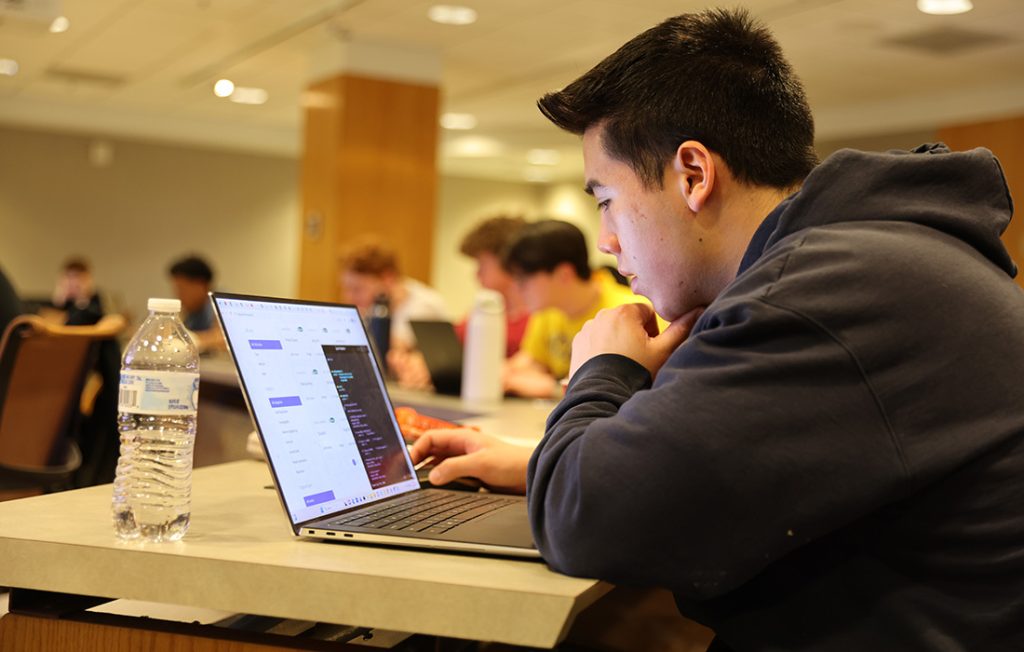
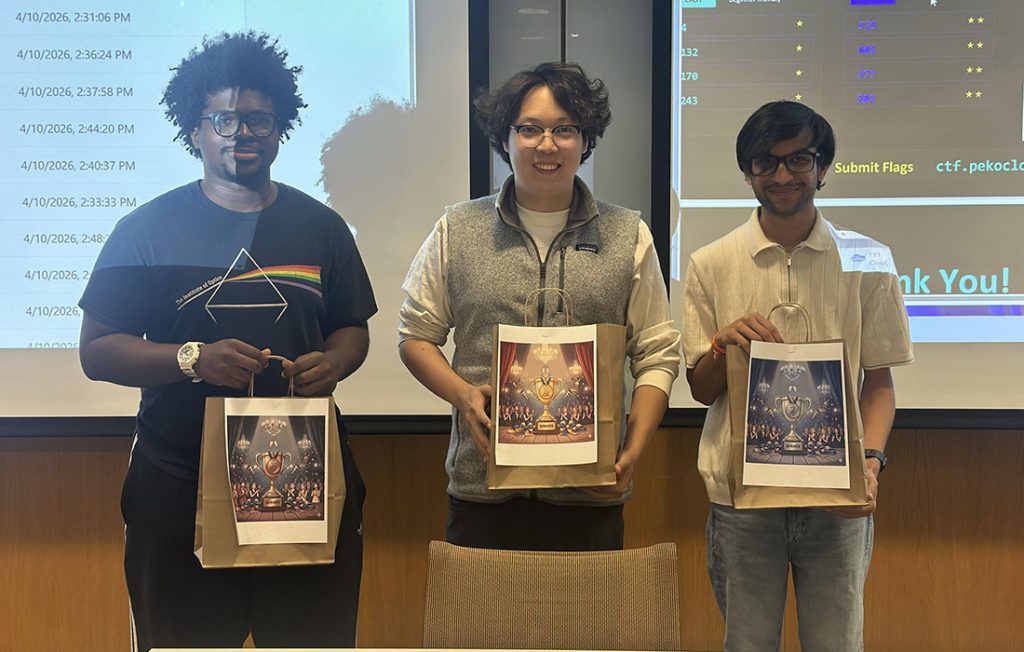
Participants competed individually across 10 challenges spanning beginner, intermediate, and advanced levels. The top three performers—Weixiang Wang (first place), Annepu Sai Charan (second place), and Armani Isonguyo (third place)—were ranked based on the number of challenges solved and the speed at which they completed them. Students described the experience as both exciting and challenging, noting that AI could guide their thinking but still required careful verification.
“This reflects how we approach computer science and cybersecurity education at Syracuse University,” said Alex Jones, the Klaus Schroder Professor and Chair of Electrical Engineering and Computer Science. “AI tools are only as effective as their operators. They do not replace expertise. Dr. Hoque’s work is a great illustration of this approach. We emphasize deep fundamental knowledge while also encouraging the use of AI. This ensures our graduates can effectively use, evaluate, guide, and validate AI-driven solutions.”
To better understand the educational impact of AI-assisted problem solving, Hoque collaborated with Dr. Rahman, an expert in Computing and AI Education. Together, they are investigating how students use AI tools, whether those tools support meaningful learning, and how they influence confidence and problem-solving strategies.
“We’re seeing a fundamental shift in how students engage with complex technical tasks,” said Rahman. “AI can be a powerful learning aid, but we need to understand how to use it without compromising deep technical learning,” Rahman noted.
Hoque plans to expand the CTF initiative by offering additional training sessions and forming student teams for regional and national competitions, further strengthening cybersecurity engagement within the EECS community.
The event is part of Hoque’s broader efforts, including his National Science Foundation CAREER Award, to advance education at the intersection of cybersecurity and artificial intelligence.