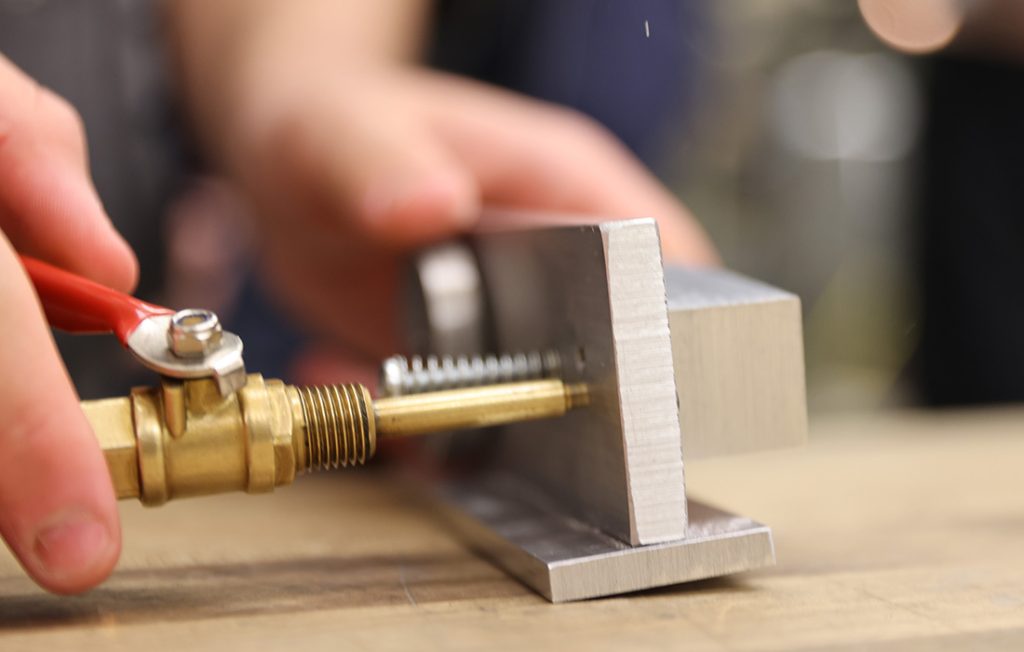
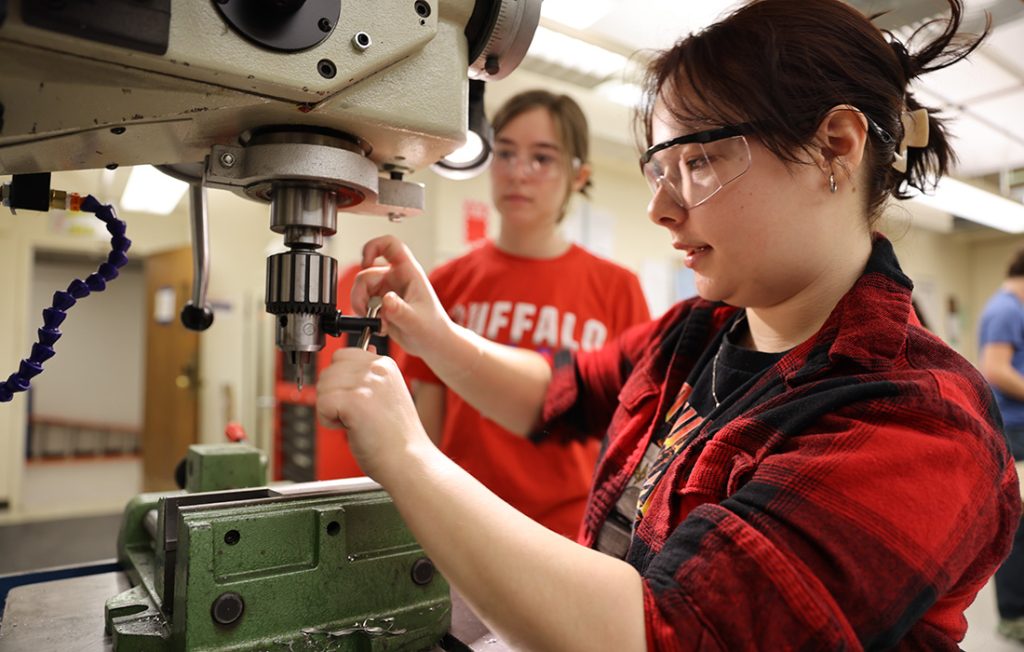
In their Introduction to Computer Aided Design (CAD) class, mechanical engineering students designed and built functional air engines from the ground up, taking a project from concept to a working physical assembly. They worked in small teams, replicating how a project would be done in a real-world engineering practice.
“The goal is to connect the dots between design, communication, and manufacturing,” said Mechanical and Aerospace Engineering Professor Jackie Anderson. “Students don’t just draw something on a screen — they have to build it, and that changes everything about how they think.”
From Screen to Shop Floor
Working in teams, students use SolidWorks — the industry-standard engineering software — to create detailed solid models of every component of an engine that will run when compressed air is run through it. From there, they generate professional drawings complete with dimensions, tolerances, and material specifications before fabricating the final physical assembly in the student machine shop.
For mechanical engineering student Laney Price ’27, the real reward came in the student machine shop — where her team’s CAD blueprint became the tangible parts that brought the project to life.
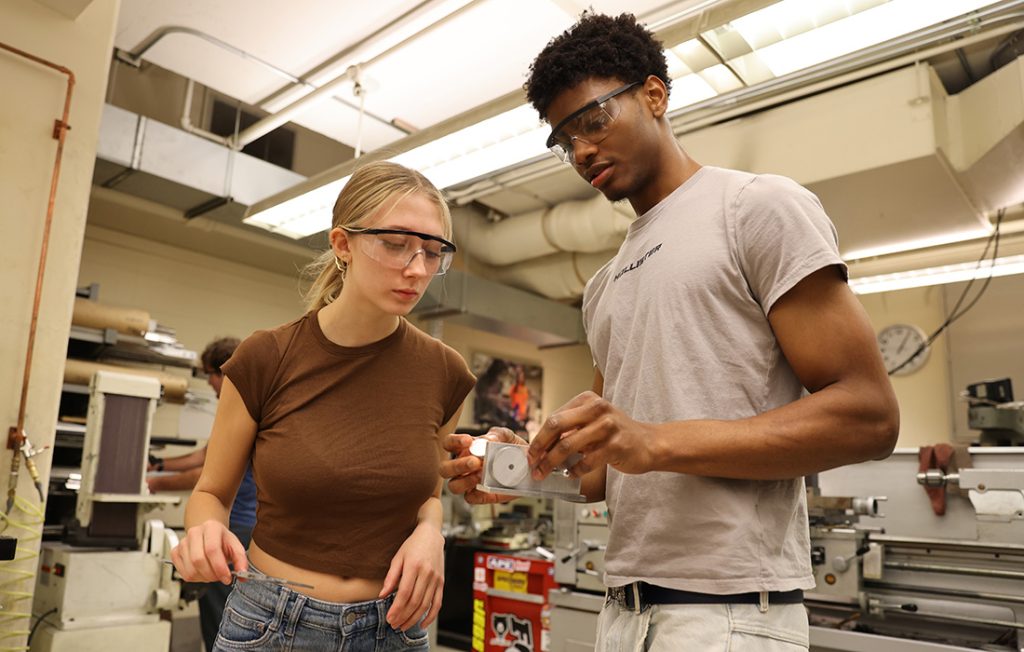
“This project allowed us to apply what we were learning to a real, physical engineering application. We learned about tolerances and fits in class, but it wasn’t until we actually built the air engine in the machine shop that I really understood how to properly select and machine them,” says Price.
The project is structured around five key engineering competencies that are essential for career readiness:
CAD Proficiency — Students develop fluency in solid modeling, drawing creation, and assembly modeling, building the kind of software skills employers consistently rank among their top hiring priorities.
Structured Design Methodology — Teams follow an engineering design process from initial concept interpretation all the way through to final documentation, reinforcing a disciplined, step-by-step approach to problem solving.
Manufacturing Awareness — Perhaps the most eye-opening aspect for many students, this component asks them to consider how tolerances, material selection, and fit specifications directly affect whether a part can actually be fabricated — and whether the final assembly will work.
Technical Communication — Beyond the drawings themselves, students are required to deliver oral presentations, preparing them for the presentations, design reviews, and client meetings that define professional engineering work.
Teamwork — Collaboration is built into the project’s DNA. Students must coordinate across roles, manage shared workloads, and resolve the kind of real-world team dynamics that no textbook exercise can fully replicate.
Lessons That Stick
Faculty emphasize that the combination of design and physical fabrication is what makes the Air Engine Project uniquely effective as a teaching tool. When a part doesn’t fit, students must diagnose whether the problem lies in the design, the drawing, or the manufacturing — a troubleshooting skill that takes on new meaning when you’re holding the evidence in your hands.
“I took Intro to CAD because I found it very interesting, however it opened a whole field of fascination to me that I had not known,” says mechanical engineering student Alexander Eastham ‘28. “The class lead me to find my place as an engineering intern and give me the tools to start my own company with products I design.”
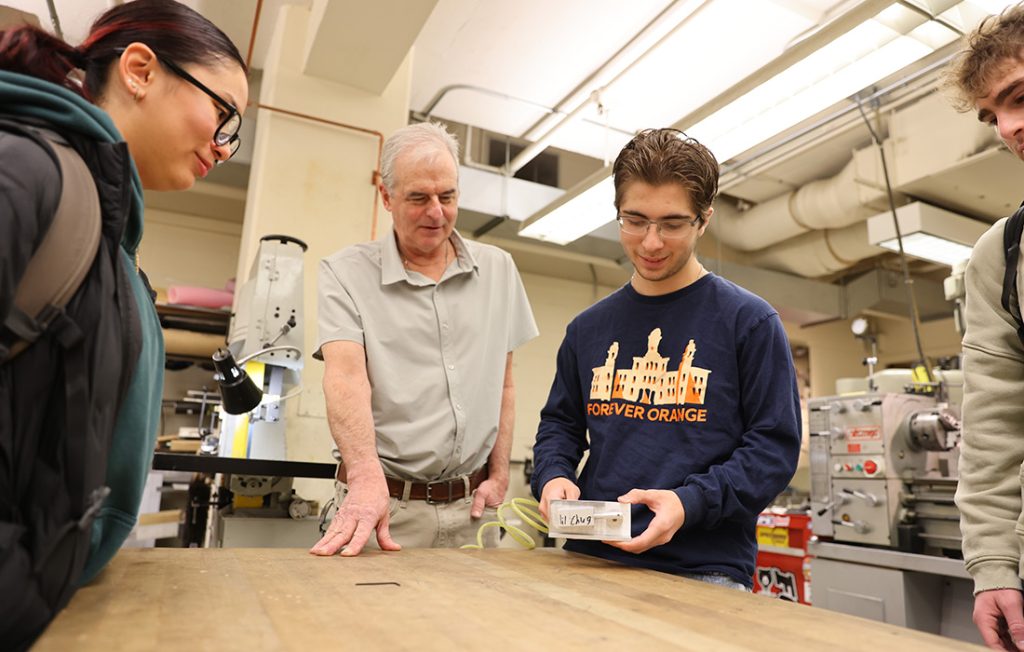
The project reflects a broader commitment in the mechanical engineering program to giving students experiences that are best learned not through lectures, but through doing. As the program continues to prepare graduates for careers in design, manufacturing, and product development, projects like the air engine project remain at the heart of that mission.