

Energy is vital to our society and daily living, playing a pivotal role in economic development. ECS researchers are engaged in a wide range of energy research and have made significant advancements in the areas of smart grid and building energy efficiency, energy conversion and storage, as well as biofuels and renewable energy sources. These research activities greatly improve the balance between energy supply and demand, increasing the energy efficiencies of buildings, industrial facilities and urban communities. Research in this area also makes major contributions to next-generation batteries for electrical power storage and utilization, conversion of biowastes into energy, heterogeneous catalysis for biofuel production, and maximizing the use of renewable energy such as solar, wind and geothermal sources.
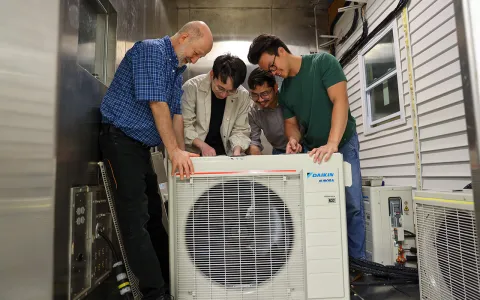
Relatedly, ECS researchers are working on innovating and improving many types of infrastructure systems, such as transportation networks (e.g., highways, bridges, rail networks, and airports); air quality management, water and wastewater pipes and treatment plants; power generation, transmission, and distribution networks; and vertical structures that we need for shelter and work.
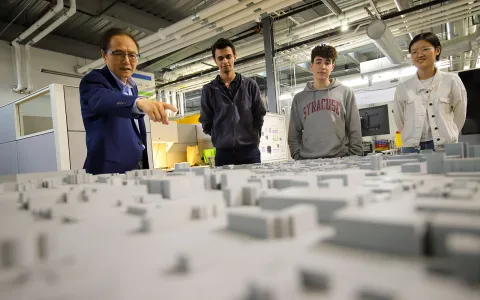
Within ECS, one set of projects in the Structural Engineering and Geotechnical Engineering fields focuses on analysis of civil infrastructure against natural and man-made hazards and development of sustainable and bioinspired materials in civil engineering applications. In terms of construction and infrastructure management, ECS researchers contribute to addressing infrastructure risk assessment and mitigation, sustainable construction practices, and developing optimization strategies for construction projects. ECS researchers are also conducting front-line research on novel technologies for energy production and storage, smart buildings and cities, design for sustainable manufacturing, and engineering pedagogy.


